Hanoi (VNA) - The application of artificial intelligence (AI) is emerging as a key solution to accelerate screening and early detection of non-communicable diseases (NCDs), contributing to the health sector’s shift from treatment to prevention.
Reducing burden of non-communicable diseases
Deputy Minister of Health Nguyen Thi Lien Huong said NCDs pose a growing global challenge, accounting for over 70% of deaths worldwide, mainly from cardiovascular diseases, cancer, diabetes and chronic respiratory diseases. In Vietnam, the burden is rising rapidly, requiring urgent and sustained preventive strategies.
Beyond their impact on individual health, NCDs hinder socio-economic development. Common risk factors include tobacco use, harmful alcohol consumption, unhealthy diets, physical inactivity and stress.
In response, the Government and Ministry of Health have implemented programmes to raise public awareness, promote early detection, and strengthen treatment at the grassroots level. Initial results are encouraging, with more than 300 outpatient clinics for chronic obstructive pulmonary disease (COPD) and asthma established, and nearly 3,000 commune health stations managing prevention and treatment for close to 700,000 patients. Meanwhile, tobacco harm prevention programmes have supported over 100,000 people in quitting smoking.
Huong said that these efforts align with the Politburo’s Resolution No. 72-NQ/TW, which calls for groundbreaking measures to improve public health, including a strategic shift from treatment-focused care to proactive prevention.
Looking ahead, the health sector aims to accelerate this transition, with digital transformation and AI playing a central role. Priorities include expanding screening programmes, developing electronic health records, and enhancing data connectivity across all levels of care, creating a foundation for effective AI application in disease forecasting, management and treatment.
Supporting data-driven clinical decisions
Assoc. Prof. Dr. Vu Van Giap, Deputy Director of Bach Mai Hospital, said the hospital has identified digital transformation, big data and AI as strategic pillars. It is investing in research and innovation, particularly in big data analytics and AI applications, to improve diagnostic accuracy, support clinical decision-making and enhance patient care.
He stressed that building medical data systems that are “accurate, sufficient, clean and up-to-date” is essential not only for treatment but also for forecasting disease patterns and strengthening prevention strategies.
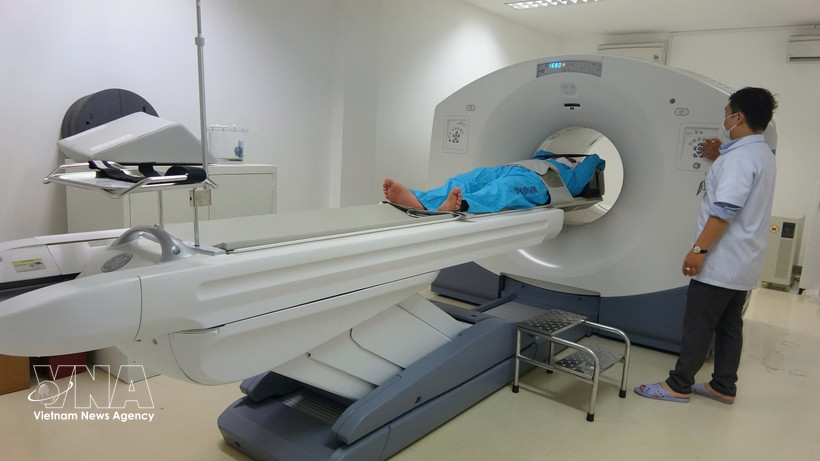
Bach Mai Hospital has developed three AI models to support lung cancer diagnosis, including CT scan analysis, real-time bronchoscopy imaging, and pathological image assessment. Developed in collaboration with domestic scientists under a State-level research project, these models have been highly rated by the national science and technology council and are ready for wider deployment.
Initial results show that in some cases AI can outperform doctors with five years of experience, helping detect early lesions, reduce missed diagnoses, and support timely clinical decisions. AI systems can also operate seamlessly within clinical workflows, providing fast, data-driven support without disrupting routine practices.
The combination of strong policy direction and technological innovation is opening a new pathway for controlling NCDs in Vietnam. As medical data systems become more standardised and interconnected, broader AI adoption is expected to help shift the healthcare system from reactive to proactive approaches, improving service quality and reducing the overall disease burden./.