Indonesian expert offers ideas for Vietnam’s energy security

Vietnam is shifting from a mindset of “ensuring sufficient energy supply” toward a framework of “safe, self-reliant, and sustainable energy”, said an Indonesian expert.

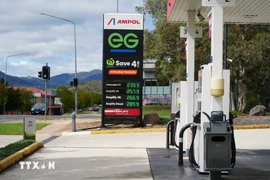
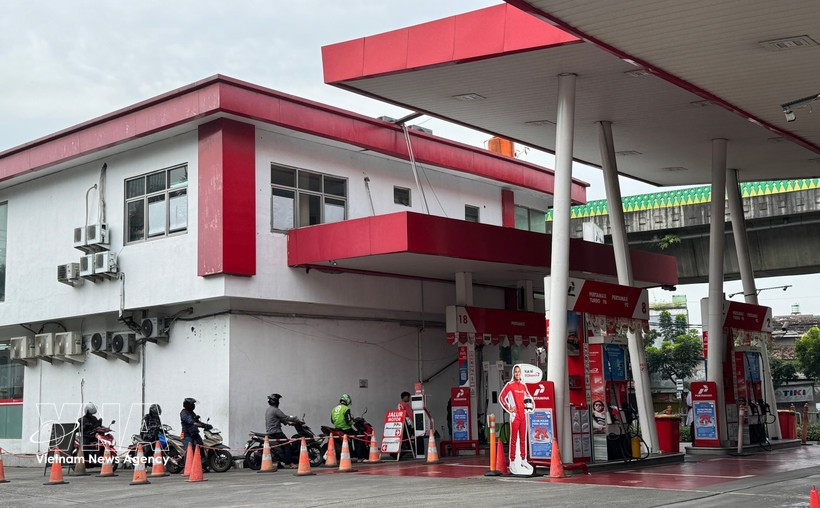
A petrol station in Indonesia (Photo: VNA)

Jakarta (VNA) – Senior Coordinator at Indonesia’s Institute for Defence and Strategic Studies (LESPERSSI) Beni Sukadis has detailed how Jakarta is responding to energy supply shocks amid geopolitical tensions in the Middle East, and offered policy suggestions to Vietnam during an interview recently granted to the Vietnam News Agency.

Facing extreme international price swings triggered by the Middle East conflict, Sukadis said President Prabowo Subianto’s administration has deployed a sharply defined “three-layer” energy policy: short-term stabilisation, medium-term diversification, and long-term structural reform.

In the short term, Jakarta’s overriding priority is preventing any disruption to domestic fuel supply. Its approach is more preventive than responsive. Instead of waiting until market shortages before making adjustments, Jakarta proactively developed risk scenarios, prepared alternative import plans, and coordinated closely between ministries and agencies to maintain domestic market stability. This is considered a necessary step in the context of volatile global oil prices and market sentiment easily influenced by geopolitical factors.

For the medium term, the country is hustling to line up new oil and gas partners beyond traditional players such as Nigeria and Saudi Arabia, adding African producers like Angola and Gabon, plus Australia. It is also accelerating its B35 biodiesel blending programme and aiming for B40, leveraging its advantage as the world's largest palm oil producer. Simultaneously, plans are underway to develop bioethanol, capitalise on the geothermal potential, and promote hydropower and solar power projects to diversify generation sources.

Overall, Sukadis said, Indonesia’s big-picture goals remain unchanged, focusing on diversification, green transition, and higher domestic added value, but the pace of action has been accelerated and made more pragmatic.

Turning to Vietnam, Sukadis praised Hanoi’s strategy as relatively effective, blending short-term stabilisation with long-term restructuring. In the short term, Vietnam has tweaked taxes and fuel pricing mechanisms to blunt inflationary spikes from volatile global oil prices, while diversifying oil and liquefied natural gas (LNG) imports to cut reliance on any single source.

According to him, this approach is similar to Indonesia’s focus on safeguarding macroeconomic stability and preserving household purchasing power.

Over the longer horizon, Vietnam is ramping up renewable energy under its latest power development plan, with priority given to offshore wind and solar power. Blessed with an extensive coastline and ideal natural conditions, the country is sitting on huge wind potential. Gradually phasing out coal will not only deliver environmental gains but also minimise financial risks as global emissions standards become increasingly stringent.

Sukadis also spotlighted Vietnam’s nuclear power plan for 2030–2035. If launched systematically, nuclear power can provide a stable baseload capacity to offset the intermittency of weather-dependent renewables, helping the economy balance fast growth with sustainable development.

Vietnam is shifting from a mindset of “ensuring sufficient energy supply” toward a framework of “safe, self-reliant, and sustainable energy”, he said.

In an increasingly unpredictable global fossil fuel market, he added, the winning formula boils down to diversifying supplies, increasing reserves, rolling out cleaner technology, and building up homegrown capacity - the surest path to sustaining high growth while guaranteeing long-term national energy security./.
VNA

See more

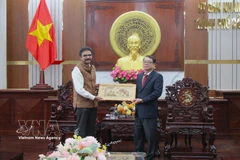
Indian Consul General in Ho Chi Minh City Vipra Pandey (left) presents a gift to Vice Chairman of the People's Committee of Can Tho Nguyen Van Khoi at the meeting on March 30. (Photo: VNA)

Can Tho seeks to expand investment cooperation with Indian partners

In recent months, many Indian enterprises have sought investment opportunities in Vietnam, particularly in technology, food processing, machinery, and the application of artificial intelligence in agriculture, via the Indian Consulate General in Ho Chi Minh City, said Consul General Vipra Pandey.

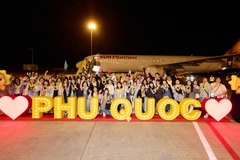
Over 200 passengers from Taiwan (China) arrive in Phu Quoc on Sun PhuQuoc Airways’ inaugural international flight. (Photo: Sun Group)

Sun PhuQuoc Airways launches its first international route to Taipei

On March 29, 2026, Sun PhuQuoc Airways - the airline of Sun Group - officially launched its first international route connecting Phu Quoc and Taipei (Taiwan, China), marking the initial step in its strategy to connect Phu Quoc with the world and gradually position the island as one of Vietnam’s emerging international gateways.

The VIFC-HCMC attracts more than 9 billion USD in committed capital in just over two months of operation. (Photo: VNA)

Deputy PM’s visit to US sparks strong interest in Vietnam int’l financial centre

The Vietnamese Government will continue to accompany and support investors, particularly in emerging financial sectors still in the experimental stage, Deputy Prime Minister Nguyen Hoa Binh stated, showing the hope that US partners will accompany Vietnam throughout the development and operation of the centre, helping position the Southeast Asian country as a vital link in the global financial network.

The “Reunification Express” SE4 arrives in Da Nang on the occasion of the Reunification Day. (Photo: VNA)

Vietnam Railways Corporation to become Vietnam National Railways Group

Under the plan, the operating model of parent–subsidiary companies of the Vietnam Railways Corporation will be transformed into a model of parent–subsidiary companies of the Vietnam National Railways Group. The move is intended to strengthen its capacity to undertake and implement assigned tasks.

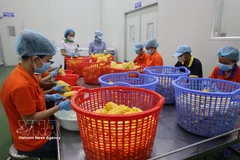
Pre-processing fruits for juice production at Wana Beverage JSC, Chau Duc Industrial Park, Ho Chi Minh City. (Photo: VNA)

Vietnam’s food sector urged to move up global value chains

Within Vietnam’s food industry, only a handful of firms, including Vinamilk and Masan Group, have achieved large-scale operations, while most businesses remain small. As a result, the highest value-added gains largely belong to companies that dominate branding and downstream markets.

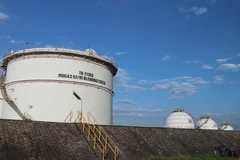
The Dung Quat refinery operates at 123.5% of its capacity, boosting domestic fuel supply. (Photo: VNA)

Dung Quat refinery operates above capacity in first quarter

The refinery produced 2.03 million tonnes of petrol products, achieving 105% of its management plan, while sales volume reached 2.02 million tonnes, equivalent to 113% of the target. As a result, key financial indicators, including revenue, profits and contributions to the state budget, all exceeded planned levels.

A VietGAP-oriented vegetable farming model adopted by farmers in An Phu commune, Quang Ngai province, has proven effective. (Photo: VNA)

Data, digitalisation key to unlocking sustainable growth in Vietnam’s agriculture

Close coordination among the State, businesses and farmers is also crucial. While the State provides regulatory frameworks, enterprises drive the market, and farmers supply data, effective incentives are needed to encourage farmers’ participation. When tangible benefits are clear, farmers will be more willing to adopt technology and engage in the digital ecosystem

Lao delegates attend the conference. (Photo: VNA)

Gia Lai, Lao provinces sign cooperation agreement

Gia Lai province signed a cooperation agreement for the 2026–2030 period with the four southern Lao provinces of Attapeu, Champasak, Salavan and Sekong at a conference held in the Vietnamese locality on March 29.

Finance Minister Nguyen Van Thang holds a working session with an HSBC delegation led by Group CEO Georges Elhedery on March 29, 2026. (Photo: Ministry of Finance)

Vietnam, HSBC accelerate push for credit upgrade and global capital inflows

At a recent meeting with an HSBC delegation led by Group CEO Georges Elhedery, Finance Minister Nguyen Van Thang highlighted the importance of an early credit upgrade to reinforce macroeconomic stability, reduce borrowing costs and strengthen investor confidence, while calling for continued technical support from the bank.

A representative of Denmark businesses speaks at the dialogue. (Photo published by VNA)

Vietnam, Denmark promote investment cooperation

Addressing the dialogue, Vietnamese Ambassador to Denmark Nguyen Le Thanh emphasised that Vietnam is intensifying comprehensive reforms to improve institutions and policies, enhance transparency and governance, and create a more stable and favourable business environment.

Permanent Deputy Prime Minister Nguyen Hoa Binh addresses the Vietnam–US Finance and Technology Dialogue. (Photo: VNA)

US firms eye expanding fintech investment in Vietnam

Addressing the Vietnam–US Finance and Technology Dialogue, themed “Technology and the future of global finance,” Permanent Deputy Prime Minister Nguyen Hoa Binh reaffirmed Vietnam’s commitment to a pro-investment environment, with breakthrough policies and stronger protections for foreign investors.

An LNG tanker docks at the Thi Vai LNG terminal in Ho Chi Minh City (Photo: VNA)

Solutions proposed to support firms amid Middle East conflict impacts

Top priority should be given to stabilising energy prices to ease input cost pressures and ensure supply stability – the most widely supported recommendation, chosen by 61.9% of surveyed firms. Businesses urged close monitoring of global fuel prices and supply risks, along with flexible measures to curb abnormal domestic price fluctuations and secure supplies of fuel and essential materials.