Expert urges integrated approach to energy security

An expert at the Indo-Pacific Development Centre under Australia’s Lowy Institute said focus should be placed on upgrading transmission systems, expanding energy storage, developing flexible gas capacity and promoting demand response, rather than setting additional capacity targets.

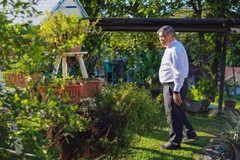
Ahmed Albayrak, Research Associate at the Indo-Pacific Development Centre under Australia’s Lowy Institute (Photo published by VNA)

Sydney (VNA) – Vietnam and Southeast Asia at large should integrate energy security with energy transition into a single agenda to ensure sustainable growth, suggested Ahmed Albayrak, Research Associate at the Indo-Pacific Development Centre under Australia’s Lowy Institute.

In an interview granted to the Vietnam News Agency, Albayrak stressed the need to prioritise the implementation of existing plans such as Vietnam’s Power Development Plan VIII (PDP8) and the ASEAN Power Grid. Focus should be placed on upgrading transmission systems, expanding energy storage, developing flexible gas capacity and promoting demand response, rather than setting additional capacity targets, he said.

These measures are essential to meet the rapidly rising energy demand while reducing reliance on imported fossil fuels like coal, petroleum, and liquefied natural gas (LNG) which, as the International Energy Agency (IEA) said, increase both energy security risks and emissions.

He added that this requires reforms on tariffs, SOE governance and contracting so private and concessional capital can scale up renewables and flexibility fast enough to meet soaring demand without locking in more import-dependent coal, oil and LNG, moving the region’s focus from import-security to system-security while sustaining rapid growth.

Southeast Asia is expected to account for about a quarter of global energy demand growth by 2035, yet it remains heavily dependent on imported oil and gas, much of it from the Middle East, according to the expert.

Highlighting Australia’s experience, Albayrak said the country has faced vulnerabilities amid recent geopolitical tensions, particularly due to low fuel stockpiles, heavy reliance on imported refined products, and limited domestic refining capacity.

In response, the Australian Government has authorised releases from emergency fuel reserves as part of a coordinated effort led by the IEA. These releases, along with temporary easing of stockholding requirements, have helped prevent widespread shortages.

The Australian Government and independent experts say national fuel supply is secure at least until mid April, with problems concentrated in specific locations where demand spiked, Albayrak stated.

Because Australia starts with only around 38 days of stocks, each release shrinks a thin buffer; if the Strait of Hormuz remains closed for months, these measures at best delay the point at which rationing or much more severe demand side restrictions would be needed. Replenishing reserves later will likely be expensive and difficult if global prices remain elevated, and stock draws do nothing to change underlying import dependence.

According to the expert, recent oil market shocks are reinforcing the long-term shift toward more secure and low-carbon energy systems. Many economies are accelerating investments in renewables, electrification and system resilience, even as they rely on fossil fuels in the short term.

Higher fossil prices are lifting near‑term revenues and encouraging some producers to invest in new oil and gas capacity, and recent IEA outlooks show upward revisions to long‑term fossil demand relative to earlier energy‑transition scenarios. LNG in particular is being cast as a strategic asset for both producers and importers in Europe and Asia, which could lock in infrastructure for a long time.

Meanwhile, if supply shortages persist, the world could enter an inflationary period marked by higher interest rates, which would drive up financing costs for renewable energy projects compared to previous levels. In theory, higher oil and gas prices could justify investment in fossil fuel infrastructure.

Despite these challenges, Albayrak emphasised that the long-term trend is moving towards diversified, domestically anchored and low-carbon energy systems although the path will vary across regions./.

VNA
See more

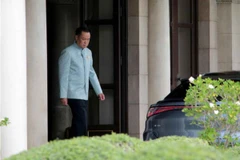
Thai PM Anutin Charnvirakul (Photo: Bangkok Post)

Thai PM submits cabinet lineup for royal approval

Thai PM Anutin Charnvirakul said the cabinet is expected to comprise 36 positions, including the PM, and that the transition will be seamless, with several incumbent ministers likely to retain key roles to ensure continuity.

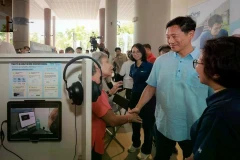
Singaporean Health Minister Ong Ye Kung touring exhibition booths at the NHG Health Musculoskeletal Day at Woodlands Hospital on March 28. (Photo: straitstimes.com)

Singapore leverages technology to enhance elderly healthcare

The initiative, known as Future Health Technologies 2 (FHT2), was launched on March 28 with support from the National Research Foundation Singapore (NRF). It focuses on translating cutting-edge research into practical healthcare solutions by 2030.

Cambodian legislature approves law on combating online scams

Cambodian legislature approves law on combating online scams

Organisers of online scam operations will face between 15 - 30 years in prison, or life imprisonment, if their activities lead to one or more deaths. Ringleaders of online scam centres will face between 5 - 10 years in prison and a fine of up to 1 billion KHR (250,000 USD). The penalties will increase to between 10 - 20 years in jail and a fine of up to 2 billion KHR if their operations involve violence, torture, illegal confinement, human trafficking, or forced labour.

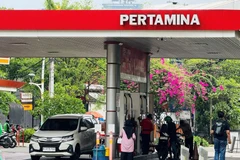
A petrol station in Indonesia (Photo: VNA)

Energy security: Opportunity to shape new cooperation between Indonesia and Vietnam

Indonesia and Vietnam could further concretise energy cooperation based on respecting each other's domestic needs while building a common stance on regional and global energy issues, according to retired Lieut. Gen. Lumban Sianipar, former Indonesian Defence Attaché to Vietnam and now a senior lecturer at the Indonesian National Resilience Institute (LEMHANNAS).

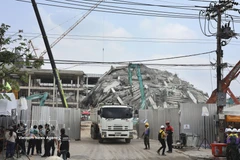
A building collapses in Bangkok, Thailand, following the impact of the March 28, 2025 earthquake in Myanmar. (Photo: Kyodo/VNA)

Thai capital upgrades disaster response capacity

Bangkok Deputy Governor Tavida Kamolvej said The BMA has significantly enhanced its urban search and rescue capabilities, integrating firefighters with emergency medical technicians to create hybrid units.

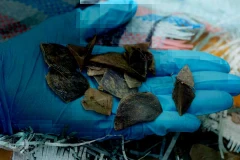
Smugglers disguise the sea cargo carried on a lorry travelling from Indonesia to Cambodia as dried fish skin. (Photo: National Parks Board)

Singapore seizes record haul of pangolin scales

The National Parks Board (NParks) confirmed that the scales originated from the species Manis javanica, commonly known as the Sunda pangolin, after conducting genetic analysis. This critically endangered species is native to South-east Asia, including Singapore.

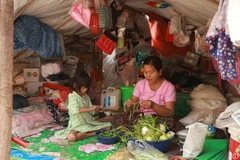
UN warns of deepening food crisis in Myanmar

UN warns of deepening food crisis in Myanmar

The crisis is also striking Myanmar’s farmers as they prepare for monsoon crops. With fertiliser demand expected to rise over the next three months, fuel shortages and rising input costs are threatening to push production expenses to double last year’s levels.

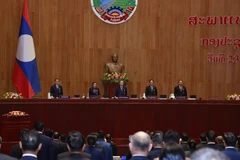
Lao National Assembly has approved in-principle a railway project linking Thakhek township in Khammouane province of Laos and the Mu Gia border gate in Vietnam’s Quang Binh province (Photo: kpl.gov.la)

Laos pushes rail link with Vietnam

The project is seen as a strategic step to help transform Laos from a landlocked country into one better connected to regional and global markets via the East–West Economic Corridor.