Singapore leverages technology to enhance elderly healthcare

The initiative, known as Future Health Technologies 2 (FHT2), was launched on March 28 with support from the National Research Foundation Singapore (NRF). It focuses on translating cutting-edge research into practical healthcare solutions by 2030.

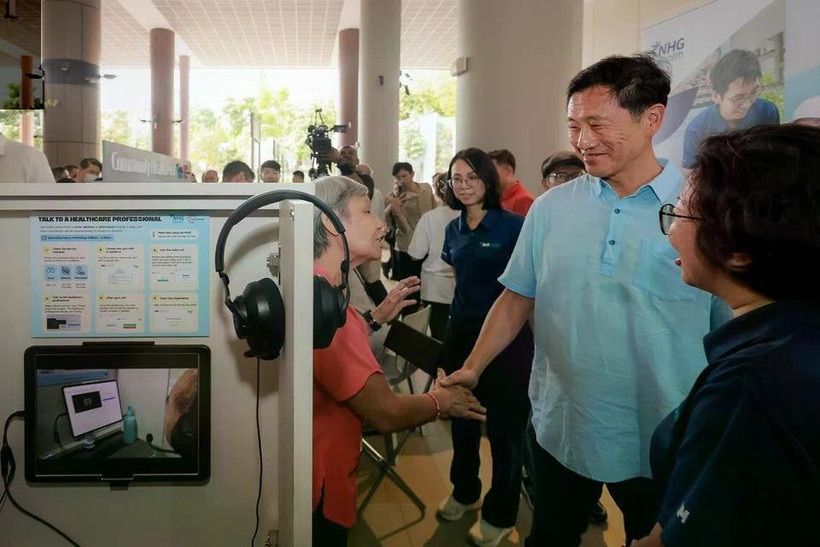
Singaporean Health Minister Ong Ye Kung touring exhibition booths at the NHG Health Musculoskeletal Day at Woodlands Hospital on March 28. (Photo: straitstimes.com)

Singapore (VNA) – Singapore is ramping up the use of advanced technologies to improve elderly healthcare through a 37.9 million SGD (over 29 million USD) programme aimed at promoting healthy ageing and strengthening the efficiency of its healthcare system.

The initiative, known as Future Health Technologies 2 (FHT2), was launched on March 28 with support from the National Research Foundation Singapore (NRF). It focuses on translating cutting-edge research into practical healthcare solutions by 2030.

Under the programme, a range of innovative technologies is being developed. Notably, artificial intelligence (AI) tools capable of predicting fracture risks within seconds and wearable sensors to assess fall risks are expected to help address musculoskeletal health and mobility - one of the programme’s three key pillars.

Researchers are also utilising “bone organoids,” lab-grown tissue derived from stem cells, to forecast patients’ responses to drugs and improve prevention strategies for high-risk groups.

NRF Chief Executive Officer John Lim said at the launched that beyond physical health, FHT2 targets mental and cognitive well-being by developing platforms that integrate large language models, behavioural science, and real-world data to deliver personalised interventions, particularly for young people coping with stress, anxiety, and depression. The third focus area is rehabilitation, including the use of technology to support upper limb recovery for stroke patients.

FHT2 builds on the first phase of the initiative launched in 2020, which produced tools for early dementia detection and digital applications supporting healthy lifestyles. According to co-director of the FHT2 programme Assistant Professor Bryan Tan, the new phase aims to accelerate the adoption of promising technologies into clinical practice, enabling patients to benefit directly from scientific advances.

The programme is expected to help shift Singapore’s healthcare system towards a more preventive, community-based approach amid its rapidly ageing population./.

VNA

See more

Cambodian legislature approves law on combating online scams

Cambodian legislature approves law on combating online scams

Organisers of online scam operations will face between 15 - 30 years in prison, or life imprisonment, if their activities lead to one or more deaths. Ringleaders of online scam centres will face between 5 - 10 years in prison and a fine of up to 1 billion KHR (250,000 USD). The penalties will increase to between 10 - 20 years in jail and a fine of up to 2 billion KHR if their operations involve violence, torture, illegal confinement, human trafficking, or forced labour.

Ahmed Albayrak, Research Associate at the Indo-Pacific Development Centre under Australia’s Lowy Institute (Photo published by VNA)

Expert urges integrated approach to energy security

An expert at the Indo-Pacific Development Centre under Australia’s Lowy Institute said focus should be placed on upgrading transmission systems, expanding energy storage, developing flexible gas capacity and promoting demand response, rather than setting additional capacity targets.

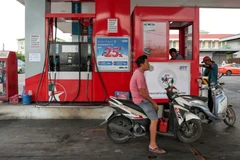
A petrol station in Indonesia (Photo: VNA)

Energy security: Opportunity to shape new cooperation between Indonesia and Vietnam

Indonesia and Vietnam could further concretise energy cooperation based on respecting each other's domestic needs while building a common stance on regional and global energy issues, according to retired Lieut. Gen. Lumban Sianipar, former Indonesian Defence Attaché to Vietnam and now a senior lecturer at the Indonesian National Resilience Institute (LEMHANNAS).

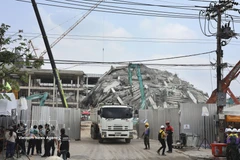
A building collapses in Bangkok, Thailand, following the impact of the March 28, 2025 earthquake in Myanmar. (Photo: Kyodo/VNA)

Thai capital upgrades disaster response capacity

Bangkok Deputy Governor Tavida Kamolvej said The BMA has significantly enhanced its urban search and rescue capabilities, integrating firefighters with emergency medical technicians to create hybrid units.

UN warns of deepening food crisis in Myanmar

UN warns of deepening food crisis in Myanmar

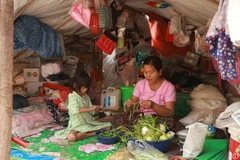
The crisis is also striking Myanmar’s farmers as they prepare for monsoon crops. With fertiliser demand expected to rise over the next three months, fuel shortages and rising input costs are threatening to push production expenses to double last year’s levels.

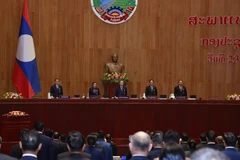
Lao National Assembly has approved in-principle a railway project linking Thakhek township in Khammouane province of Laos and the Mu Gia border gate in Vietnam’s Quang Binh province (Photo: kpl.gov.la)

Laos pushes rail link with Vietnam

The project is seen as a strategic step to help transform Laos from a landlocked country into one better connected to regional and global markets via the East–West Economic Corridor.

Malaysia rolls out measures to reduce healthcare costs

Malaysia rolls out measures to reduce healthcare costs

A report by BMI, a market research firm under Fitch Solutions, indicates that the focus of this policy is to increase the share of domestically produced medical products and establish a legal framework that prioritises essential medicines, especially generic drugs and biosimilars.

An aerial photo shows heavy vehicles and machinery being operated to collect coal along the coast of Peunaga Cut Ujong, Meureubo district, Aceh, on January 9, 2026. (Photo: Antara)

Indonesia plans coal export tax from April

The planned levy comes as Indonesia faces mounting fiscal pressure from higher global oil prices, which are driving up energy subsidy costs and raising the risk of a wider budget deficit.

Philippine President Ferdinand Romualdez Marcos Jr. (Photo: Kyodo/VNA)

ASEAN leaders to discuss oil, food and migrant labour

The Philippines holds the ASEAN Chairmanship in 2026 under the theme “Navigating our future, together,” with three key priorities: strengthening peace and security, enhancing economic connectivity, and empowering people.