Malaysia rolls out measures to reduce healthcare costs

A report by BMI, a market research firm under Fitch Solutions, indicates that the focus of this policy is to increase the share of domestically produced medical products and establish a legal framework that prioritises essential medicines, especially generic drugs and biosimilars.

Kuala Lumpur (VNA) – The Malaysian government will intensify support for domestic drug production to reduce healthcare costs and improve access to medicines for its citizens.

A report by BMI, a market research firm under Fitch Solutions, indicates that the focus of this policy is to increase the share of domestically produced medical products and establish a legal framework that prioritises essential medicines, especially generic drugs and biosimilars.

The Malaysian Ministry of Health will introduce a significant shift in its procurement policy, prioritising suppliers with investments in local production, while also strengthening its capacity to negotiate prices and making affordable generic drugs the default prescription option when available.

This strategy of prioritising generic medicines has yielded significant economic benefits, saving the Malaysian government more than 220 million USD over the past two years as of January 2026. It is also identified as a core objective in the 13th Malaysia Plan for 2026–2030 and the Health White Paper, aiming to reshape prescribing habits among physicians and strengthen public confidence in lower-cost, equivalent treatments.

Under Budget 2026, total public healthcare expenditure is set at 419 billion MYR (106.7 billion USD), marking the first overall contraction since 2020. However, the Ministry of Health will still receive 46.5 billion MYR, up from 45.3 billion MYR in 2025.

The strong promotion of domestically produced medicines is expected to create significant competitive pressure on pharmaceutical manufacturers seeking to expand their presence in this Southeast Asian nation./.

VNA

See more

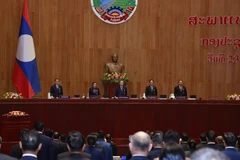
Lao National Assembly has approved in-principle a railway project linking Thakhek township in Khammouane province of Laos and the Mu Gia border gate in Vietnam’s Quang Binh province (Photo: kpl.gov.la)

Laos pushes rail link with Vietnam

The project is seen as a strategic step to help transform Laos from a landlocked country into one better connected to regional and global markets via the East–West Economic Corridor.

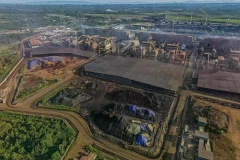
An aerial photo shows heavy vehicles and machinery being operated to collect coal along the coast of Peunaga Cut Ujong, Meureubo district, Aceh, on January 9, 2026. (Photo: Antara)

Indonesia plans coal export tax from April

The planned levy comes as Indonesia faces mounting fiscal pressure from higher global oil prices, which are driving up energy subsidy costs and raising the risk of a wider budget deficit.

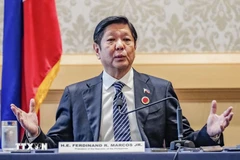
Philippine President Ferdinand Romualdez Marcos Jr. (Photo: Kyodo/VNA)

ASEAN leaders to discuss oil, food and migrant labour

The Philippines holds the ASEAN Chairmanship in 2026 under the theme “Navigating our future, together,” with three key priorities: strengthening peace and security, enhancing economic connectivity, and empowering people.

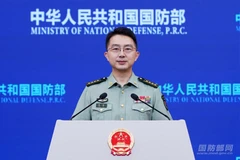
Spokesperson of the Chinese Ministry of National Defence and Deputy Director-General of its Information Office Col. Jiang Bin. (Photo: VNA)

China, Vietnam bolster military cooperation

Colonel Jiang Bin, spokesperson of the Chinese Ministry of National Defence and Deputy Director-General of its Information Office, described China-Vietnam ties as “profound”, noting the two countries are socialist neighbours working to build a China-Vietnam Community with a shared future of strategic significance. Military exchanges and collaboration have broadened in recent years, with new strides in high-level visits, joint training and border defence cooperation, he added.