Sweeping changes to regulations on deportation of offending foreigners take effect

To prevent prolonged illegal stays, the new rules allow immediate deportation for individuals unable to pay administrative fines, with enforcement of financial penalties suspended in such cases.

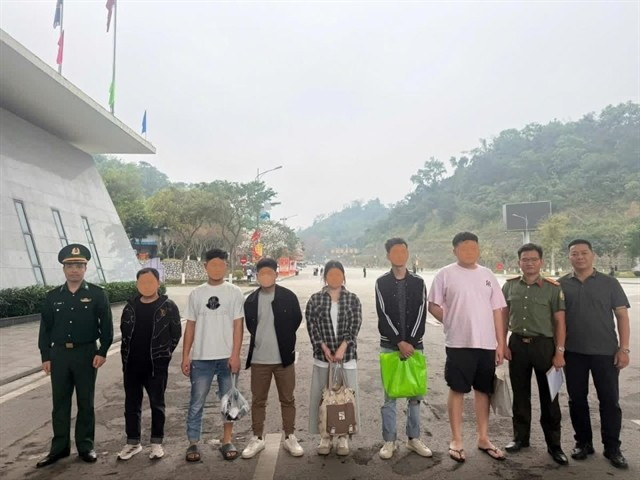
Lang Son provincial authorities on March 30, 2026, deported six Chinese nationals found to have entered Vietnam illegally. (Photo: Lang Son Police)

Hanoi (VNS/VNA) – Vietnam has overhauled its deportation regulations for foreign nationals, with a new decree starting effect on April 1, aimed at streamlining procedures while strengthening human rights protection.

Decree 59/2026/ND-CP, issued by the Government, replaces earlier provisions under Decree 142/2021 and sets out updated rules on deportation as an administrative sanction, as well as procedures for temporary detention, escort and management of foreign offenders awaiting removal.

The regulation, consisting of six chapters and 44 articles, applies to foreign nationals committing administrative violations within Vietnam's territory, contiguous zones, exclusive economic zone and continental shelf.

One of the most notable changes is the full digitalisation of the deportation process. For the first time, procedures ranging from case handling to detention and escort will be conducted electronically, enabling faster data processing and reducing reliance on paperwork.

The decree also introduces clearer provisions to protect women and children, embedding principles of gender equality and safeguarding lawful rights. This marks a more explicit and human-centred approach compared to previous regulations, which focused primarily on general protections of life and health. Minors awaiting deportation must now be held separately from adults, a measure aimed at preventing negative psychological and social impacts.

Foreign nationals subject to deportation are granted broader rights under the new rules. They may directly contact their country’s diplomatic or consular representatives and request a review of deportation decisions, going beyond the previous framework of general complaints and denunciations.

They are also entitled to legal representation or assistance, as well as interpreters when working with Vietnamese authorities.

Additionally, deportees must be informed of the reasons for their removal and receive the decision at least 48 hours before enforcement.

The decree clearly defines which authorities can issue deportation decisions, including the Director of the Immigration Department under the Ministry of Public Security, provincial police chiefs and heads of immigration divisions.

At the same time, it simplifies enforcement by allowing these officials to directly decide on management measures for individuals awaiting deportation, removing multiple layers of approval that previously slowed responses.

To prevent prolonged illegal stays, the new rules allow immediate deportation for individuals unable to pay administrative fines, with enforcement of financial penalties suspended in such cases.

The decree also expands circumstances under which deportation may be delayed. These include situations where the individual is involved in legal proceedings, suffers from serious illness or is affected by force majeure events such as natural disasters, epidemics or conflict.

Notably, the authority that issues the deportation decision is also empowered to approve postponements, streamlining the process.

Standards for detainees awaiting deportation have been raised, with daily food rations doubled in some categories, including an increase in meat from 0.1kg to 0.2kg and drinking water allowances from 1l to 2l.

Authorities are also required to provide detailed background information on deportees to designated accommodation facilities, enhancing monitoring and security.

Officials said the decree reflects Vietnam's broader effort to align domestic regulations with international human rights standards, particularly in handling vulnerable groups and ensuring due process./.

VNA
See more

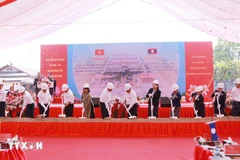
Representatives from both countries cut the ribbon to inaugurate the Friendship Primary and Secondary School in Salavan province of Laos (Photo: VNA)

Da Nang-funded school project strengthens Vietnam–Laos education ties

Funded by Da Nang city, the project includes a two-storey building with five classrooms, two offices and supporting facilities, at a total cost of nearly 6 billion VND (about 228,000 USD). Once operational, it is expected to improve educational infrastructure in Khongsedone district and Salavan province in general.

Students share their understanding and impressions of Vietnamese history during the class. (Photo: VNA)

Vietnam’s history, culture resonate in Singapore classroom

Courses such as Introducing Vietnam, therefore, not only provide knowledge but also create spaces for dialogue and cultural connection, strengthening the foundation of understanding and cooperation between Vietnam and Singapore, as well as with other countries in an increasingly integrated world.

Fishing vessels moored at An Thoi port. (File photo: VNA)

An Giang steps up action in line with EC's anti-IUU fishing recommendations

Over the past two years, An Giang's enforcement efforts have resulted in fines of nearly 30 billion VND (1.39 million USD) for vessels violating foreign waters, with 55 criminal cases prosecuted, including 33 that have already gone to trial. Violations related to loss of VMS connection and crossing maritime boundaries have also resulted in fines exceeding 26 billion VND.

Delegates at the ceremony (Photo: VNA)

Da Nang funds hospital project in Laos’ Sekong province

Secretary of the Da Nang municipal Party Committee Le Ngoc Quang said the central city of Da Nang has decided to provide 6.7 million USD in non-refundable aid from its local budget to support Sekong province in building the Da Nang–Sekong Friendship Hospital during the 2026–2030 period.

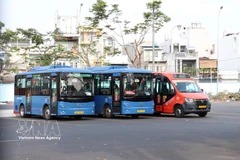
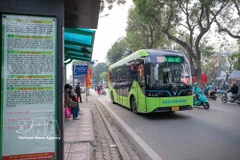
Hanoi rolls out 10 electric bus routes from April 1. (Photo: VNA)

Hanoi launches 10 electric bus routes from April 1

By the end of April, the number of buses using electricity and other green energy sources in the city is expected to reach 822, including 683 electric buses and 139 compressed natural gas (CNG) buses, representing 42.1% of the total number of vehicles.

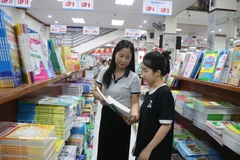
A parent chooses textbooks for her daughter ahead of the new school year. (Photo: VNA)

Free textbooks proposed nationwide from 2029–2030

The free textbook policy is scheduled to be implemented nationwide from the 2029–2030 school year. Localities with sufficient budget capacity are encouraged to introduce the scheme earlier, with priority given to border areas, islands, ethnic minority and mountainous regions, and areas facing particularly difficult socio-economic conditions.

Vesak celebrations in Vietnam in 2025 (Photo: VNA)

Religious freedom must not be separated from civic responsibility

The Vietnamese Ministry of Foreign Affairs has repeatedly rejected what it calls “unobjective and inaccurate” claims in various reports. Most recently on March 4, the US Commission on International Religious Freedom (USCIRF) released its 2025 Annual Report on international religious freedom, which gave biased allegations about the religious situation in Vietnam.