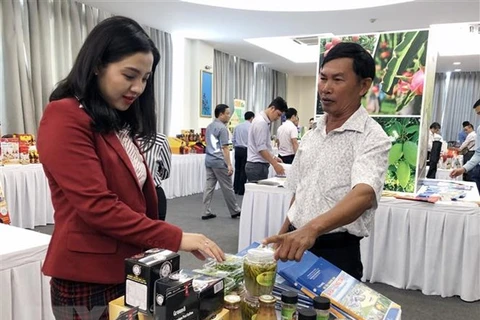
A panel discussion at the forum on connecting suppliers and distributors of Vietnamese high quality foods and agricultural produce in HCM City on December 20 (Photo: VNA)
 HCM City (VNS/VNA) - With increasing incomes, consumers are paying greater attention to products of high quality and health foods, and producers and distributors need to focus on such products, a forum on Vietnamese high quality foods and agricultural products heard in Ho Chi Minh City on December 20.
Nguyen Huy Hoang, commercial director of market research firm Kantar Worldpanel Vietnam, said a survey by his company had found food safety and health to be the top concerns of Vietnamese consumers.
With higher incomes, consumers tend to spend more on new kinds of goods, but fresh foods and fast moving consumer goods (FMCG) remain their main items of purchase, accounting for 26.8 percent of total spending in urban areas and 25.9 percent in rural areas.
Consumers spend around 27 billion USD on fresh foods annually, with “a greater focus on consumption of products that are good for their health, especially organic products”, he said.
Nguyen Quoc Toan, acting director of the agriculture ministry’s Agro Processing and Market Development Authority, said: “Consumers tend to have higher requirements in terms of product quality, origin and distribution methods.”
The country’s farm produce exports are expected to reach 40 billion USD this year, higher than the target set by the Government.
Vietnamese farm produce is sold to many markets around the world, including fastidious ones such as the US, EU and Japan.
But in the 97 million people domestic market, the agricultural sector and other relevant sectors as well as authorities need to focus on improving the quality of farm produce and food products, he said.
Hoang said producers and traders need to supply products with clear origins, labels and manufacturing and expiry dates and carrying the health benefits.
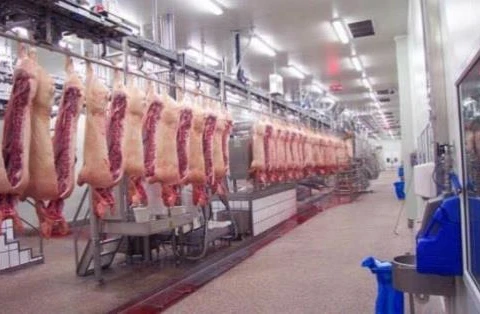
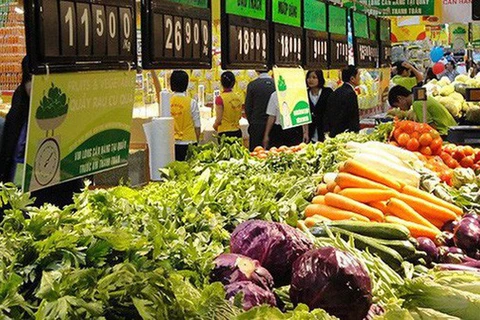
Producers need to diversify their products, especially fruits, vegetables and white meat (such as fish and seafood), which consumers tend to consume more, he said.
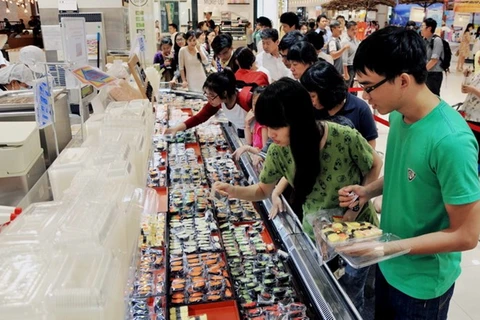
With more and more people having a busy life, distributors need to increase the supply of semi-processed and ready-to-eat products or invest in convenient stores and services to offer greater shopping convenience, he said.
Finally, producers and traders need to capture the high-end segment, targeting high-income families and families with small children, thereby boosting sales of organic and nutrient-rich products, he added.
Vu Thanh Hoa of the Agro Processing and Market Development Authority said to guarantee sales and ensure proper quality of farm produce, all cities and provinces have developed supply chains for clean and safe farm produce.
Hoa said there are nearly 1,100 supply chains for safe farm produce including vegetables, fruits, tea, pork, egg, rice and seafood across the country, with more than 1,420 products and nearly 3,180 points of sale placed in supply chains for greater control.
But demand for safe farm produce is much higher and the country has set a target of at least 50 percent of key farm produce in each locality being placed in supply chains by 2020, she said.
To develop more safe food supply chains, she said relevant agencies and localities need to enhance dissemination of hygiene and food safety regulations and application of good agricultural practices, and persuade enterprises to enhance linkages with farmers.
The Government should have policies to help stakeholders in safe food supply chains obtain certificates and promote their products, she said.
Organised by the High Quality Vietnamese Products Business Association and the Agro Processing and Market Development Authority, the forum also discussed measures to promote export of Vietnamese farm produce.
Vu Kim Hanh, chairwoman of the association, said to ensure export success, enterprises must firstly assess market demand to come up with appropriate products and market strategies.
Nguyen Dinh Tung, general director of Vina T&T Group, said market information is an important factor in boosting export of farm produce because each market has its own regulations.
Tung said market orientation, planning cultivation areas, ensuring product quality, and building brands for Vietnamese farm produce are among factors that would help Vietnamese farm produce penetrate developed markets.
The forum was followed by a direct meeting between producers of food and farm produce and retailers including VinCommerce, Saigon Co.op, Big C, Trung Nguyen Coffee HyperMarket and Vina T&T to explore business cooperation. — VNS/VNA
VNA