Hanoi (VNA) – Amid growing export headwinds, the first Glorious Spring Fair 2026 is shaping up as more than a traditional exhibition, emerging as a form of “soft infrastructure” for trade promotion, particularly for Vietnam’s high-potential yet underdeveloped Halal industry.
A key highlight of the event is its new format. Instead of a retail-focused fair, it operates as an integrated platform combining product showcases, business matching, policy dialogue and international market outreach.
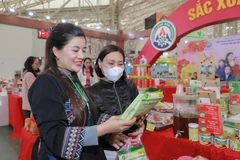
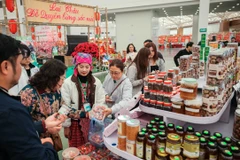
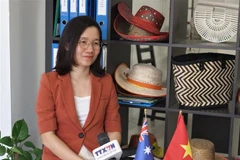
Ba Thi Nguyet Thu, Director of Hanoi Xanh Cooperative, said the scale and professionalism of the fair exceeded expectations. While the cooperative had mainly targeted overseas markets, 2026 marks a turning point toward parallel domestic development. The fair therefore functions as a dual springboard, allowing firms to gauge local consumer response while forging global connections at home.
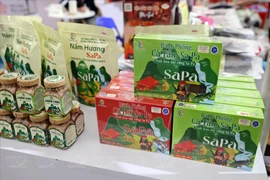
From the opening day, the cooperative’s booth drew strong visitor interest, suggesting Halal products are increasingly appealing not only to Muslim consumers but also to buyers seeking safe, transparent and high-standard goods, Thu noted.
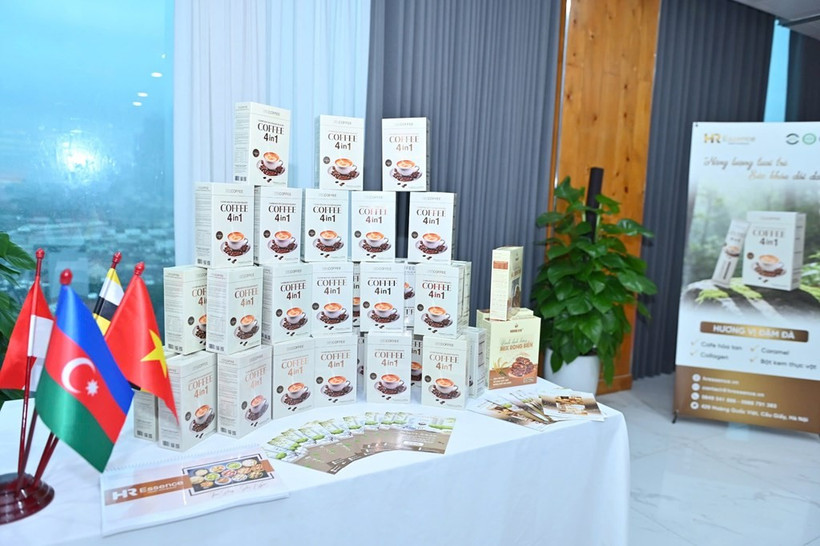
The event also reflects a shift in trade promotion thinking, from searching for outlets to meeting standards so as to be selected. Hanoi Xanh exemplifies this approach, operating a closed value chain from raw material zones and research to deep processing and marketing, underpinned by international standards such as FDA compliance and Halal certifications from Türkiye, India and Malaysia.
According to Thu, certification is not merely an export passport but proof of transparent quality that helps enterprises compete without relying heavily on marketing. The fair has thus become less a sales venue and more a platform for businesses to demonstrate capabilities, including compliance, traceability and responsiveness to market requirements.
She added that cross-border e-commerce is central to the cooperative’s export strategy. Its products are already available on Alibaba under the “Halal Viet” store, which also promotes other Vietnamese Halal producers, and preparations are underway to expand to Amazon.
Participation in international Halal exhibitions in Türkiye and the receipt of 10 sample orders have shown that Halal is far from a niche market but a vast consumer ecosystem with demanding standards and matching opportunities. In that context, the fair serves as a domestic launchpad for product testing, model refinement and global readiness.
More broadly, the Halal presence at the fair reflects a wider shift in local trade promotion strategies. Localities such as Khanh Hoa and Da Nang are increasingly viewing Halal as a pathway to diversify exports and attract visitors and investment from Muslim markets.
With an estimated market size of 7.5–10 trillion USD and nearly two billion consumers, Halal now extends beyond food into tourism, services, logistics and cross-border e-commerce.
Pham The Cuong, Vietnam’s Trade Counsellor in Indonesia, said the main constraint facing Vietnamese firms is not opportunity but limited certification and insufficient preparation in processes, human resources and finance. In this sense, fairs like Spring Fair 2026 function as practical classrooms where businesses learn standards, understand markets and build an integration mindset.
The fair’s greatest value for Halal products lies less in immediate revenue than in building trust and standardising business practices. In a market where certification determines entry, it highlights that expansion must begin with fundamentals, standards, raw materials, production processes and readiness.
Ultimately, the event not only creates sales opportunities but also helps shape a new ecosystem in which standards, linkages and digitalisation form the pillars of a sustainable export strategy. Amid global uncertainty, initiatives like Spring Fair 2026 may determine whether Vietnamese firms enter major markets through preparation and long-term vision rather than chance./.