STEM Innovation Petrovietnam launched to power Vietnam’s future workforce

It plans to build 100 standardised STEM labs in 34 cities and provinces, marking the biggest education project ever undertaken by a Vietnamese state-owned enterprise.

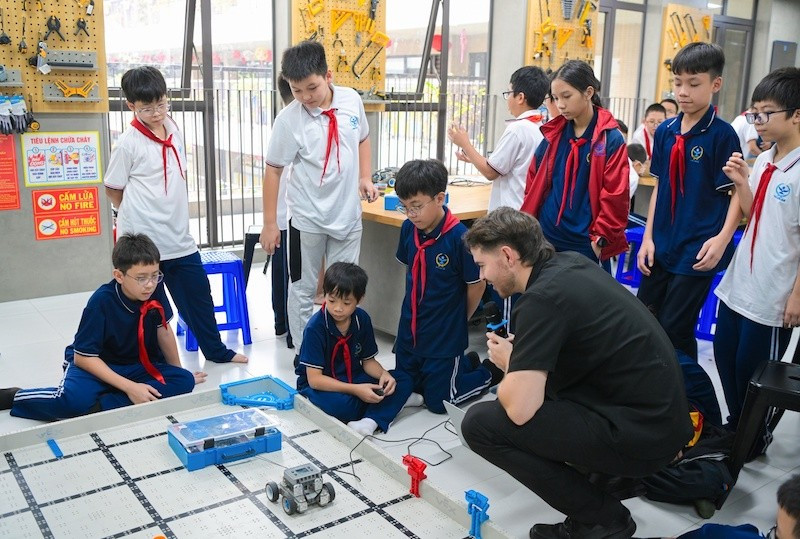
A STEM lab at a school (Photo: baodautu.vn)

Hanoi (VNA) – The Vietnam National Industry - Energy Group (Petrovietnam) has launched a nationwide education programme called STEM Innovation Petrovietnam to equip the next generation with sci-tech skills critical to the country’s energy transition and industrial modernisation.

The programme, spurred by Party General Secretary To Lam, kicked off on September 21. It plans to build 100 standardised STEM labs in 34 cities and provinces, marking the biggest education project ever undertaken by a Vietnamese state-owned enterprise.

A strategic bet on human capital

The programme aligns with the Politburo’s resolutions on innovation and education reform, seeking to modernise learning facilities and outfit youth with skills in science, technology, engineering and mathematics (STEM). It underscores Petrovietnam’s determination to support the nation’s strategy for a quality workforce in the new period.

The labs will meet global standards, giving students and educators practical exposure to cutting-edge gear in artificial intelligence, Internet of Things, robotics and digital tools. The programme also advances creative STEM teaching, scientific research and a nationwide STEM ecosystem to guide careers, spark entrepreneurship and match Industry 4.0 demands.

It features teacher training and knowledge-sharing sessions across school systems, while fostering research in education and technology. Domestic labs will link with global networks, starting with Singapore, plus local university and institute facilities to nurture talented students.

Petrovietnam aims to finish all 100 labs by the late 2025, with its Party Committee deploying a national rollout plan right after launch. Each locality gets three labs, including two for high schools and one for secondary schools, with priority given to disadvantaged and border areas.

To date, 11 labs have been completed, and surveys, evaluations and construction plans are set for the remaining 89. The group is coordinating with local officials and units to fast-track procurement and setup, targeting delivery of all 100 global-standard labs within 100 days, ahead of the December 31, 2025 deadline.

Building “knowledge infrastructure”

The programme stands out not just for modern classrooms but for forging a linked education network. It connects labs countrywide, kicks off ties with Singapore’s system, and rolls out custom curricula, specialised materials and a network of local master trainers for long-term growth.

Petrovietnam described this as an investment not just in “educational infrastructure,” but in “knowledge infrastructure”, preparing a new generation of high-skilled professionals ready to lead in the era of industry-energy-digital technology.

Experts called this “investment in intellectual energy” a way to create a “knowledge cycle”, where today’s students will become the engineers, managers and innovators driving Vietnam’s future industrial and energy projects.

At Cau Giay Secondary School in Hanoi, sixth-grader Nguyen Kieu Minh said that smart learning tools make science “more vivid and engaging”. In Nghe An province, Dang Vu Duc Duy from Kim Lien High School said first-time hands-on experiments turned lessons “exciting and inspiring”.

Nguyen Thi Mai, Vice Principal of Cau Giay Secondary School, said the modern classrooms help strengthen interdisciplinary teaching and encourage creative scientific thinking.

Doan Thi Thanh Huong, Principal of Tay Mo Secondary School, hailed it as a move to “borderless learning,” letting students link globally, widen views and grow as global citizens.

Over the 100-day sprint, Petrovietnam and advisors have held regular discussions to refine rollout, ensuring labs run smoothly and power Vietnam’s budding STEM network. Tailored lesson plans and training kits are also in the pipeline.

The group continues to work closely with local authorities and schools to speed up construction and installation, aiming to quickly connect knowledge, ignite creativity and inspire science passion among students nationwide.

STEM Innovation Petrovietnam embodies the company’s view that investing in people secures the nation’s tomorrow. For Petrovietnam, business expansion pairs with public duty, and innovation means both a driver of progress and a duty to nurture the next generation./.

VNA

See more

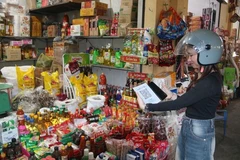
From early December, major retail chains in Ho Chi Minh City have recorded a noticeable increase in shoppers seeking Tet products. (Photo: VNA)

HCM City businesses ramp up production to meet Lunar New Year demand

From early December, major retail chains in the city have recorded a noticeable increase in shoppers seeking Tet products. Many consumers are taking advantage of promotional programmes to purchase gift items with long shelf lives, such as confectionery, soft drinks and processed foods, well ahead of the holiday peak.

Workers process fish to be tinned for export at KTC Canned Food Factory under Kien Giang Trading JSC. (Photo: VNA)

Vietnam to host seminar on export growth strategies

Vietnam's exports rose 16.1% to 430.2 billion USD in the first 11 months of 2025, while total trade hit 839.8 billion USD during the same period. This strong performance shows that exports remain a key driver of economic growth, boosting Vietnam's standing on the world stage in recent years.

The vessel carrying the 2 millionth TEU arrives at Hai Phong Port. (Photo:VNA)

Hai Phong Port reaches 2-million-TEU milestone

Handling the 2 millionth TEU in 2025 not only demonstrates Hai Phong Port’s operational capacity and the collective efforts of its workforce, but also highlights its increasingly important role in regional and global supply chains, the confidence of shipping lines, logistics firms and the business community, and the effectiveness of policies to improve the investment climate and strengthen maritime infrastructure and services.

Melons labelled with traceability codes on display at the Song Van agricultural produce store in Ninh Binh city, Ninh Binh province. (Photo: VNA)

Tracing origins hindered by fragmented data systems

As the Government accelerates the digital economy, establishing a unified national traceability system has become a crucial move to end data fragmentation and disconnection among ministries, sectors and localities.

Hyundai unveils its new Avante Hybrid model in Seoul, the Republic of Korea, on August 13, 2020. (Photo: Yonhap/VNA)

Tax cuts poised to ignite Vietnam’s hybrid vehicle boom from 2026

Experts forecast that 2026-2030 will mark a period of strong growth for hybrid vehicles in Vietnam, a trend that will invigorate the automotive sector while supporting national objectives on emissions reduction, sustainable development and the broader transition to green mobility.

Illustrative image (Photo: VNA)

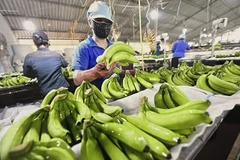
Vietnam targets 1 billion USD in banana exports

Bananas have been identified as a priority product under the Project for the Development of Key Fruit Crops to 2025, with a vision to 2030, approved in October 2022. Under the plan, banana acreage is projected to reach 165,000–175,000ha by 2030, with output of 2.6–3 million tonnes.

Deputy Minister of Foreign Affairs Nguyen Minh Hang (Photo: VNA)

Event connects Vietnamese businesses with African countries

Deputy Foreign Minister Nguyen Minh Hang held that to develop Vietnam – Africa ties more strongly and substantively, it is necessary to promote the engagement of businesses, and that the Government will create favourable conditions for them to enhance fruitful cooperation.

Deputy Prime Minister Ho Duc Phoc (R) and Independent Non-executive Chairman of AIA Mark Tucker at their meeting in Hanoi on December 12. (Photo: VNA)

AIA Group envisions long-term investment, cooperation in Vietnam

Over 25 years of operation in Vietnam, AIA has achieved positive results. Its premium revenue ranks among the top five life insurers, reaching nearly 14.83 trillion VND (563.71 million USD) in 2024 and an estimated 15.73 trillion VND in 2025, equivalent to around 10% of the market share.

A view of the 2025 Japan business roundtable in HCM City on December 12. (Photo: VNA)

Ho Chi Minh City courts Japanese investment with growth blueprint

Ha underscored the pivotal contributions of Japanese firms, which have long supported local socio-economic progress through major infrastructure projects, industrial zones and workforce training courses. To date, Japanese companies have invested more than 15 billion USD in over 2,200 projects, reflecting sustained confidence and commitment to the market.