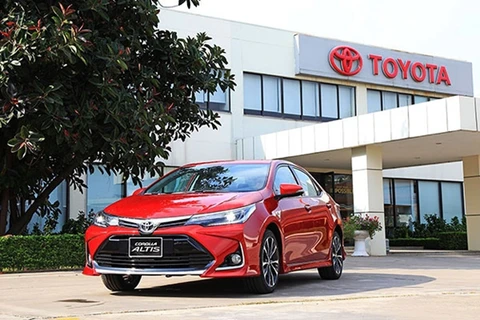
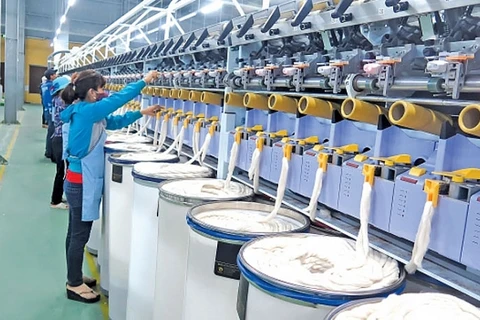
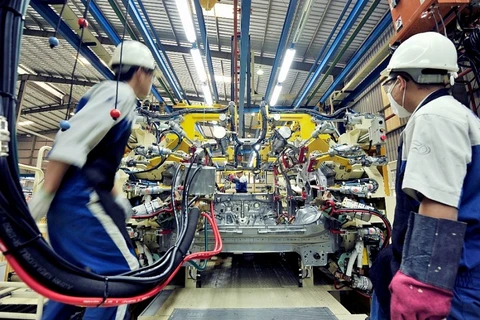
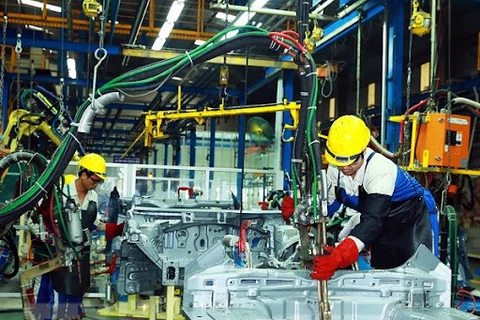
Illustrative image (Photo: VNA)
 Hanoi (VNA) – The Government have issued a host of preferential policies for businesses operating in supporting industries over the past time. However, their beneficiaries have said it is difficult for them to access incentives and support from these policies.
In June 2021, the Prime Minister has issued a decree supplementing a previous one on corporate income tax incentives for supporting industry projects.
Accordingly, beneficiaries include enterprises having investment projects implemented before January 1, 2015 on manufacturing supporting industry products on a list of those prioritised for development.
In 2020, the Government issued a resolution on solutions to the development of supporting industries, which set out specific goals for the sector by 2025 and 2030 as well as financial and credit incentives for enterprises involved.
In 2015, a decree on developing supporting industries was issued, offering support policy for organisations and individuals participating in the research and development of prioritised supporting industry products.
However, a large number of firms operating in the field have been facing hurdles accessing the Government’s preferential policies, particularly regarding credit and interest rate.
The reason is that in order to get a loan, businesses need to meet many conditions. Most supporting industry enterprises have small scale, limited financial capacity, no or very little collateral. The demand for loans is often large compared to the size of their assets.
Moreover, the loan needs of supporting industry firms are mostly for medium and long-term to invest in machinery, equipment, and production lines, while preferential credit policies usually apply only to short-term capital and have a small scope of incentives.
In order to realise policies and incentives for supporting industry development into life, opening up opportunities for firms to participate in the global value chain, it is necessary for ministries, branches and localities to come up with relevant solutions and facilitate businesses in accessing the incentives.
Vietnamese enterprises operating in the support industry account for 4.5 percent of the total number of enterprises operating in processing and manufacturing in the country.
Businesses specialising in supporting industries employ 8 percent of the industrial sector’s workforce and contribute 900 trillion VND (39.5 billion USD) or 11 percent of the industrial sector’s total revenue.
Vietnamese enterprises have many opportunities to provide products to assembling and manufacturing enterprises abroad, thus further expanding the country’s supporting industry in the future.
Boosting the development of the supporting industry is one of the important solutions for Vietnam to improve the quality of the economy, ensuring sustainable development avoiding the middle income trap and enhancing the country’s capacity of attracting foreign investment.
The efforts are also expected to encourage and assist domestic firms to join deeper into the supply chain of foreign-invested companies as well as the global supply chain.
The Vietnamese Government approved Resolution 115/NQ-CP in August last year, which clarified solutions to promote Vietnam’s supporting industries, giving specific goals for the sector such as ensuring high level of competitiveness in the next decade. Especially in 2025, Vietnamese firms are expected to meet 45 percent of the basic demands for domestic production and consumption with about 1,000 businesses capable to directly supply supporting products to assembling companies and multinational groups in the Vietnamese territories.
With the same purpose, in late 2020, the Ministry of Industry and Trade launched the Vietnam Technology Advice and Solutions from Korea Centre (VITASK) and a mold technology centre.
The establishment of these facilities showed the desire to boost the growth of the supporting industry in a strong manner as well as promote cooperatikn and investment to enhance the capacity of Vietnamese firms in engaging deeper into the global supply chains, meeting the demand for seeking high quality human resources or promissing partners from the Republic of Korea in Vietnam./.
VNA