Tech giants eye Binh Duong as Vietnam's emerging high-tech hub

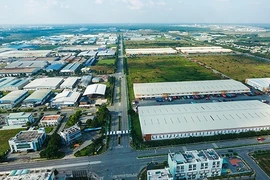
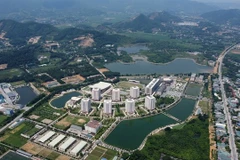
Over the past three decades, Binh Duong has cemented its status as one of Vietnam’s most dynamic industrial hubs, building a robust foundation in manufacturing, exports, and investment. The province now has 30 operational industrial parks spanning over 13,000 hectares, with an occupancy rate exceeding 90%.

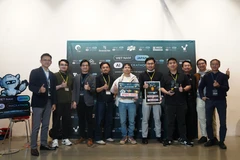
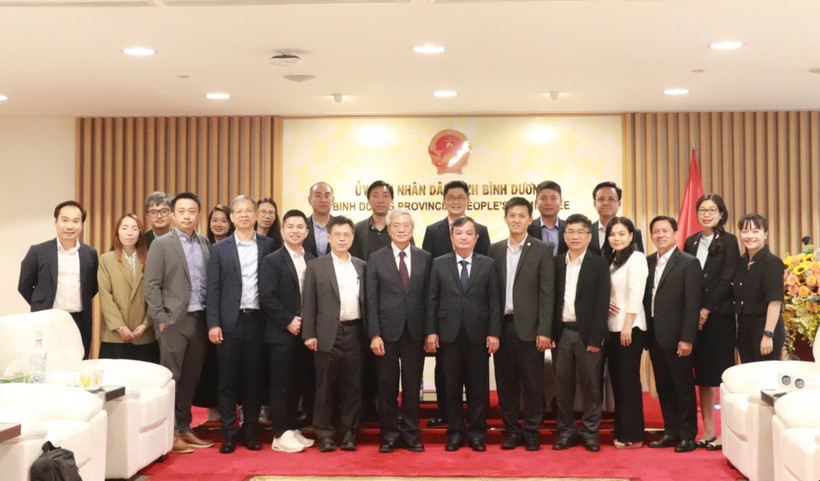
Leaders of the Binh Duong Provincial People's Committee meet with a delegation from Taiwan (China)'s MiTAC Group. (Photo: VNA)

Binh Duong (VNA) – A series of recent high-level meetings between Binh Duong leaders and major foreign tech corporations have underscored the southern province’s strategic vision to position artificial intelligence (AI), semiconductors, and the digital economy as pillars of its sustainable growth model.

During a meeting with the provincial authorities on June 13, Ryan Sim, AMD’s Regional Director for Asia-Pacific and Japan, expressed strong interest in potential cooperation in high-tech industries, human resource training, and the development of a semiconductor ecosystem.

The US-based conglomerate is among the world’s leading providers of high-performance processors, AI accelerators, and computing platforms serving industries such as supercomputing, defence, e-government, and generative AI. Its growing interest in Binh Duong signals the province’s increasing relevance in global technology value chains.

As the global semiconductor supply chain undergoes restructuring, Vietnam is emerging as an increasingly attractive destination thanks to its strategic location, political stability, and open economic policies. Binh Duong, in particular, stands out with its integrated industrial infrastructure, adaptive mechanisms, and forward-looking governance.

As of mid-June, the province had attracted more than 4,500 foreign direct investment (FDI) projects from 65 countries and territories, with total registered capital exceeding 42.7 billion USD. Of these, the US had 138 projects worth nearly 1.4 billion USD. These figures highlight significant room for deeper cooperation, especially in core technology sectors.

At a separate meeting with local leaders, Su Liang, Chairman of MiTAC - a multinational tech firm headquartered in Taiwan (China) and operating in over 70 countries with four decades of experience in core technology development and systems integration – praised Binh Duong’s smart city ambitions. He expressed interest in concrete projects such as urban rail systems, smart lighting, and AI-powered city surveillance, while noting that MiTAC’s solutions align well with the province’s digital transformation goals.

Vice Chairman of the provincial People’s Committee Bui Minh Tri affirmed Binh Duong’s commitment to facilitating project implementation, especially in sectors poised to drive a transformation of the local growth model.

Speaking to the press, Bui Thanh Nhan, head of the provincial Party Committee’s Commission for Information, Education and Mass Mobilisation, said the two meetings clearly demonstrate a new vision in the local investment attraction strategy – one that avoids being scattered or focused on quantity, and instead prioritises high value-added, environmentally friendly, and knowledge-intensive industries.

Over the past three decades, Binh Duong has cemented its status as one of Vietnam’s most dynamic industrial hubs, building a robust foundation in manufacturing, exports, and investment. The province now has 30 operational industrial parks spanning over 13,000 hectares, with an occupancy rate exceeding 90%. Under its development plan through 2030 with a vision to 2050, Binh Duong aims to establish around 10 new industrial parks, prioritising high-tech and eco models./.

VNA

See more

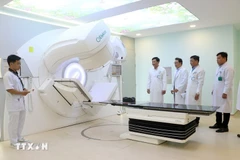
Doctors from Cho Ray Hospital (Ho Chi Minh City) and Vinh Long General Hospital (Vinh Long province) test the operation of a linear accelerator radiotherapy system for cancer treatment (Photo: VNA)

Vietnam sets orientations for applying nuclear energy across sectors

The plan aims to ensure the effective implementation of Decision No. 245/QD-TTg dated February 5, 2025, which approved the national master plan, while concretising objectives, orientations, solutions and resources for applying radiation and radioisotopes across sectors. It also assigns responsibilities to ministries, sectors and localities, and sets roadmaps and priorities for key programmes and projects.

Prime Minister Pham Minh Chinh and delegates visit booths showcasing products at TechFest Vietnam 2025. Photo: VNA

Vietnam to become attractive destination for tech talent, innovative startups: PM

TechFest Vietnam 2025, held from December 12 to 14, is expected to attract more than 60,000 participants both in person and online, with the participation of over 20 corporations, 50 investment funds, more than 100 supporting organisations and incubators, and delegates from Southeast Asia, Northeast Asia, Central Asia, the Middle East, North America, and Europe.

Police offiers mornitor the traffic through AI camera (Photo: VNA)

Applying the Internet of Things in smart transport

The project aims to build a unified, safe and efficient IoT platform to support the management, operation and exploitation of smart transport systems under the Ministry of Construction, with data shared across ministries and localities.

Through long-term commitment, Viettel has brought millions of Burundians into the mobile era and become the first operator to roll out 5G in the country, Viettel Burundi CEO Phan Truong Son noted. (Illustrative photo: VNA)

Viettel secures three prestigious international awards

Viettel has won honours in the “People & Culture” and “Best Operator in a Growth Market” categories at the 2025 World Communication Awards (WCA), alongside the “Best Digital Transformation Project” at the 2025 Global Telecoms Awards (Glotel).

A view of the Can Gio sea-encroaching urban area project (Photo: VNA)

Green-tech push for Can Gio

Vietnam has the capacity, ambition and technological foundation to join the group of leading sustainable coastal urban nations in the coming decade, experts said at a dialogue on "advancing to the sea with ESG++ megacities: breakthroughs through green technology", held on December 9 in Hanoi by the Vietnam Institute for Real Estate Studies (VIRES).

Minister of Science and Technology Nguyen Manh Hung speaks at the meeting (Photo: VNA)

Vietnam turns intellectual property into bankable assets in new law

About AI-generated content, the law draws a clear line: purely autonomous AI creations are not eligible for copyright or patent protection. Those who provide substantial creative input, such as ideas, curation, editing, or selection, qualify as authors or inventors.

Lieutenant General Nguyen Minh Chinh, NCA Vice Chairman, speaks at the launch ceremony of the southern branch of the National Cybersecurity Association. (Photo: VNA)

National Cybersecurity Association opens branch in HCM City

The southern branch aims to become a coordinating body for cybersecurity tasks, workforce development, awareness-raising and the strengthening of digital defence capabilities across the region, contributing to the safe and sustainable growth of Vietnam’s digital economy.

Viettel exceeds target of 20,000 new 5G stations by more than three weeks. (Illustrative photo: VNA)

Viettel exceeds target of 20,000 new 5G stations by more than three weeks

Viettel plans to continue scaling up its network from now until the end of 2025, with an additional 23,500 stations scheduled for installation, nearly quadruple the number rolled out in 2024. Once completed, Viettel will operate Vietnam’s largest 5G network, with 30,000 stations covering 90% of outdoor areas and 70% of indoor spaces nationwide, from major cities to rural regions.

In Vietnam, demand for infrastructure supporting AI, cloud computing, and digital services is rising at an unprecedented level. (Illustrative photo: VNA)

Vietnam emerges as new hub for data centres

Data centres have surged to become the second most preferred alternative asset class in the region. Vietnam is no exception to this trend as the demand for infrastructure supporting AI, cloud computing, and digital services has risen at an unprecedented level.