Trade ministry issues warning as Middle East tensions threaten global trade

A trade official has suggested companies work closely with shipping lines, airlines, and freight forwarders to monitor routes, transit times, and potential surcharges while exploring broader cargo insurance to cover risks like war and terrorism.

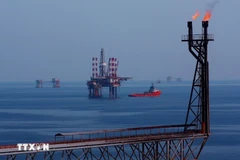
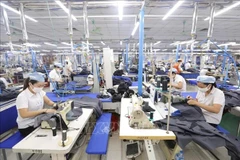
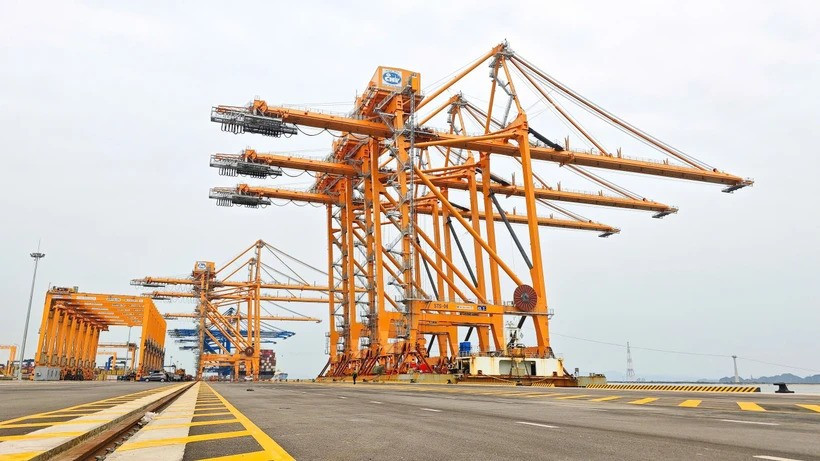
Illustrative image (Photo: VNA)

Hanoi (VNA) – The Ministry of Industry and Trade (MoIT) has issued a stark warning to businesses, urging them to closely monitor the escalating tensions between Israel and Iran that threaten to disrupt global trade, according to a ministry official.

Speaking at a regular press conference in Hanoi on June 19, Deputy Director of the MoIT’s Agency of Foreign Trade Tran Thanh Hai pressed companies to stay updated via the Ministry of Foreign Affairs, the MoIT, and trusted news sources to gauge risks and swiftly adjust operations.

Hai stressed rigorous scrutiny of export-import contracts, particularly key terms concerning freight charges, delivery schedules, insurance coverage, and force majeure provisions, to shield against disruptions.

He cautioned against the peril of leaning too heavily on a single market or shipping lane – a vulnerability that could prove risky in the current landscape. Instead, Hai advocated diversification: new markets to conquer, and logistics partners with safer routes to forge alliances with. Supply chain resilience, he insisted, hinges on contingency plans – alternative raw material sources or, perhaps, the adoption of multimodal transport solutions like international rail freight, which could optimise costs and ensure timely deliveries. Maintaining open lines with import partners is also key to navigating volatile conditions, he noted.

Companies, he continued, should work closely with shipping lines, airlines, and freight forwarders to monitor routes, transit times, and potential surcharges while exploring broader cargo insurance to cover risks like war and terrorism. With global oil prices and currency fluctuations posing added threat, Hai called for heightened vigilance against foreign exchange risks, pointing firms toward the MoIT, Vietnam’s overseas trade offices, or embassies for timely support.

“The Middle East’s geopolitical volatility is a serious risk to global trade flows,” Hai said. “Vietnamese companies must be agile, prepared, and armed with robust contingency plans to weather the storm and keep their operations afloat.”/.

VNA

See more

The relocation of check-in counters aims to better meet the travel needs of residents and visitors. (Photo: VNA)

Vietjet shifts domestic check-in at Tan Son Nhat from January 13

During the recent New Year 2026 holiday peak, Vietjet added 380 flights, equivalent to nearly 78,000 additional seats, on many key domestic routes linking Hanoi and Ho Chi Minh City with destinations such as Vinh, Thanh Hoa, Hai Phong, Da Nang, Phu Quoc, Nha Trang and Da Lat.

Commercial banks are providing approximately 88% of total green credit outstanding in Vietnam. (Photo: nhandan.vn)

Capital sources expanded for sustainable growth

According to the State Bank of Vietnam (SBV), by the end of November 2025, outstanding green credit was estimated at around 750 trillion VND (28.55 billion USD), with an average growth rate exceeding that of overall credit in the economy.

Customers select goods at a supermarket. (Photo: VNA)

Retail market expands sharply, sustainability challenges persist

According to a report on recently released by the Ministry of Industry and Trade’s Agency for Domestic Market Surveillance and Development, the size of the market reached more than 7 quadrillion VND (about 266 billion USD) in 2025, up around 10% compared with 2024.

Oil rigs at the Bach Ho oil field. (Photo: VNA)

Resolution 79: State economy to lead growth

Resolution 79 is described as a “clear action declaration” by the Politburo, saying the state economy is not only responsible for maintaining macroeconomic stability, but must also become the force leading a new growth model that is green and sustainable.

Workers at Garment 10 Corporation produce apparel for export. (Photo: Nhan Dan)

Leveraging export advantages within RCEP region

In 2025, seafood exports to China alone exceeded 2.2 billion USD, up about 33% compared to 2024. Shipments to Japan fetched nearly 1.7 billion USD, a year-on-year increase of 14.6%, while those to the Republic of Korea and Australia grew by 9.6% and 3.2%, respectively.

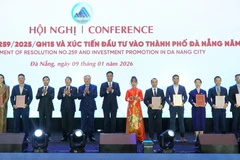
Certificates of membership in the Vietnam International Financial Centre in Da Nang are awarded at the conference on January 9. (Photo: VNA)

Da Nang continues targeted investment promotion approaches

According to Chairman of the Da Nang People’s Committee Pham Duc An, the city prioritises building sustainable economic ecosystems and focuses on key breakthrough sectors with strong spillover effects, including high technology and digital transformation, logistics, urban infrastructure, finance, processing and manufacturing industries, high-tech agriculture, and the pharmaceutical and medicinal herb industry.

In 2025, Hyundai sales reached 53,229 vehicles across the Vietnamese market. (Illustrative photo: Yonhap/VNA)

Hyundai sales in Vietnam rise almost 23% in December

In 2025, sales reached 53,229 vehicles across the market, a result considered a testament to the efforts by TC Group, Hyundai Thanh Cong, and the entire Hyundai dealership network nationwide amidst a volatile market.

Hydroponic vegetable cultivation model at the High-Tech Agricultural Park (Photo daibieunhandan.vn)

HCM City accelerates shift toward ecological urban agriculture

​The city’s agricultural sector is undergoing a strong transformation, restructuring toward higher value-added and sustainable development. In recent years, the sector has maintained steady growth, with agricultural, forestry and fisheries output rising by an estimated 2.5% annually.

Illustrative photo (Photo: VNA)

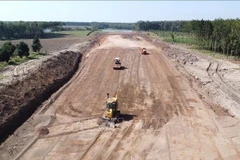
Dong Nai to launch major projects ahead of 14th National Party Congress

The launch of work on these projects represents an important political event for the province as they demonstrate the strong commitment of the entire political system to developing a comprehensive and modern infrastructure network, enhancing inter-regional connectivity, and addressing social welfare needs.