Truong Sa – A sacred homeland in the hearts of OVs

Each year, delegations of overseas Vietnamese are invited to visit Truong Sa (Spratly) as a gesture that underscores the deep national unity shared between Vietnamese at home and abroad. For many, it is not only a journey to the frontline of the nation’s sovereignty but also a symbolic return to their roots.

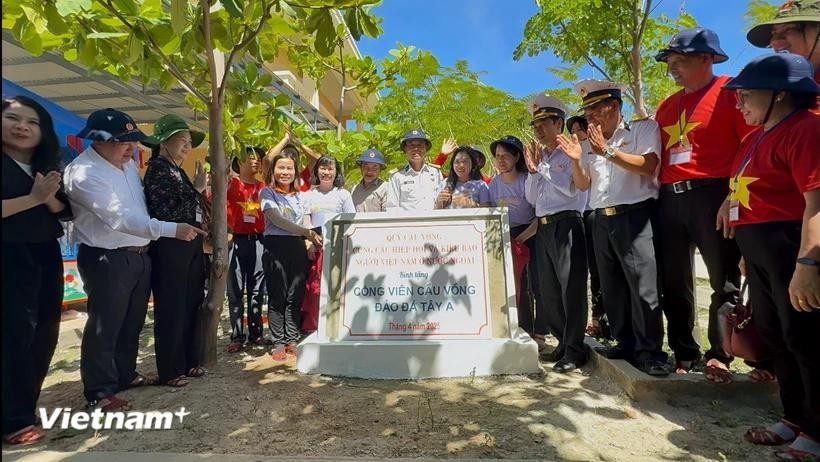
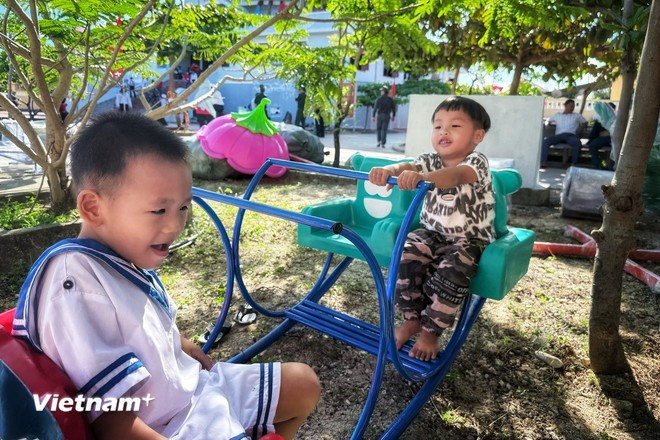
The Rainbow Park is an initiative launched by the Rainbow Fund, with overseas Vietnamese contributing to the construction of facilities for children in Truong Sa. (Photo: VietnamPlus)

Hanoi (VNA) - Each year, delegations of overseas Vietnamese (OVs) are invited to visit Truong Sa (Spratly) as a gesture that underscores the deep national unity shared between Vietnamese at home and abroad. For many, it is not only a journey to the frontline of the nation’s sovereignty but also a symbolic return to their roots.

A recent voyage to the archipelago brought together over 60 Vietnamese expatriates from 24 countries and territories. The trip formed part of a broader effort by the State Committee for Overseas Vietnamese under the Ministry of Foreign Affairs, in collaboration with the Navy, to strengthen national solidarity and reaffirm the overseas community’s connection to the homeland.

The visit coincided with major national anniversaries including 80 years since the founding of the nation, 50 years since the reunification of the country and the liberation of Truong Sa, and 70 years of the Vietnam People's Navy. The visit helped to reinforce patriotic sentiment and shared responsibility for national development and maritime sovereignty.
ong-nguyen-trung-kien-2804.jpg
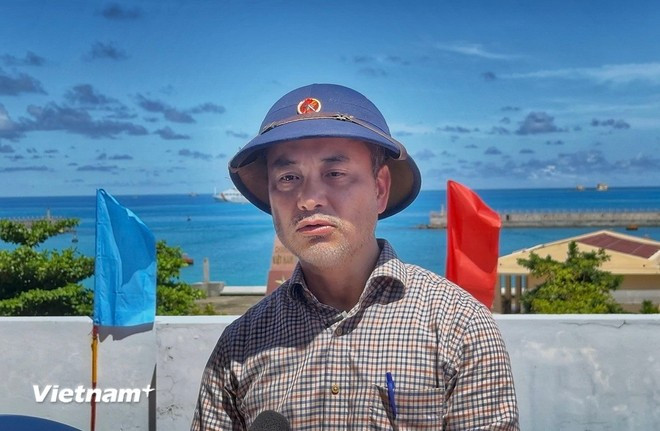
Nguyen Trung Kien, Chairman of the State Committee for Overseas Vietnamese. (Photo: VietnamPlus)

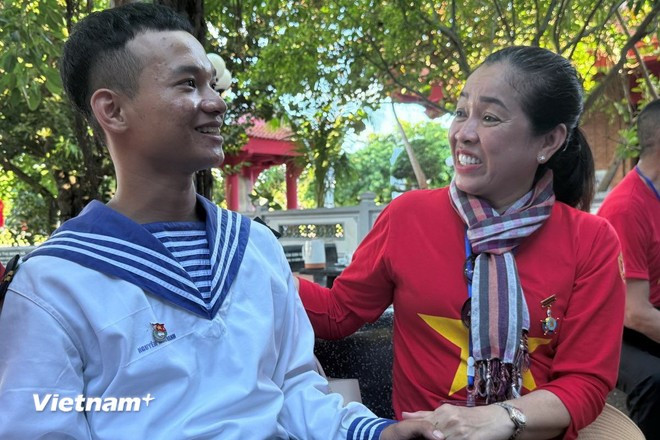
Speaking with VietnamPlus, head of the State Committee for Overseas Vietnamese Nguyen Trung Kien emphasised the meaningful impact of such journeys. He noted that with each trip, the overseas Vietnamese community gains a deeper insight into the sacrifices made by naval officers and soldiers. They also witnessed firsthand the growing vitality of the islands from improved infrastructure to greener landscapes.

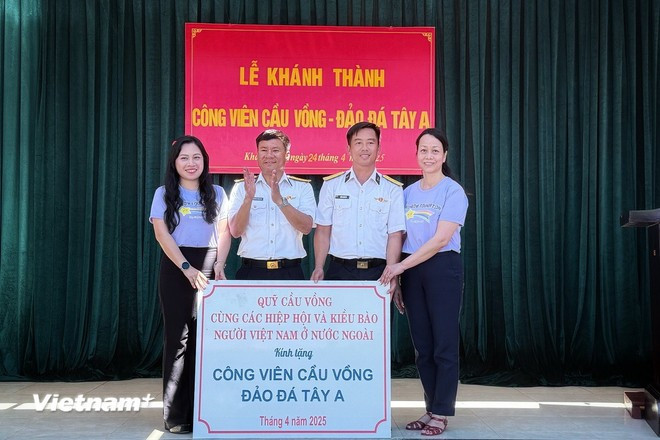
One key highlight of this year's voyage was the opening of Rainbow Park (Cong vien Cau Vong) on Da Tay A Island, a joint initiative led by the Vietnamese community in the Republic of Korea (RoK).

The park provides a recreational space for children on the island and reflects the growing contributions of overseas Vietnamese to life on Truong Sa. A similar park had previously been built on Truong Sa Lon Island. These initiatives reflect how expatriates are playing an active role in improving living conditions for soldiers and residents on the archipelago.
tham-truong-sa-28.jpg
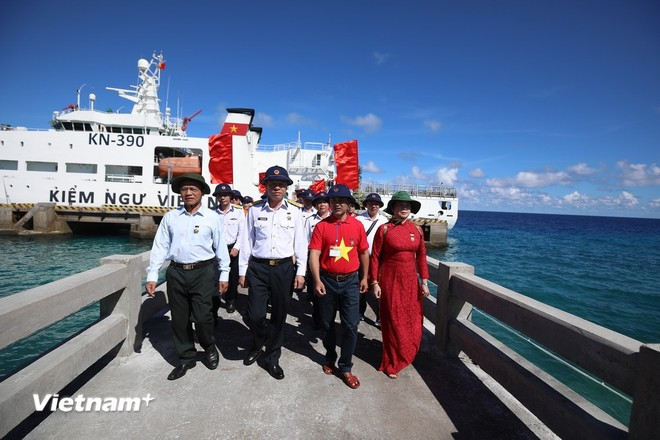
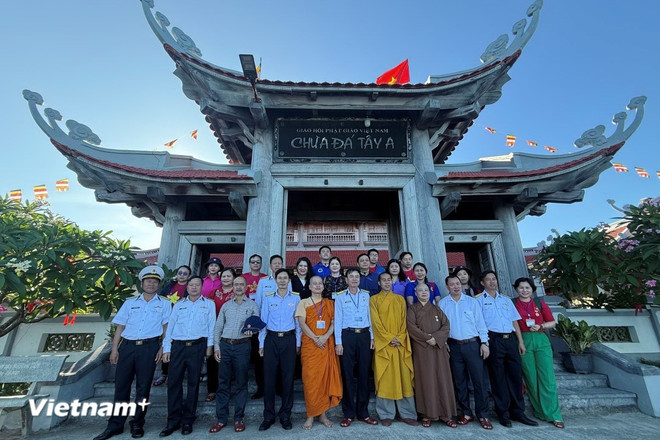
Working Group No. 13 visits islands as part of the voyage bringing overseas Vietnamese to Truong Sa. (Photo: VietnamPlus)
tham-truong-sa-28-3.jpg
Working Group No. 13 visits islands as part of the voyage bringing overseas Vietnamese to Truong Sa. (Photo: VietnamPlus)

Delegates were particularly moved by the greenery now present on the islands, a sign of both the resilience of those stationed there and the collective contributions of people from across the nation. Kien highlighted this as “the green of life,” symbolising hope, peace, and sustainable development on the maritime frontier.

In the coming time, the committee plans to further engage the Vietnamese diaspora in initiatives related to Truong Sa and national sovereignty. One example is a new movement to promote physical fitness among overseas Vietnamese through running and walking campaigns that connect with efforts to safeguard the nation’s maritime territories.
cau-vong-28.jpg
The Rainbow Park is an initiative launched by the Rainbow Fund. (Photo: VietnamPlus)
cau-vong-282.jpg
The Rainbow Park is an initiative launched by the Rainbow Fund. (Photo: VietnamPlus)

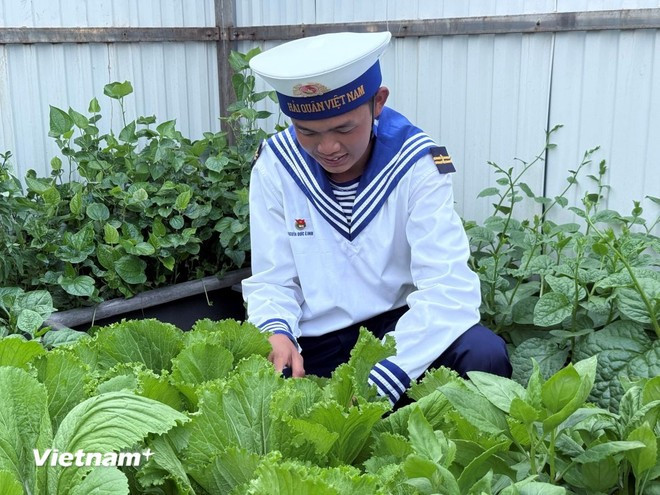
Another priority is applying scientific and technological expertise from the diaspora, particularly in agriculture to help improve self-sufficiency on remote islands. For example, the committee is encouraging overseas Vietnamese scientists and professionals to support the development of green farming models in areas where land and fresh water are limited.

Kien also drew inspiration from Vietnamese peacekeeping forces abroad, particularly in Africa, who not only serve missions of stability but also contribute to local communities through farming, construction, and public works, embodying the ethos of the “soldier for the people.” He sees similar spirit in overseas Vietnamese communities, which continue to demonstrate creativity, dedication, and a strong sense of national identity.
truong-sa-2804.jpg
A naval soldier tending to a vegetable garden. (Photo: VietnamPlus)

In terms of policy, the committee will focus on three key areas moving forward. First is fostering scientific collaboration between Vietnamese at home and abroad. This is highlighted in the Politburo’s Resolution 57, which promotes science and technology as the core of national development. Second is reinforcing unity across generations and geographies, with special attention to younger Vietnamese overseas. Third is preserving cultural identity through the Vietnamese language and heritage, seen as the strongest bond connecting the global community.
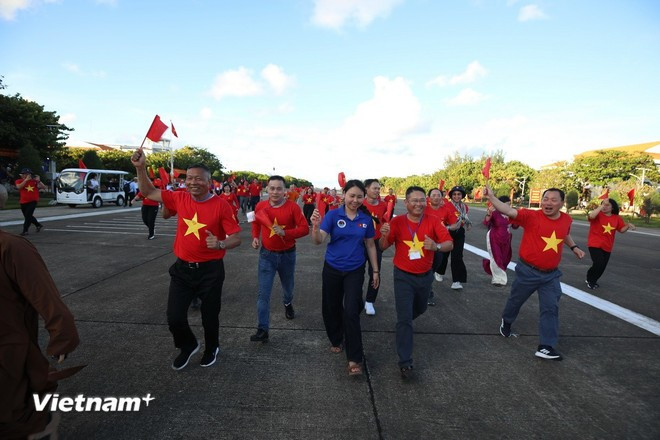
kieu-bao-tang-qua-2805.jpg
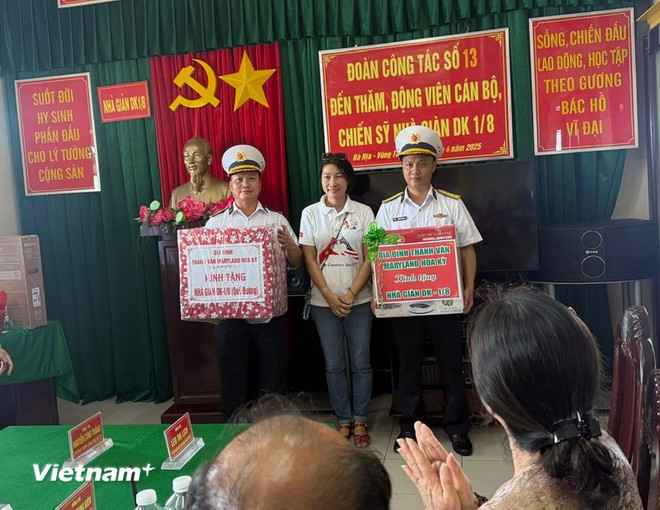
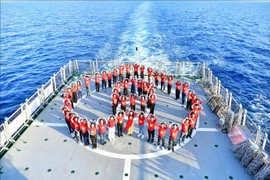
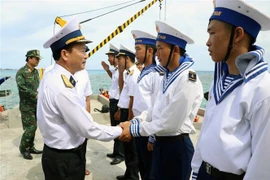
Meaningful activities by overseas Vietnamese during their visit to Truong Sa and DK-I platform (Photo: VietnamPlus)
kieu-bao-truong-sa-28-2.jpg
Overseas Vietnamese engage in meaningful activities during their visit to Truong Sa and DK-I platform (Photo: VietnamPlus)
kieu-bao-truong-sa-28-3.jpg
Overseas Vietnamese engage in meaningful activities during their visit to Truong Sa and DK-I platform (Photo: VietnamPlus)

Throughout the recent journey, the Vietnamese expatriate delegation visited six locations, including Da Thi, Sinh Ton, Len Dao, Co Lin, Da Tay A, Truong Sa, and the DKI/8 platform. Each stop deepened their connection to the homeland and reaffirmed the shared mission of safeguarding the nation’s maritime frontiers.

The enduring message from this journey and those before it, is one of unity and resilience, a testament to the millions of Vietnamese hearts across the world that continue to beat for Truong Sa./.
VNA

See more

Glenn Mathews and his wife hand over the diary of Vietnamese martyr Vo Van Cong to Minister Counsellor Nghiem Xuan Hoa, representing the Embassy of Vietnam in Australia. (Photo: VNA)

Australian veteran’s son returns diary of Vietnamese martyr

Entries in the diary show that Vo Van Cong was born in 1944 in the former Phuoc Tho commune, Nhon Trach district, Bien Hoa province, now Dong Nai province. He joined the revolutionary movement in April 1961 and was admitted to the Communist Party of Vietnam in May 1962.

A number of youth union members at the Vietnam Academy of Social Sciences visit the exhibition space showcasing books and materials on culture. (Photo: VNA)

Book week underscores role of knowledge in policymaking

The highlight is a series of activities on April 21, including a book and document exhibition on culture, the launch of a special publication titled “Special scientific information for leadership” and initiatives promoting reading culture, including a book donation programme and a book review contest.

Hanoi has over 1,100 libraries and numerous cultural and educational spaces in the community. (Photo: VNA)

Spreading value of books, building foundations of learning society

Each weekend in Hanoi, the “Reading with Children” Club brings together students to practise reading, explore language, and express ideas creatively. According to founder of the club Nguyen Thuy Anh, the club encourages children to reflect, retell stories, and connect books with personal experiences, making reading more vivid and meaningful.

Automated ticketing system is used on the urban railway Cat Linh-Ha Dong line in Hanoi. (Photo: VNA)

Digital transformation powers Hanoi metro expansion

Beyond convenience, stable fares and the elimination of fuel, parking and maintenance costs have made urban rail increasingly attractive. The growing preference for metro travel is also contributing to a greener, more modern urban lifestyle.

Delegates cut the ribbon to inaugurate the operation of electric bus route No. 43. (Photo: VNA)

Hanoi accelerates shift to green buses, targets 100% by 2030

In the 2027–2030 period, the city will accelerate the transition towards the complete phase-out of fossil fuel-powered buses. The share of electric and green energy-fueled buses is projected to reach 79–89% by 2029 and 100% by 2030.

At the second session of the Ho Chi Minh City People’s Council (Photo: VNA)

Ho Chi Minh City greenlights central square, administrative centre in Thu Thiem

The new central city square and administrative centre will create a modern, centralised political-administrative complex for Ho Chi Minh City, designed to house around 8,000 officials, civil servants, and employees. It will also handle daily traffic of 1,500- 2,000 citizens and business representatives through a unified one-stop-shop administrative service system.

A working session at the job fair (Photo: VNA)

Vietnamese students flock to Seoul Job Fair 2026

The second annual Job Fair 2026 was held for Vietnamese students in the Republic of Korea. Organisers pitched it as a straight-up bridge between eager students and bosses hungry for young talent who can actually handle multicultural workplaces.

Defendants at the court (Photo: VNA)

Ho Chi Minh City court opens trial over Agribank lending scandal

The investigation revealed that multiple credit files were incomplete or riddled with inaccurate information, while some pledged assets lacked proper legal standing yet were accepted and grossly overvalued. As a result, the loans became high-risk and largely unrecoverable, leading to losses surpassing 1 trillion VND.