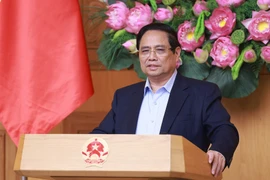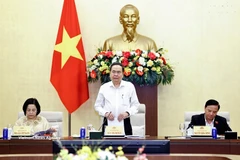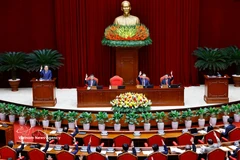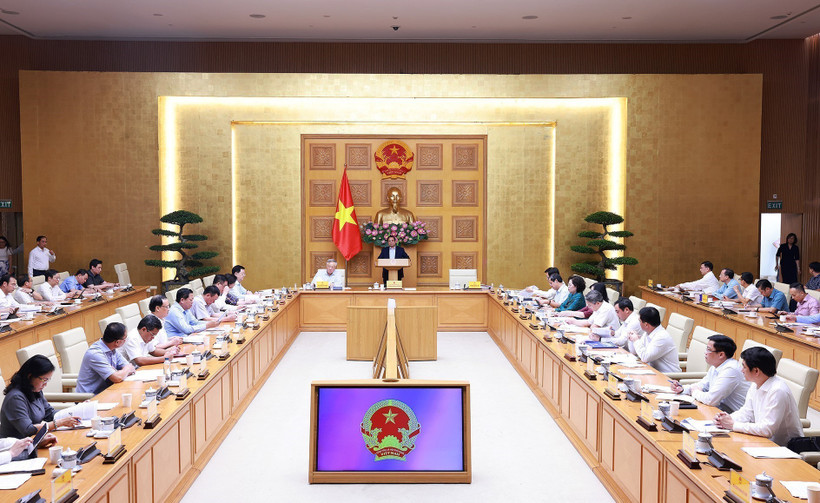
Hanoi (VNA) – The two-tier local administration system has initially operated in a stable and smooth manner, shifting from a management role to one of service provision and development facilitation, Prime Minister Pham Minh Chinh affirmed while addressing a conference reviewing one month of running this system on July 28.
According to the PM, public administrative services have been maintained continuously and without interruption, earning recognition and high appreciation from both citizens and businesses. Political security and social order and safety have been firmly upheld. Direction and governance from the central to local levels have been unified and proved effective. Administrative procedures continue to be streamlined, and the decentralisation and delegation of authority have been further promoted.
These results affirm the soundness of the Party’s policy on building a two-tier local administration model while reflecting the strong efforts and determination of all levels and sectors, as well as support from the people. They demonstrate that the goal of “streamlining the apparatus, enhancing effectiveness and efficiency, and better serving the people” has initially been realised, PM Chinh stressed.
However, the Government leader candidly pointed out the existing shortcomings and limitations that need to be addressed in improving the legal and institutional frameworks related to the new system.
Difficulties remain in consolidating organisational structures and staffing at the local level, including a shortage of highly specialised personnel. The process of power decentralisation has recorded new problems, including confusion in implementation and constraints in financial and budgetary mechanisms. Inadequate infrastructure in terms of facilities, technical equipment, information technology, electricity supply, and internet connection, continues to hinder the efficient operation of the two-tier local administration system, PM Chinh noted.
Reaffirming the goal of quickly overcoming these shortcomings and continuing to perfect the model to maximise its efficiency and meet the expectations of the Party, the State, and the people, he demanded the continued review and refinement of the legal framework governing the organisation and operation of the system.
He emphasised the need to establish a synchronised and unified legal corridor to ensure smooth, effective, and efficient operations, develop and apply tools to measure public satisfaction, and create motivation for citizens to actively participate in performing the two strategic tasks of national development and defence.
The Government leader instructed localities to promptly reorganise and assign officials and civil servants in alignment with the functions and tasks of each agency and unit. He highlighted the necessity for capacity-building programmes, particularly in modern administrative management skills, information technology application, and communication skills, for all-level officials and civil servants.
PM Chinh also requested an urgent review and adjustment of planning in the newly merged provinces and cities to ensure alignment with the new administrative boundaries.
Efforts should be made to accelerate the restructuring of procedures and the provision of online public services, ensure smooth, efficient, and uninterrupted operations, and quickly address errors in information systems managed by ministries and sectors, he said.
As a new system requires a new approach and response, the PM requested ministries, sectors, and agencies to proactively renew their mindset, act decisively, and complete tasks thoroughly. He also stressed the need for close coordination, particularly in digital transformation and database building, to enable the two-tier local administration system to operate more efficiently./.
VNA