Vietnam advances on global innovation index

Among lower-middle-income countries, Vietnam is second only to India while maintaining its global position of 44th at a time when many regional economies are slowing down.

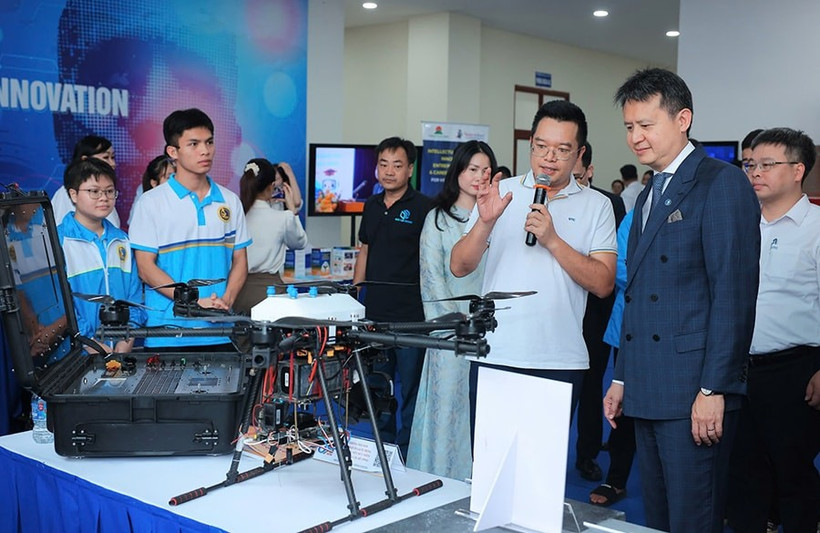
Director General of the World Intellectual Property Organization (WIPO) Daren Tang visits an exhibition of innovative products by students at the Posts and Telecommunications Institute of Technology. (Photo: hanoimoi.vn)

Hanoi (VNA) – Within just 12 years, Vietnam has climbed from the 76th place in 2013 to the group of economies with innovation outperforming their development level, which highlights the country’s sustained efforts but also points out challenges that lie ahead.

Vietnam has retained the 44th place among the 139 economies in the Global Innovation Index (GII) 2025, ranking third in ASEAN after Singapore and Malaysia.

Key highlights in GII 2025

According to the report, Vietnam, together with India, has set a record of posting an innovation index surpassing its level of development for 15 consecutive years. Among lower-middle-income countries, Vietnam is second only to India while maintaining its global position of 44th at a time when many regional economies are slowing down.

The Southeast Asian country continues to lead globally in creative goods exports, a position it has shared with four other countries since 2024. This is calculated basing on the proportion of handicrafts, musical instruments, recording products, and photos, among others in the total exports.

Additional strengths include high-tech trade, labour productivity growth, and mobile app innovation, signalling a strong shift towards a knowledge- and technology-based economy.

Sacha Wunsch-Vincent, Senior Economist at the World Intellectual Property Organisation (WIPO) and co-editor of the GII report, attributed Vietnam’s achievements to a methodical governance strategy. Since 2017, the Government has treated the GII as a governance tool, regularly introducing measures to improve individual indicators. Vietnam has also localised the index into the Provincial Innovation Index (PII), enabling localities to self-assess, foster competition, and connect intellectual property policies with innovation.

Challenges and pathway forward

Despite these gains, the GII 2025 also identifies limitations Vietnam must address, particularly in research and development (R&D) investment, science and technology infrastructure, and the commercialisation of intellectual property.

WIPO Director General Daren Tang recommended three priorities: increasing R&D investment as the “source” of innovation, strengthening human capital to convert ideas into products and services, and accelerating the transition from an agriculture- and assembly-based economy to a knowledge-driven one. He emphasised that intellectual property protection alone is not enough, commercialisation must be central, supported by an ecosystem that connect universities, research institutions, and enterprises of all sizes.

One example is an initiative helping students, lecturers, and research institutes bring laboratory innovations to market through spin-off companies. Such efforts act as a bridge to turn intellectual property into an economic driver, in line with the Politburo's Resolution 57-NQ/TW on making breakthroughs in science – technology development, innovation, and national digital transformation.

Minister of Science and Technology Nguyen Manh Hung reaffirmed Vietnam’s goal of breaking into the global top 30 in innovation within the next five to ten years. To that end, he stressed the need to refine institutional and financial frameworks, expand investment in science, technology, and digital infrastructure, build a high-quality workforce, and foster innovation in enterprises.

The most important shift, he underlined, is moving from “protection of rights” to “assetisation, commercialisation, and marketisation” of research outcomes.

The GII 2025 confirms Vietnam’s long stride, underscoring its role as an innovation model among lower-middle-income economies. Yet, to achieve its ambition of joining the global top 30 and becoming a developed nation, the country must further advance in R&D investment, human resource quality, and the commercialisation of intellectual property./.

VNA
See more

Prime Minister Pham Minh Chinh and delegates visit booths showcasing products at TechFest Vietnam 2025. Photo: VNA

Vietnam to become attractive destination for tech talent, innovative startups: PM

TechFest Vietnam 2025, held from December 12 to 14, is expected to attract more than 60,000 participants both in person and online, with the participation of over 20 corporations, 50 investment funds, more than 100 supporting organisations and incubators, and delegates from Southeast Asia, Northeast Asia, Central Asia, the Middle East, North America, and Europe.

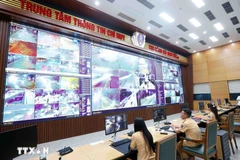
Police offiers mornitor the traffic through AI camera (Photo: VNA)

Applying the Internet of Things in smart transport

The project aims to build a unified, safe and efficient IoT platform to support the management, operation and exploitation of smart transport systems under the Ministry of Construction, with data shared across ministries and localities.

Through long-term commitment, Viettel has brought millions of Burundians into the mobile era and become the first operator to roll out 5G in the country, Viettel Burundi CEO Phan Truong Son noted. (Illustrative photo: VNA)

Viettel secures three prestigious international awards

Viettel has won honours in the “People & Culture” and “Best Operator in a Growth Market” categories at the 2025 World Communication Awards (WCA), alongside the “Best Digital Transformation Project” at the 2025 Global Telecoms Awards (Glotel).

A view of the Can Gio sea-encroaching urban area project (Photo: VNA)

Green-tech push for Can Gio

Vietnam has the capacity, ambition and technological foundation to join the group of leading sustainable coastal urban nations in the coming decade, experts said at a dialogue on "advancing to the sea with ESG++ megacities: breakthroughs through green technology", held on December 9 in Hanoi by the Vietnam Institute for Real Estate Studies (VIRES).

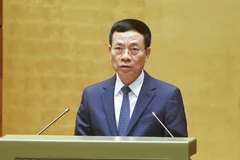
Minister of Science and Technology Nguyen Manh Hung speaks at the meeting (Photo: VNA)

Vietnam turns intellectual property into bankable assets in new law

About AI-generated content, the law draws a clear line: purely autonomous AI creations are not eligible for copyright or patent protection. Those who provide substantial creative input, such as ideas, curation, editing, or selection, qualify as authors or inventors.

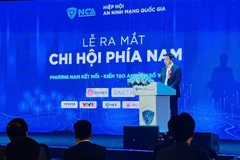
Lieutenant General Nguyen Minh Chinh, NCA Vice Chairman, speaks at the launch ceremony of the southern branch of the National Cybersecurity Association. (Photo: VNA)

National Cybersecurity Association opens branch in HCM City

The southern branch aims to become a coordinating body for cybersecurity tasks, workforce development, awareness-raising and the strengthening of digital defence capabilities across the region, contributing to the safe and sustainable growth of Vietnam’s digital economy.

Viettel exceeds target of 20,000 new 5G stations by more than three weeks. (Illustrative photo: VNA)

Viettel exceeds target of 20,000 new 5G stations by more than three weeks

Viettel plans to continue scaling up its network from now until the end of 2025, with an additional 23,500 stations scheduled for installation, nearly quadruple the number rolled out in 2024. Once completed, Viettel will operate Vietnam’s largest 5G network, with 30,000 stations covering 90% of outdoor areas and 70% of indoor spaces nationwide, from major cities to rural regions.

In Vietnam, demand for infrastructure supporting AI, cloud computing, and digital services is rising at an unprecedented level. (Illustrative photo: VNA)

Vietnam emerges as new hub for data centres

Data centres have surged to become the second most preferred alternative asset class in the region. Vietnam is no exception to this trend as the demand for infrastructure supporting AI, cloud computing, and digital services has risen at an unprecedented level.

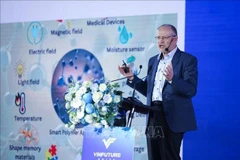
Professor Kurt Kremer, from the Max Planck Institute for Polymer Research in Germany, speaks at the event. (Photo: VNA)

Vietnam has advantages to develop versatile humanoid robots: experts

At the symposium, international and Vietnamese experts also discussed the latest trends in robotics, from socially interactive humanoids and collaborative service robots to medical and rehabilitation systems, and examined major challenges surrounding AI safety and ethics to ensure that robotics evolves in a responsible, human-centred and sustainable manner.