Vietnam affirms credibility in regional UN peacekeeping training

Vietnam’s full ownership of a UN-recognised training programme would represent an important institutional milestone and a clear demonstration of its long-term commitment to multilateral cooperation.

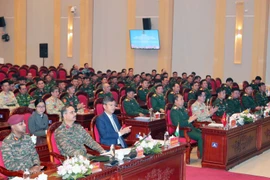
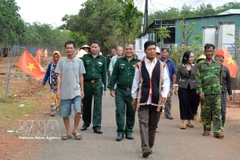
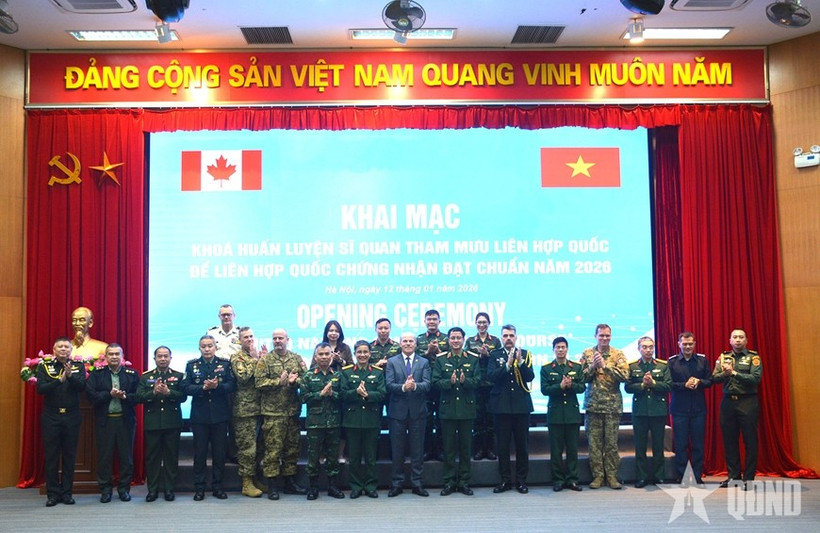
Delegates at the opening ceremony of the UNSOC 2026. (Photo: qdnd.vn)

Hanoi (VNA) – Vietnam has reaffirmed its growing credibility and leadership in United Nations peacekeeping training in the region with the launch of the United Nations Staff Officer Course 2026 (UNSOC 2026), supported by Canada.

The opening ceremony was held on January 12 at the Vietnam Department of Peacekeeping Operations under the Ministry of National Defence. The course runs from January 3 to 30 and is jointly delivered by Vietnamese instructors, with advisory support from Canadian trainers.

Participants include officers from the Vietnam People’s Army and international trainees from countries participating in Canada’s Military Training and Cooperation Programme (MTCP), namely Bangladesh, Fiji, Indonesia, Malaysia, Mongolia, Nepal, Pakistan, the Philippines, Thailand and Timor-Leste. The course also welcomes officers from the Lao People’s Army at the invitation of the Vietnamese Ministry of National Defence.

In his opening remarks, Major General Pham Manh Thang, Director of the Vietnam Department of Peacekeeping Operations, highlighted that over the more than 11 years of Vietnam’s engagement in UN peacekeeping activities, the country has consistently received strong and valuable support from Canada and the UN, particularly in training and capacity-building.

He noted that bilateral defence cooperation between Vietnam and Canada in UN peacekeeping has developed in an increasingly substantive and effective manner in recent years, and UNSOC 2026 stands as a vivid demonstration of this strong partnership.

According to Thang, the course holds special significance as it is the first advanced international peacekeeping training programme fully organised and managed by Vietnam. Importantly, it is being directly assessed by the UN Integrated Training Service under the UN Department of Peace Operations, forming the basis for evaluation, recommendations and potential certification of UNSOC courses conducted by Vietnam as meeting UN standards.

The training aims to equip officers of the Vietnam People’s Army, the Lao People’s Army and MTCP partner countries with essential professional knowledge and skills, enabling them to effectively perform duties as UN staff officers at peacekeeping missions worldwide.

Beyond its immediate training objectives, UNSOC 2026 is expected to further enhance Vietnam’s professional capacity, organisational and operational competence in delivering advanced international training courses, while also fostering a contingent of high-quality instructors. The programme also contributes to strengthening practical cooperation and friendship among Vietnam, Laos, Canada and other international partners in UN peacekeeping.

Thang expressed confidence that, built on strong cooperative foundations and thorough preparations, UNSOC 2026 would be successfully conducted and officially recognised by the UN.

Speaking at the ceremony, Canadian Ambassador to Vietnam James Nickel described UNSOC 2026 as clear evidence of the increasingly substantive, reliable and trust-based partnership between Canada and Vietnam in contributing to international peace and security.

He thanked the Vietnam People’s Army, particularly the Vietnam Department of Peacekeeping Operations, for its close and effective coordination in organising the course, and praised Vietnam’s professionalism and sense of responsibility.

Nickel noted that since the two countries signed a Memorandum of Understanding on peacekeeping cooperation in 2023, Vietnam has played a more prominent role by hosting multiple Canada-supported training courses, thereby affirming its standing as a regional hub for UN peacekeeping training in line with UN priorities.

He said that Canada is proud to have accompanied Vietnam throughout the development and validation of UNSOC 2026.

Vietnam’s full ownership of a UN-recognised training programme would represent an important institutional milestone and a clear demonstration of its long-term commitment to multilateral cooperation, he added./.
VNA

See more

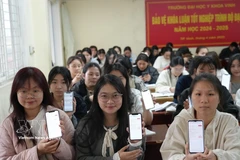
Delegates and students pose for a commemorative photo. (Photo: baocantho.com.vn)

Four more Can Tho schools earn French education accreditation

The recognition of six schools under the Label FrancEducation programme is expected to create momentum for expanding education cooperation between French and Can Tho institutions, contributing to human resources development and friendship between the two countries.

A seminar at the programme (Photo: VNA)

Event promotes inclusion, empowerment for youth with disabilities

A key feature of the programme will be the dialogue “The Inspirers – Family Support on the Journey of Resilience”, where exemplary families and inspirational figures will share stories of overcoming adversity and spread messages of compassion, understanding and community responsibility in building an inclusive and humane society.

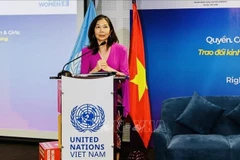
UN Resident Coordinator in Vietnam Pauline Tamesis (Photo: VNA)

South–South cooperation promotes rights, justice for women and girls

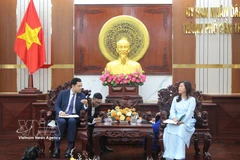
UN Resident Coordinator in Vietnam Pauline Tamesis commended Vietnam’s sustained commitment to gender equality, noting advances in budgeting, land use, social insurance and domestic violence prevention under the recent review of the Convention on the Elimination of All Forms of Discrimination against Women (CEDAW).

Party General Secretary To Lam presents Nhan Dan newspaper with the first-class Labour Order on March 11. (Photo: VNA)

Nhan Dan newspaper must act as ideological vanguard, shield, information sensor: Party chief

In a keynote address at a ceremony in Hanoi marking the 75th anniversary of the newspaper’s first issue on March 11, General Secretary Lam highlighted its more than seven decades of evolution while maintaining its role as the Party’s sharp ideological weapon, an effective information and communication channel for Party committees and authorities at all levels, and a trusted platform for Party members and people.

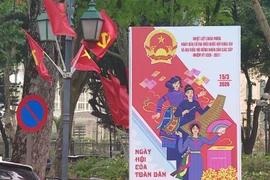
A poster celebrating the Election Day (Photo: VNA)

Final preparations underway for Election Day

In Hanoi, local authorities have increased the dissemination of election-related information through community loudspeaker systems, information boards, official websites and verified social media pages, helping officials, Party members and residents better understand their rights and responsibilities as voters.

NA Chairman Tran Thanh Man inspects a constituency in Dong Nai province. (Photo: VNA)

Dong Nai works to ensure workers cast vote on Election Day

With the utmost regard for citizens’ electoral rights and responsibilities, and in a spirit of creating optimal conditions for workers, especially those employed in industrial parks and non-state enterprises, the provincial leader has requested that no overtime be scheduled during voting hours.

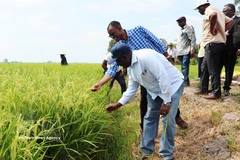
Zambia's Minister of Agriculture Reuben Mtolo Phiri (first, left), learns about the OM19 rice variety grown at Tien Thuan cooperative in Thanh Quoi commune,, Can Tho city (Photo: VNA)

Can Tho shares agricultural transformation experience with Zambia

Rice production remains Can Tho’s key industry. Alongside maintaining production, Can Tho has encouraged value chain linkages among farmers, cooperatives and businesses, while accelerating the application of science and technology, mechanisation and digital transformation in farming.

Staff members of the Hanoi Public Administrative Service Centre handle administrative procedures for local residents. (Photo: VNA)

Hanoi: 95% of administrative procedures to be handled from home

The plan targets that at least 80% of administrative procedures under the city’s authority will be provided as fully online public services, while more than 95% of applications will be received and processed entirely online. By June 30, 2026, about 80% of administrative procedures are expected to be restructured based on integrated data systems, with the figure rising to 95% by the end of the year.