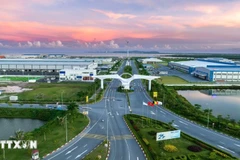
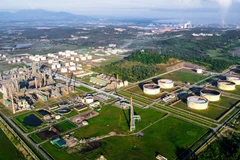
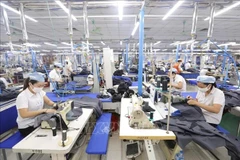
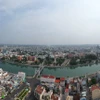
A view of Ho Chi Minh City (Photo: VNA)
 HCMCity (VNS/VNA) - Vietnam has become one of the world’s feweconomic bright spots attracting foreign investors, especially those fromAustralia, due to cheap labour, a young population, high educationstandards, and government incentive policies, experts have said.
Australia’s businesscommunity has recently assisted many enterprises to diversify their supplychains to developing countries, including Vietnam, Indonesia and India.
KyleSpringer, a senior analyst at the University of Western Australia’s PerthUSAsia Centre, said that Vietnam could become an important partner of Australiain the global supply chain as Australia wants to diversify partnersafter the pandemic ends.
Australiacould export main raw materials along with technologies to develop cleanenergy to Vietnam, and import consumer and electronic products andvalue-added agricultural products from Vietnam.
Vietnamaims to become among Australia’s 10 most important partners, according toSpringer.
Thecountry is the fastest-growing trading partner with Australia among ASEANcountries. “The two sides need to work to increase each other’s presencein their respective business communities,” he said.
NguyenQuoc Cuong, General Director of USIS, said the lure of Vietnam was toogood for many to resist. “Vietnam has been largely praised for itsoutstanding results in containing the pandemic. Over the past few months, mycompany has traded online with Australian partners extensively.”
DavidJohn Whitehead, Vice President of the Australian Chamber of Commerce in Vietnam(AusCham), said Australian businesses hit hard by the outbreakare struggling to survive, and want to diversify their supplychains, especially in Asia.
In2017, Australia and Vietnam enhanced their bilateral relationship to astrategic partnership, which is important for many Australian businesses,especially those with strong financial resources, sound management and advancedtechnology, to promote trade and investment in Vietnam.
“Wewill see a large number of new businesses from Australia, especially those inthe high-tech, education and service sectors, which will significantly add tothe global value chain,” he added.
InAugust, Sydney-based logistics developer Logos along with another globalinvestor established the Logos Vietnam Logistics Venture with an initialportfolio of 350 million USD, aiming to develop logistics facilities across thekey markets of HCM City, Hanoi and Da Nang.
TrentIliffe, managing director and co-CEO of Logos, said the group’s expansion to Vietnamis an important step in its regional growth strategy driven bycustomer needs.
InMay, shipbuilder Austal Vietnam continued to expand its operations in Vietnamthrough its launch of a 94-metre high-speed catamaran from its shipyard inVung Tau city, said David Singleton, CEO of Austal.
TheAPT James vehicle-passenger ferry is the first vessel to be built byAustal Vietnam. “Austal Vietnam has started construction on its next project, a41-metre high-speed catamaran ferry,” he said.
Lastmonth, USIS, a company that assists non-American individuals and companies toinvest in US market, and its partners implemented two projects calling forinvestment in Australia’s Queensland region: a project to install solar panelsfor households, and a solar farm project at industrial parks.
Vietnamis home to nearly 500 Australian-financed projects with capital totallingmore than 2 billion USD, according to statistics from the Ministry of Planningand Investment’s Foreign Investment Agency.
Two-waytrade between Vietnam and Australia reached 7.73 billion USD last year, andnearly 7.8 billion USD in 2018./.
Australia’s businesscommunity has recently assisted many enterprises to diversify their supplychains to developing countries, including Vietnam, Indonesia and India.
KyleSpringer, a senior analyst at the University of Western Australia’s PerthUSAsia Centre, said that Vietnam could become an important partner of Australiain the global supply chain as Australia wants to diversify partnersafter the pandemic ends.
Australiacould export main raw materials along with technologies to develop cleanenergy to Vietnam, and import consumer and electronic products andvalue-added agricultural products from Vietnam.
Vietnamaims to become among Australia’s 10 most important partners, according toSpringer.
Thecountry is the fastest-growing trading partner with Australia among ASEANcountries. “The two sides need to work to increase each other’s presencein their respective business communities,” he said.
NguyenQuoc Cuong, General Director of USIS, said the lure of Vietnam was toogood for many to resist. “Vietnam has been largely praised for itsoutstanding results in containing the pandemic. Over the past few months, mycompany has traded online with Australian partners extensively.”
DavidJohn Whitehead, Vice President of the Australian Chamber of Commerce in Vietnam(AusCham), said Australian businesses hit hard by the outbreakare struggling to survive, and want to diversify their supplychains, especially in Asia.
In2017, Australia and Vietnam enhanced their bilateral relationship to astrategic partnership, which is important for many Australian businesses,especially those with strong financial resources, sound management and advancedtechnology, to promote trade and investment in Vietnam.
“Wewill see a large number of new businesses from Australia, especially those inthe high-tech, education and service sectors, which will significantly add tothe global value chain,” he added.
InAugust, Sydney-based logistics developer Logos along with another globalinvestor established the Logos Vietnam Logistics Venture with an initialportfolio of 350 million USD, aiming to develop logistics facilities across thekey markets of HCM City, Hanoi and Da Nang.
TrentIliffe, managing director and co-CEO of Logos, said the group’s expansion to Vietnamis an important step in its regional growth strategy driven bycustomer needs.
InMay, shipbuilder Austal Vietnam continued to expand its operations in Vietnamthrough its launch of a 94-metre high-speed catamaran from its shipyard inVung Tau city, said David Singleton, CEO of Austal.
TheAPT James vehicle-passenger ferry is the first vessel to be built byAustal Vietnam. “Austal Vietnam has started construction on its next project, a41-metre high-speed catamaran ferry,” he said.
Lastmonth, USIS, a company that assists non-American individuals and companies toinvest in US market, and its partners implemented two projects calling forinvestment in Australia’s Queensland region: a project to install solar panelsfor households, and a solar farm project at industrial parks.
Vietnamis home to nearly 500 Australian-financed projects with capital totallingmore than 2 billion USD, according to statistics from the Ministry of Planningand Investment’s Foreign Investment Agency.
Two-waytrade between Vietnam and Australia reached 7.73 billion USD last year, andnearly 7.8 billion USD in 2018./.
VNA