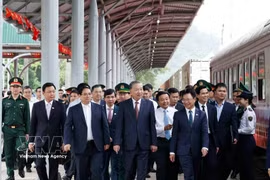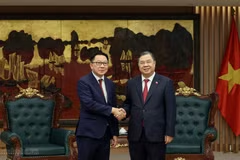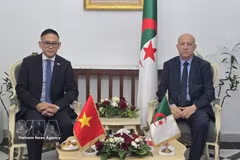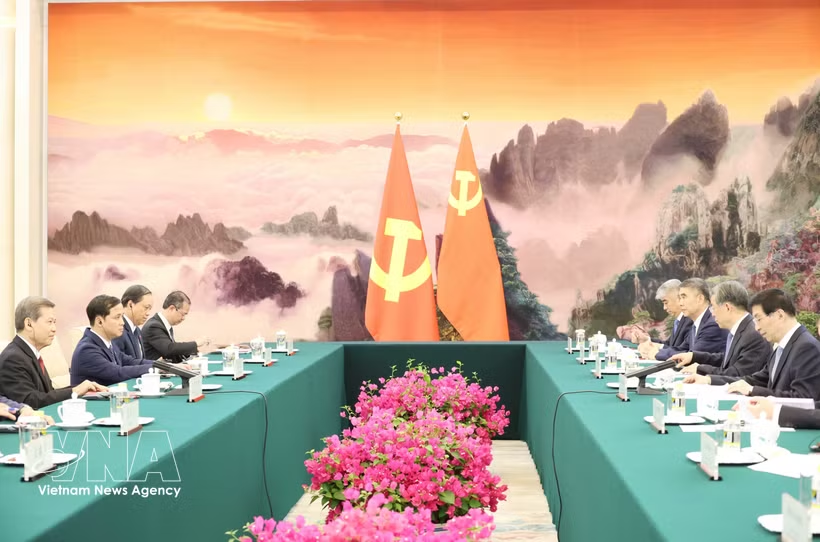
Beijing (VNA) – Politburo member, Secretary of the Communist Party of Vietnam (CPV) Central Committee and Chairman of the CPV Central Committee's Commission for Internal Affairs Le Minh Tri met with Wang Huning, Member of the Standing Committee of the Political Bureau of the Communist Party of China (CPC) Central Committee and Chairman of the National Committee of the Chinese People's Political Consultative Conference (CPPCC), in Beijing on July 14, during his working visit to China.
Tri, who is also Standing Deputy Head of the Central Steering Committee for Prevention and Control of Corruption, Wastefulness and Negative Phenomena, conveyed greetings from General Secretary of the CPV Central Committee and State President To Lam to General Secretary of the CPC Central Committee and President of China Xi Jinping, and affirmed that Vietnam consistently regards strengthening its Comprehensive Strategic Cooperative Partnership with China as a top priority.
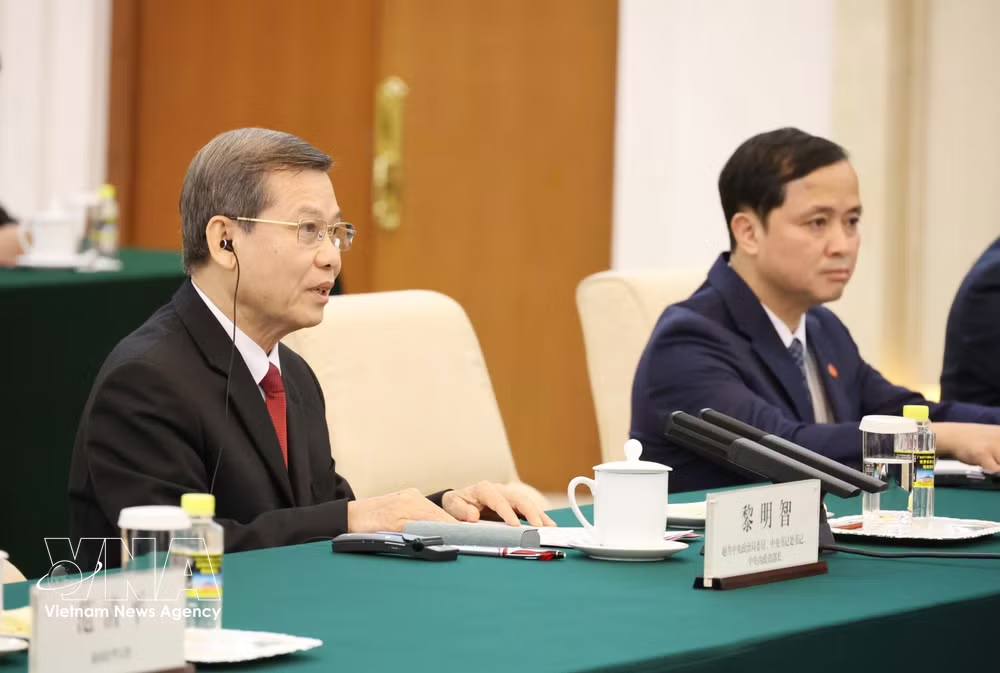
He expressed his appreciation for China's longstanding support, while stressing Vietnam's commitment to advancing the Vietnam–China Community with a shared future that carries strategic significance to a higher level in the new era, delivering tangible benefits to the two countries' people and contributing to peace, stability and development in the region and the world.
For his part, Wang also conveyed the top Chinese leader's greetings to his Vietnamese counterpart To Lam and other key leaders, and congratulated Vietnam on its development achievements. He affirmed that China attaches great importance to its friendship with Vietnam and regards bilateral relations as a priority in its neighbourhood diplomacy.
China stands ready to work with Vietnam to advance the building of the Vietnam–China Community with a shared future that carries strategic significance to new heights in a more substantive and effective manner, he said.
The two sides spoke highly of the important and comprehensive development of the Vietnam – China relations in recent times, noting that recent high-level exchanges, particularly the visits by the two countries' top leaders, have strengthened political trust and promoted cooperation in trade, transport infrastructure connectivity, tourism and people-to-people exchanges.
Regarding future orientations for cooperation, Tri proposed enhancing Party-to-Party cooperation; maintaining frequent all-level exchanges; sharing experience in Party building and building a socialist rule-of-law state, combating corruption, wastefulness, and negative phenomena, and judicial reform; promoting cooperation in the fields of trade, investment, strategic infrastructure connectivity, railways, and science and technology in an effective, substantive, balanced, and sustainable manner; strengthening people-to-people exchanges and successfully organising the " “Vietnam – China Tourism Cooperation Year 2026–2027.
Wang endorsed the proposals, calling for more effective Party-to-Party cooperation, stronger theoretical exchanges and cadre training. He also proposed making full use of strategic dialogue mechanisms in diplomacy, defence and public security to further consolidate political trust and jointly advance socialist modernisation in each country.
He further called for closer alignment of the two countries' development strategies, with priority given to accelerating cross-border railway projects, while promoting more substantive cooperation in trade, investment, artificial intelligence and digital economy.
Wang affirmed that the CPPCC supports exchanges between people from all walks of life in the two countries, particularly young people. He called on the two sides to effectively implement people-to-people exchange programmes such as the "Red Journey" initiative, while expanding cooperation in education, culture, tourism, healthcare and local exchanges.
The two sides also agreed to strengthen coordination on regional and international issues, maintain peace and stability at sea, and better manage and properly handle differences in accordance with the high-level common perceptions and international law./.