Vietnam emerges as ASEAN’s leading next-generation trade hub

Singapore’s The Business Times noted that the Vietnamese Government is intensifying investment efforts to advance ambitious reform agendas and realise its growth objectives for 2026.

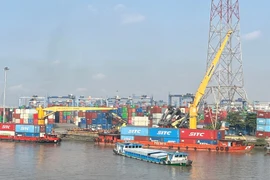
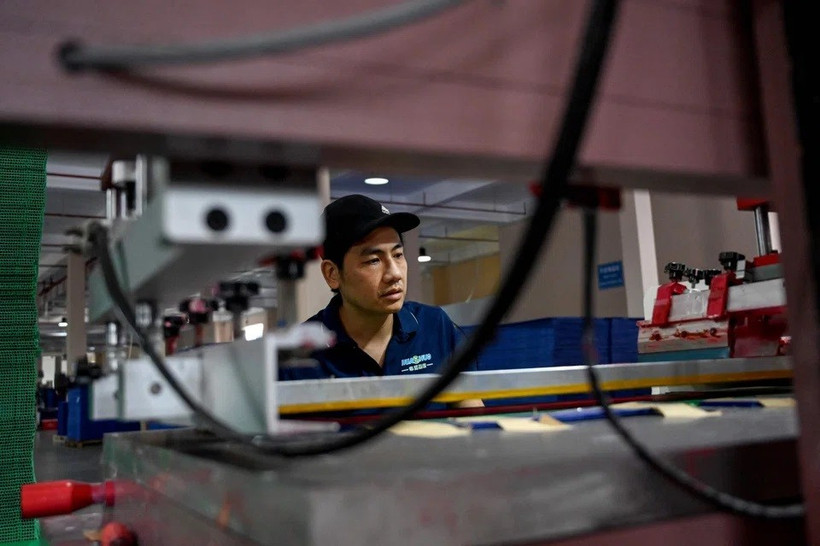
On a year-on-year basis, Vietnam’s total exports and imports for the first 10 months of 2025 are up 16.2% and 18.6%, respectively. (Photo: AFP)

Hanoi (VNA) – Singapore’s The Business Times on November 6 hailed Vietnam as ASEAN’s foremost next-generation trade hub, attributing the achievement to the country’s robust manufacturing base and sustained export expansion.

The report noted that the Vietnamese Government is intensifying investment efforts to advance ambitious reform agendas and realise its growth objectives for 2026.

According to the article, Vietnam’s growing competitiveness relative to other countries in the region is helping to fuel its rise as one of the top global manufacturing powerhouses.

The country’s position was recently bolstered by its ranking as the second-most promising next-generation trade hub, behind the United Arab Emirates, in a report released on November 5 by Allianz Research. The Germany-headquartered trade analysis team credited Vietnam’s rise to its surging exports, which solidifies its role at the centre of Asia’s manufacturing re-route.

The report said the country’s increasing number of free trade agreements, lower labour costs, and diversified export basket have all contributed to its growing influence. In addition, Vietnam is benefiting from broader regional shifts, such as the offshoring of manufacturing from China and the regionalisation of trade.

Indeed, despite a challenging global economic environment marked by rising tariffs, shifting supply chains, and geopolitical tensions, Vietnam’s export sector has remained resilient. Merchandise shipments rose 17.5% year on year to 42.1 billion USD in October. In the first 10 months of 2025, Vietnam’s total exports and imports climbed 16.2% and 18.6%. However, on a month-on-month basis, merchandise exports last month contracted by 3.5% in seasonally adjusted terms, a sign that the effects of higher tariffs from the US are beginning to have a more pronounced impact on Vietnam’s economy.

Adam Ahmad Samdin, an economist at Oxford Economics, noted that export growth next year is still at risk of further drags from the possibility of the US’ additional sectoral tariffs . However, he said the impact of tariffs could also be partially offset by sustained demand for artificial intelligence-related infrastructure, which is expected to continue into 2026.

Meanwhile, Vietnam’s manufacturing sector showed signs of strengthening at the start of 2025’s fourth quarter. In October, the Vietnam Manufacturing Purchasing Managers’ Index (PMI) from S&P Global rose sharply to 54.5, from 50.4 in September. This marked improvement reflects accelerated growth in output and new orders, especially with a pickup in new export orders for the first time in a year.

Tourism has been another bright spot for Vietnam’s economy this year. International arrivals surged by 22.1% year on year to 1.7 million in October. This follows a 19.5% rise in September, and reflects growing interest in Vietnam as a tourist destination.

“Tourism should continue to support domestic spending,” said Samdin, though he believes momentum in private consumption has peaked, since inflation-adjusted wage growth has slowed.

Vietnam’s inflation rate eased to 3.25% in October 2025, down slightly from a three-month high of 3.38% in the preceding month. Disbursed investment from the state budget in October surged by over 29% year on year, maintaining the strong momentum seen in Q3. Meanwhile, the 10th session of the National Assembly has proposed a fiscal deficit of 4.2% of gross domestic product for next year, up from 3.1% in 2024, signalling a firm commitment to increasing spending to drive economic growth.

Foreign investment is also flowing into Vietnam at a rapid pace. From January to October this year, foreign direct investment (FDI) increased by 8.8% year on year, reaching 21.3 billion USD, the highest level for any 10-month period since at least 2007.

Additionally, FDI pledges, which represent future inflows, grew by 15.6% to 31.52 billion USD, indicating strong investor confidence in Vietnam’s long-term economic outlook./.
VNA

See more

From early December, major retail chains in Ho Chi Minh City have recorded a noticeable increase in shoppers seeking Tet products. (Photo: VNA)

HCM City businesses ramp up production to meet Lunar New Year demand

From early December, major retail chains in the city have recorded a noticeable increase in shoppers seeking Tet products. Many consumers are taking advantage of promotional programmes to purchase gift items with long shelf lives, such as confectionery, soft drinks and processed foods, well ahead of the holiday peak.

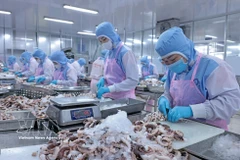
Workers process fish to be tinned for export at KTC Canned Food Factory under Kien Giang Trading JSC. (Photo: VNA)

Vietnam to host seminar on export growth strategies

Vietnam's exports rose 16.1% to 430.2 billion USD in the first 11 months of 2025, while total trade hit 839.8 billion USD during the same period. This strong performance shows that exports remain a key driver of economic growth, boosting Vietnam's standing on the world stage in recent years.

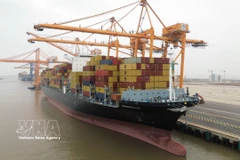
The vessel carrying the 2 millionth TEU arrives at Hai Phong Port. (Photo:VNA)

Hai Phong Port reaches 2-million-TEU milestone

Handling the 2 millionth TEU in 2025 not only demonstrates Hai Phong Port’s operational capacity and the collective efforts of its workforce, but also highlights its increasingly important role in regional and global supply chains, the confidence of shipping lines, logistics firms and the business community, and the effectiveness of policies to improve the investment climate and strengthen maritime infrastructure and services.

Melons labelled with traceability codes on display at the Song Van agricultural produce store in Ninh Binh city, Ninh Binh province. (Photo: VNA)

Tracing origins hindered by fragmented data systems

As the Government accelerates the digital economy, establishing a unified national traceability system has become a crucial move to end data fragmentation and disconnection among ministries, sectors and localities.

Hyundai unveils its new Avante Hybrid model in Seoul, the Republic of Korea, on August 13, 2020. (Photo: Yonhap/VNA)

Tax cuts poised to ignite Vietnam’s hybrid vehicle boom from 2026

Experts forecast that 2026-2030 will mark a period of strong growth for hybrid vehicles in Vietnam, a trend that will invigorate the automotive sector while supporting national objectives on emissions reduction, sustainable development and the broader transition to green mobility.

Illustrative image (Photo: VNA)

Vietnam targets 1 billion USD in banana exports

Bananas have been identified as a priority product under the Project for the Development of Key Fruit Crops to 2025, with a vision to 2030, approved in October 2022. Under the plan, banana acreage is projected to reach 165,000–175,000ha by 2030, with output of 2.6–3 million tonnes.

Deputy Minister of Foreign Affairs Nguyen Minh Hang (Photo: VNA)

Event connects Vietnamese businesses with African countries

Deputy Foreign Minister Nguyen Minh Hang held that to develop Vietnam – Africa ties more strongly and substantively, it is necessary to promote the engagement of businesses, and that the Government will create favourable conditions for them to enhance fruitful cooperation.

Deputy Prime Minister Ho Duc Phoc (R) and Independent Non-executive Chairman of AIA Mark Tucker at their meeting in Hanoi on December 12. (Photo: VNA)

AIA Group envisions long-term investment, cooperation in Vietnam

Over 25 years of operation in Vietnam, AIA has achieved positive results. Its premium revenue ranks among the top five life insurers, reaching nearly 14.83 trillion VND (563.71 million USD) in 2024 and an estimated 15.73 trillion VND in 2025, equivalent to around 10% of the market share.