Vietnam eyes opportunities to expand exports to Halal markets

If Vietnamese businesses can meet Halal requirements, they won’t just reach Muslim consumers, she said, adding that they’ll also tap into the high-end segment in global markets increasingly focused on quality and product safety.

The seminar is co-hosted by the the Ho Chi Minh City Centre of International Integration Support (CIIS) under the Ho Chi Minh City Institute for Development Studies and the Department of Overseas Markets under the Ministry of Industry and Trade (MoIT). (Photo: VNA)

HCM City (VNA) – The global Halal market, catering to Muslim consumers, presents significant export opportunities for Vietnamese businesses, particularly in sectors such as agriculture, food, cosmetics, textiles, and pharmaceuticals.

However, tapping into this lucrative market requires deep understanding of Halal standards, consumer habits, and trading practices, experts said at a seminar held on July 14 in Ho Chi Minh City.

Co-hosted by the the Ho Chi Minh City Centre of International Integration Support (CIIS) under the Ho Chi Minh City Institute for Development Studies and the Department of Overseas Markets under the Ministry of Industry and Trade (MoIT), the seminar discussed opportunities and challenges in Halal markets in the Gulf Cooperation Council (GCC).
vna-potal-hoi-thao-thi-truong-halal-tai-khu-vuc-gcc-va-nam-a-co-hoi-va-thach-thuc-cho-doanh-nghiep-8148576.jpg
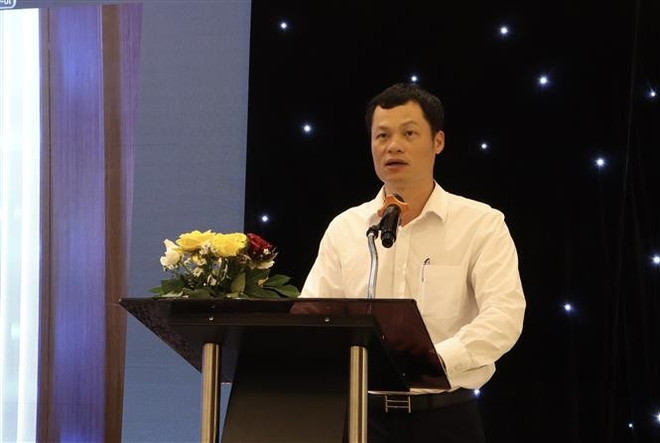
Do Quoc Hung, Deputy Director of the Department of Overseas Markets, speaks at the event. (Photo: VNA)

Speaking at the event, Do Quoc Hung, Deputy Director of the Department of Overseas Markets, highlighted the growing importance of Halal markets in the context of Vietnam’s market diversification strategy. Globally, the Halal industry is worth trillions of USD annually, serving over 2 billion consumers, approximately 25% of the world’s population.

The GCC comprising Saudi Arabia, the UAE, Qatar, Kuwait, Bahrain, and Oman is considered a hub in the global Halal supply chain. With high per capita incomes and a heavy reliance on imported goods including food, cosmetics, and medicines, the region offers vast opportunities for Vietnamese exporters.

In 2024, Vietnam–GCC bilateral trade reached 18 billion USD, with Vietnamese exports accounting for 7.5 billion USD. This shows that Vietnam's export growth potential is still very large, especially when the Vietnam-UAE Comprehensive Economic Partnership Agreement (CEPA) will take effect in the coming time.

Meanwhile, South Asia, home to approximately 600 million Muslims, also presents a promising Halal market. Key export destinations include Pakistan and Bangladesh. However, Vietnamese firms must meet rigorous Halal certification requirements and overcome cultural, religious, and technical barriers to access these markets.

Nguyen Minh Phuong, head of the West Asia–Africa Division at the MoIT, noted that the GCC has the population of around 60 million and annual incomes ranging from 40,000 to 80,000 USD per capita. Its domestic production is limited while consumer demand is high, with 90% of food being imported.

She said that with high income, consumers in the GCC region tend to choose high-quality branding products and pricing is not a big matter to them. Popular product categories include processed foods, seafood, instant noodles, rice, coffee, natural cosmetics, eco-friendly textiles, and household Halal goods.

She added that aside from local consumers, the GCC also hosts large South and Southeast Asian immigrant communities with consumption habits similar to Vietnamese people, which is a valuable advantage for local businesses.

Vietnam’s geographical location, she stressed, provides a strategic edge in accessing Halal markets in the UAE, Malaysia, and Indonesia. Several Vietnamese companies have successfully entered the Halal market, including Vinh Hoan Corp., Cau Tre Export Goods Processing JSC, and Trung Nguyen Coffee.

Despite its potential, the Halal market comes with specific challenges. Phuong emphasised the lack of a unified Halal certification system, with each country operating its own authority. Complicated customs procedures and slow payment methods also hinder market entry.

In South Asia, Halal food spending is estimated at 70–100 billion USD annually, said Le Thi Mai Anh, head of the Southeast Asia–South Asia and Regional Cooperation Division at the MoIT.

She said that consumer trends are shifting toward processed foods, cosmetics, and health supplements. Rising young middle-class populations are driving consumption growth of 5–7% annually.

South Asian consumers are price-sensitive but prefer organic products with small packaging, and increasingly shop online. In addition to food and cosmetics, demand is rising for light industrial inputs such as textiles and fragrances.

To succeed in Halal markets, experts advise Vietnamese exporters to focus on their niche strengths, comply strictly with Halal standards, leverage trade promotion networks, and build partnerships with local distributors.

Nguyen Thi Ngoc Hang, Marketing Director at Halal Certification Authority (HCA Vietnam), said Halal certification covers the entire supply chain from raw materials to production, transport, and storage, not just the final product. Certification is granted for individual products, not entire companies or categories, requiring businesses to adopt clear, long-term strategies.

If Vietnamese businesses can meet Halal requirements, they won’t just reach Muslim consumers, she said, adding that they’ll also tap into the high-end segment in global markets increasingly focused on quality and product safety./.
VNA

See more

Vietnamese Ambassador to Brazil Bui Van Nghi speaks at the seminar. (Photo: VNA)

Vietnam, Brazil seek ways to promote trade, investment cooperation

Vietnamese Ambassador to Brazil Bui Van Nghi informed that two-way trade reached 4.22 billion USD in the first six months of 2026, up 16.8% year-on-year. Brazil's exports to Vietnam exceeded 2 billion USD, rising 16.6%, while its imports from Vietnam totalled about 2.11 billion USD, an increase of 17%.

Wave Alpha, Honda Vietnam’s best-selling manual motorcycle model each month. (Photo: Bnews/VNA)

Honda Vietnam posts strong car sales growth, leads motorcycle market

The company sold 172,299 motorcycles in June, up 4.7% from the same month last year, highlighting steady consumer demand even as the market gradually shifts towards greener transport options. For the first six months of 2026, motorcycle sales reached 515,743 units, up 0.6% year-on-year.

Rice harvest in Xuan Giang commune, Ninh Binh province. (Photo: VNA)

Plan issued to develop agricultural logistics system

A key target is that by 2030, all concentrated agricultural, forestry and fisheries production areas will have access to essential services, including product traceability, quarantine, testing, quality certification, processing and market development. The move reflects growing international demand for stricter food safety, quality and traceability standards, which have become increasingly important for agricultural exports.

Delegates at the signing ceremony (Photo: VNA)

Vietnam, RoK boost micro-business cooperation

Vietnam's young population, dynamic market, and big growth potential are a perfect fit for the strengths that Korean micro-businesses bring in K-brands, technology, and service expertise, said KFME President Song Chi Young.

Cars at a public parking lot in Hai Phong city. (Photo: VNA)

Vietnam's auto sales rise 15%, hybrid, imported vehicles continue to outperform

With auto loan interest rates remaining competitive, stable vehicle supply, and an increasingly diverse product range, Vietnam's automotive market is expected to maintain its growth momentum through the remainder of 2026. SUVs, MPVs, and hybrid vehicles are likely to remain the main drivers of overall market sales.

The MoU signing ceremony between Becamex VSIP Binh Dinh and PV Gas CNG in Gia Lai province on June 26, 2026 (Photo: nhandan.vn)

Gia Lai positions itself as magnet for sustainable investment

Vice Chairman of the provincial People's Committee Nguyen Huu Que said ESG is no longer a communications message or a cost burden, but an essential requirement for accessing global capital. Gia Lai has chosen ESG as a pillar for building new competitive advantages and achieving sustainable development.

Chairman of the Tay Ninh provincial People's Committee Le Van Han delivers remarks at the inauguration ceremony. (Photo: VNA)

Suntory PepsiCo inaugurates 300-million-USD plant in southern Tay Ninh province

Built on nearly 20 hectares at Huu Thanh Industrial Park, the facility is the company's largest and most advanced plant in Vietnam and the biggest production site in Suntory PepsiCo's Asian manufacturing network. The factory has a designed annual production capacity of over 1.24 billion litres and is equipped with highly automated production, filling and warehousing systems.

Ho Chi Minh City inaugurates a UAV postal route linking Can Gio commune and Vung Tau ward on February 12, 2026. (Photo: VNA)

Ho Chi Minh City promotes UAV applications to develop low-altitude economy

With its enlarged development space, Ho Chi Minh City now combines strengths in urban development, industry and services with high-tech agriculture, the marine economy, logistics and diverse ecological areas. These conditions provide an ideal testing ground for UAV applications in urban management, land administration, environmental monitoring, disaster prevention and response, agriculture, logistics and public services.