Vietnam makes meaningful contributions to global human rights progress

Throughout the 59th session of the UNHRC, Vietnam’s delegation demonstrated a proactive, constructive, and responsible approach—engaging in dialogue, contributing to resolutions, and co-sponsoring major initiatives.

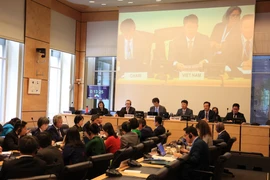
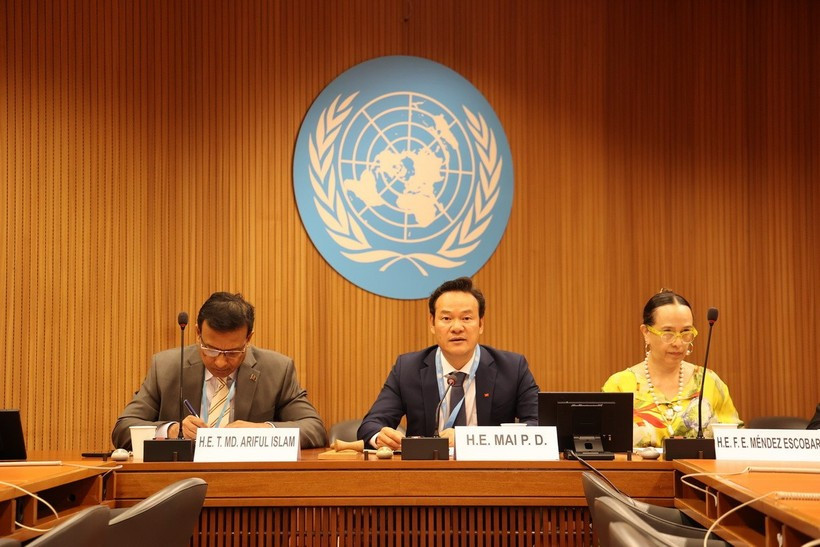
Ambassador Mai Phan Dung (middle), Permanent Representative of Vietnam to the UN, WTO, and other international organisations in Geneva, speaks at a discussion as part of the 57th regular session of the United Nations Human Rights Council (Photo: VNA)

Geneva (VNA) – The 59th regular session of the United Nations Human Rights Council (UNHRC) has concluded with the adoption of 26 resolutions and decisions – two of which were co-sponsored and co-drafted by Vietnam as part of a core group of nations.

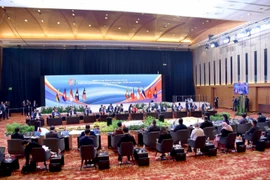
Held from June 16 to July 8 in Geneva, the session saw broad participation from member states, intergovernmental bodies, and non-governmental organisations. It featured five thematic panel discussions, dialogues with 35 special procedures and UN human rights mechanisms, and extensive consultations on draft resolutions. In total, the council adopted 26 resolutions, appointed two new special procedure mandate holders, and approved fourth-cycle Universal Periodic Review (UPR) reports for 14 countries.

The Vietnamese delegation, led by Ambassador Mai Phan Dung, Permanent Representative of Vietnam to the UN, WTO, and other international organisations in Geneva, actively engaged in the session.

On July 8, the council adopted by consensus two resolutions co-initiated and co-drafted by Vietnam and partner countries.

The first, a resolution on climate change and human rights, with a focus on climate finance, had over 63 co-sponsoring countries as of the evening of July 8 (Geneva time). The resolution followed extensive consultations led by Bangladesh in collaboration with Vietnam and the Philippines.

The second resolution, on strengthening international cooperation, technical assistance, and capacity-building to reinforce national frameworks for protecting and empowering children in cyberspace, was co-sponsored by over 87 countries by late July 8. It was jointly developed under the leadership of Saudi Arabia, along with Vietnam, Algeria, Azerbaijan, Kuwait, and Pakistan.

Vietnam has been an active member of the core group, alongside Bangladesh and the Philippines, responsible for the annual resolution on climate change and human rights at the UNHRC since 2008. This year’s theme, “Equitable and Effective Access to Climate Finance”, reaffirmed the link between climate change impacts and the enjoyment of human rights, stressing the importance of ensuring climate finance that offers tangible support to the nations most affected. Vietnam’s role underscores its commitment to human rights protection amid climate challenges and reflects its proactive and responsible foreign policy towards global issues.

The second resolution highlights growing international concern over the risks children face in digital environments. Vietnam’s strong involvement demonstrates its responsiveness to emerging and transboundary human rights issues. The resolution also reaffirmed the significance of the forthcoming UN Convention Against Cybercrime, due to open for signature in Hanoi on October 25–26. These actions reinforce Vietnam’s role in shaping global human rights standards.

Vietnam’s delegation contributed actively across numerous thematic discussions, including on climate change and human rights, human trafficking, extreme poverty, access to clean water and sanitation, business and human rights, and UPR report reviews of other nations. Alongside fellow ASEAN members, Vietnam helped lead the drafting of ASEAN’s joint statement on just transition in the context of climate change.

As part of the session, Vietnam held a photo exhibition titled “Vietnam: Identity, Humanity, and Integration” at the UN headquarters in Geneva from June 30 to July 8. The exhibition attracted wide interest from the international community, showcasing striking images of Vietnam’s socio-economic progress, its commitment to human rights, and its diverse cultural heritage. It served as a compelling example of cultural diplomacy and illustrated a modern and globally integrated Vietnam.

Vietnam also hosted a side event on transforming food systems to adapt to climate change and ensure the right to food, co-sponsored by Bangladesh, the Netherlands, and Mexico. Attended by over 50 international delegations and organisations, the event underlined Vietnam’s leadership in advocating human rights, especially the right to food in the face of intensifying climate threats. Delegates praised Vietnam’s food system transformation as a model worthy of expansion.

Throughout the 59th session of the UNHRC, Vietnam’s delegation demonstrated a proactive, constructive, and responsible approach—engaging in dialogue, contributing to resolutions, and co-sponsoring major initiatives.

These efforts reflect Vietnam’s consistent policy and steadfast commitment to promoting and protecting human rights, anchored in the UN Charter, international law, and global human rights norms.

Vietnam has continued to affirm its credibility and position as a responsible and active member of the UNHRC for the 2023–2025 tenure. Its achievements during this session exemplify its commitment to dialogue, mutual understanding, and safeguarding human rights for all, thus laying strong groundwork for its candidacy for the 2026–2028 term and making more substantive contributions to common issues of the international community./.

VNA
See more

A young volunteer donates blood during the 2026 Red Sunday programme. (Photo: VNA)

Nearly 5,000 people join blood donation campaign in Ho Chi Minh City

According to health authorities, Vietnam collected nearly 1.75 million units of blood in 2025, with 98% from volunteer donors, equivalent to around 1.75% of the population participating in blood donation. Large-scale campaigns such as Red Sunday have played a key role in achieving these results.

More than 30 kilogrammes of various drugs trafficked from Cambodia to HCM City were seized in a police operation in March 2025. (Photo: VNA)

Ho Chi Minh City aims to become drug free by 2030

Every commune, ward or residential area in Ho Chi Minh City is expected to meet official drug-free standards by the end of 2029, while schools, hospitals, government offices, businesses and social organisations across the city are to remain free of drug activity.

Military forces take a resident from a flooded area. Photo: VNA

Da Nang, Oxfam join hands to support flood victims

In the coming time, the Da Nang Red Cross Society will continue to coordinate with Oxfam to implement support activities in Nong Son commune, helping residents overcome difficulties and stabilise their livelihoods.

Training on response to reservoir incidents (Photo: VNA)

Central Civil Defence Fund established to bolster disaster response

The Central Civil Defence Fund is authorised to receive, manage and use voluntary contributions from domestic and foreign entities and individuals, plus transfers from provincial civil defence funds in line with the PM’s decisions and allocations from relevant state financial sources outside the state budget, all earmarked for incident and disaster response and recovery efforts.

Vietnamese women shine in the traditional Ao dai (Photo: VNA)

March shines with elegance of “Ao dai”

In early March, scenes of women in flowing Ao dai taking spring photos by lakes, parks, offices, temples and historical sites have become a familiar sight on the streets of Hanoi. Social media is also filled with images and stories surrounding the elegant attire, which has become a symbolic signal of the season dedicated to honouring women.

Hanoi voters learn about candidates’ biographies and action programmes. (Photo: VNA)

Hanoi thoroughly prepares for NA, People’s Council election

According to the municipal Election Committee, the capital city has established election committees in 126 communes and wards. In addition, 11 electoral boards for National Assembly deputies, 31 electoral boards for the city-level People’s Council, 831 commune-level electoral boards and more than 4,000 polling teams have been set up to serve the election process.

Artisan Vu Van Vinh from Chuyen My commune introduces to visitors a set of mother of pearl inlaid lacquer furniture including a platform bed, tea cabinet, and lacquered horizontal boards and parallel sentences made by his family, worth more than 3 billion VND. (Photo: VNA)

Four Hanoi craft villages join global creative crafts network

The recognition is not only a source of pride for the capital but also creates opportunities to promote these craft villages globally, strengthen international connections, and support their sustainable development in the process of global integration.

Vietnamese women affirm growing role in national economy

Vietnamese women affirm growing role in national economy

Vietnamese women have long been an indispensable force in the country’s socio-economic development. Today, they are present across a wide spectrum of economic activities, from production, trade and small-scale services to innovative start-ups, collective economic development, the digital economy, green growth, the circular economy and financial inclusion.

Voters study information of candidates to the 16th National Assembly and People’s Councils at all levels in the 2026-2031 tenure. (Photo published by VNA)

K’Ho ethnic minority group in Lam Dong province looks forward to Election Day

Lac Duong commune is a remote locality largely inhabited by the K’Ho ethnic minority in Lam Dong. The commune has 15 villages with more than 14,000 residents in 3,119 households and 8,799 registered voters. Given that residents live scattered along National Highway 27C and that the area’s mountainous terrain makes travel difficult, local authorities have prepared plans to organise the election smoothly.

Officers of the Vietnam Coast Guard Region 2 Command step up communications efforts to encourage fishermen to comply with anti-IUU fishing regulations. (Photo: VNA)

Vietnam Coast Guard Region 2 intensifies efforts to help remove IUU fishing “yellow card”

According to Colonel Truong Ba Long, Deputy Commander and Chief of Staff of the Vietnam Coast Guard Region 2 Command, the close integration of efforts to combat IUU fishing with routine patrol and control activities to safeguard maritime sovereignty, prevent smuggling and trade fraud, fight drug-related crimes, and conduct search and rescue operations constitutes a regular task of the unit.