Vietnam overtakes Thailand to become world's second-largest rice exporter

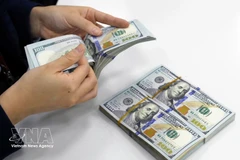
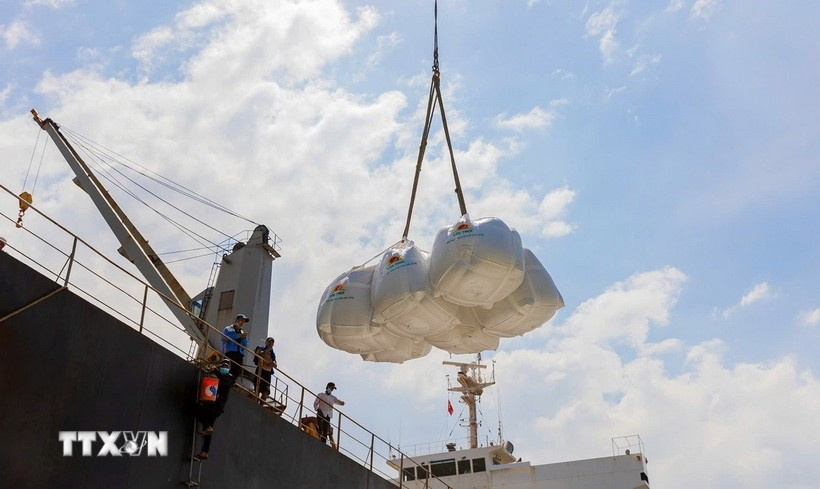
For the first seven months of 2025, Vietnam exported about 5.5 million tonnes of rice, generating 2.81 billion USD — a 3.1% increase in volume but a significant 15.9% decline in value compared to the same period in 2024.

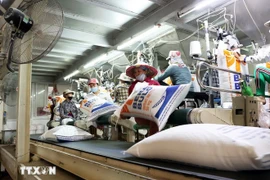
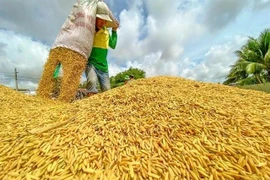
Vietnam exported about 5.5 million tonnes of rice, generating 2.81 billion USD, in the first seven months of 2025. (Photo: VNA)

Hanoi (VNA) – Vietnam has outranked Thailand as the world’s second-largest rice exporter in the first half of 2025, Thai PBS reported on August 3, citing the Thai Rice Exporters Association.

The association noted that from January to June, India exported 11.68 million tonnes of rice, an increase of 36.5% year on year, followed by Vietnam’s 4.72 million tonnes, up 3.6%.

Meanwhile, Thailand saw 3.73 million tonnes exported, down 27.3%; Pakistan’s 2.76 million tonnes, down 20.2%; and the US's 1.4 million tonnes, down 23.5%.

Vietnam sees rise in export volume, drop in value

According to the Vietnamese Ministry of Agriculture and Environment, the country exported an estimated 750,000 tonnes of rice in July 2025, with 366.1 million USD in revenue. This brought total rice exports for the first seven months of the year to about 5.5 million tonnes, generating 2.81 billion USD — a 3.1% increase in volume but a significant 15.9% decline in value compared to the same period in 2024.

The drop in revenue is attributed to lower average export prices. In the first seven months, Vietnam’s average export price fell to 514 USD per tonne, down 18.4% from a year earlier.

The Philippines remained Vietnam’s largest buyer, accounting for 42.6% of total export turnover, though the value to this market dropped 13.5% in the first half of the year.

In contrast, several African markets recorded impressive growth. Exports to Ghana soared by 53.5%, while shipments to Côte d’Ivoire nearly doubled, up 96.6%. Among Vietnam's top 15 rice export markets, Bangladesh showed the strongest increase in value — a staggering 188-fold surge — while Malaysia posted the sharpest decline, at 58.5%.

Despite solidifying its position as the world’s second-largest rice exporter, Vietnam faces growing pressure from global price declines, which are squeezing export revenue and profit margins across the rice sector.

Vietnam's rice remains highly competitive

Do Ha Nam, Chairman of the Vietnam Food Association (VFA), acknowledged that the gap between Vietnam and Thailand remains narrow, but the result reflects the competitiveness of Vietnamese rice, which has maintained growth since the year's beginning.

Nam observed that although the global rice market is experiencing a price downturn and many exporters are losing ground, the Vietnamese grain has remained in demand in key markets such as the Philippines, Africa, and China.

He cited statistics as showing that Vietnam’s export prices over the past six months averaged 517 USD per tonne — higher than the average price of around 400 USD per tonne recorded by other major exporting countries./.
VNA

See more

Officials visit a booth at the festival. (Photo: VNA)

Vietnam OCOP Festival 2025 opens in Hanoi

The festival functions as a space to bring together regional OCOP excellence, a forum connecting OCOP stakeholders with distributors, investors, experts and consumers, and a platform to spread pride in indigenous culture, local knowledge, and the aspiration for legitimate prosperity.

Prime Minister Pham Minh Chinh (third from right) and officials launch the Ministry of Construction’s new information technology systems at the conference on December 21. (Photo: VNA)

Modern, comprehensive infrastructure – a need for fast, sustainable development: PM

The Party and State continue to define infrastructure development as one of the three strategic breakthroughs, with priority given to building comprehensive and modern infrastructure, particularly transport facilities, technological infrastructure, and green – digital transition infrastructure, to help realise the national target of double-digit growth, the PM said.

Prime Minister Pham Minh Chinh addresses he third meeting of the National Steering Committee implementing the Politburo’s Resolution 68 in Hanoi on December 20. (Photo: VNA)

PM pushes trust, breakthroughs to accelerate private sector growth

Prime Minister Pham Minh Chinh noted that since the rollout of Resolution 68, alongside supporting resolutions from the National Assembly (NA) and Government, there has been a marked change in understanding the private sector’s critical position and role in Vietnam’s socialist-oriented market economy.

PM Pham Minh Chinh chairs the meeting (Photo: VNA)

Private sector thrives eight months after Resolution 68’s launch: PM

The private sector has shown marked progress eight months after the launch of Resolution 68, registering about 18,000 new enterprises monthly and pushing the nationwide total to nearly 1.1 million, Prime Minister Pham Minh Chinh told the third meeting of the National Steering Committee in Hanoi on December 20.

Phin Ho Tra – a national five-star OCOP product. (Illustrative photo: VNA)

Hanoi to host Vietnam OCOP Festival 2025

The festival is seen a practical activity celebrating the achievements made by the capital and the country in 2025, affirming OCOP’s role in rural economic development, contributing to realising Vietnam’s aspiration for strong economic growth in the context of deep integration.

The expanded Hoa Binh Hydropower Plant (Photo baochinhphu.vn)

EVN launches major power projects

Among the flagship projects inaugurated was the expanded Hoa Binh Hydropower Plant with a total installed capacity of 480MW per year and average annual output of about 488 million kWh.

An ultra-intensive shrimp farming model linked with environmental protection in Ca Mau province. (Photo: VNA)

Fisheries take the lead in the Mekong Delta’s green transition

Across the Mekong Delta, leading aquaculture producers, processors and exporters, along with suppliers of inputs, are transitioning to circular, high-tech and clean production models that cut greenhouse gas emissions and comply with international certification standards.