Vietnam remains Singapore’s third-largest rice supplier

In the first half of 2025, Singapore imported rice products worth 60.9 million SGD (over 47.7 million USD) from Vietnam, accounting for 24.5% of the country’s total rice imports.

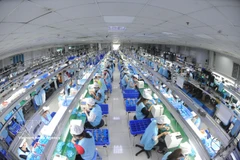
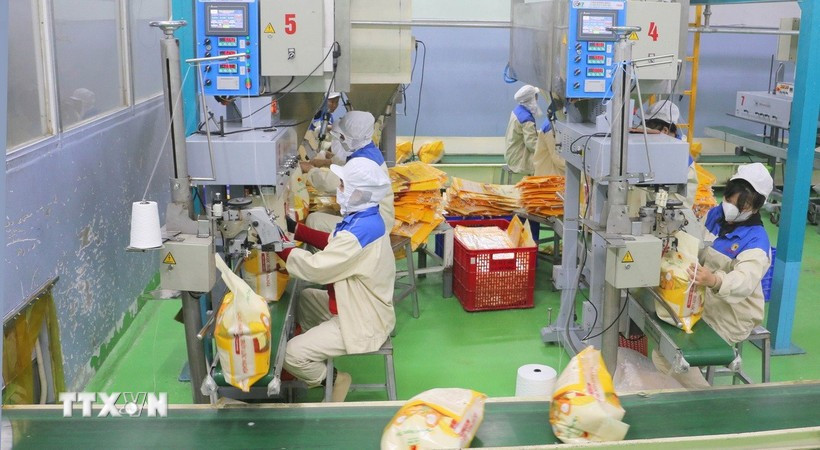
Workers package rice for export at the Thao Son food factory (Photo: VNA)

Hanoi (VNA) – Vietnam has maintained its position as the third-largest rice supplier of Singapore, according to data from Singapore’s Accounting and Corporate Regulatory Authority, cited by the Vietnam Trade Office in Singapore.

In the first half of 2025, Singapore imported rice products worth 60.9 million SGD (over 47.7 million USD) from Vietnam, accounting for 24.5% of the country’s total rice imports. The value marked a 17.1% decline year-on-year, which may be attributed to falling export prices.

Vietnam’s Ministry of Agriculture and Environment reported that the country’s average export price for rice during this period was estimated at 517.5 USD per tonne, down 18.4% from the same period in 2024.

Among Vietnamese rice categories in the Singaporean market, white rice posted the highest import value, reaching 38.6 million SGD in the first six months of 2025, an 11.9% increase year-on-year, capturing 29.6% of the market. Despite facing competition from more than 20 international suppliers, Vietnam ranks second in Singapore’s white rice imports, behind India, which posted 60.9 million SGD in sales and a 46.7% market share.

In addition to white rice, two other Vietnamese rice categories recorded strong import values: milled fragrant rice and glutinous rice, with respective import values of 15.5 million SGD and 4.7 million SGD. These accounted for 57% and 61% of Singapore’s market share in their respective segments. Despite a slight drop in import values compared to the same period in 2024, Vietnam continues to lead as Singapore’s top supplier in these two categories.

In the first half of 2025, Singapore imported 248.9 million SGD worth of rice, up 10.8% year-on-year. India and Thailand remained the top suppliers, with Vietnam holding the third place.

According to the Vietnam Trade Office in Singapore, while the size of Singapore’s rice import market has remained stable, Vietnamese rice faces intense competition from Indian, Thai and Japanese products. A proposed bilateral rice trade agreement between Vietnam and Singapore is expected to help stabilise Vietnam’s rice exports to the city-state in the near future./.

VNA
See more

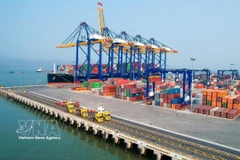
At a port in Ho Chi Minh City (Photo: VNA)

Multi-channel capital mobilisation needed to achieve double-digit growth

The Ministry of Finance estimates development investment for 2026-2030 at a minimum of 38.5 quadrillion VND (1.48 trillion USD), or about 40% of GDP. The state budget is expected to provide only about 20%, or more than 7.7 quadrillion VND, leaving over 80%, or more than 30 quadrillion VND, to be raised from the broader economy. That makes expanding capital mobilisation channels beyond bank credit essential.

An aerial view of the Nhieu Loc – Thi Nghe area in Ho Chi Minh City. The southern metropolis is home to the Vietnam International Financial Centre. (Photo: VNA)

Vietnam International Financial Centre launches membership registration system

Integrated into the official Vietnam International Financial Centre portal at vifc.gov.vn, the online system for registering and recognising members provides a unified online service channel through which investors, organisations and businesses can complete procedures related to membership, from new registration and recognition to information updates and termination of membership.

At a tax office in Hung Yen province (Photo: VNA)

Finance ministry moves to cut business costs, spur growth

Tax policy is among the solutions with the most direct impact on companies. Rather than prioritising near-term revenue collection, fiscal policy is being run to help them preserve cash flow, expand production and build more sustainable revenue sources.

In the Kim Long Motor Hue factory (Photo: VNA)

Hue courts capital to turn industrial zones into growth engine

The economic and industrial zones in Hue city host more than 200 active investment projects worth over 152 trillion VND (5.84 billion USD), with 139 already operational. Since the start of 2026, they have generated about 32 trillion VND, contributed 4.2 trillion VND to the state budget and brought in 730 million USD in exports, while employing more than 46,000 workers.

An overview of a meeting between Politburo member and Secretary of the Hanoi Party Committee Tran Duc Thang and representatives of Saint Petersburg businesses. (Photo: VNA)

Saint Petersburg’s metro expertise valuable for Vietnam

As Hanoi implements its master plan with a 100-year vision, in which metro lines are identified as the backbone of the capital city’s transport network, Secretary of the municipal Party Committee Tran Duc Thang met with representatives from several Saint Petersburg companies specialising in urban rail development.

An art performance at 2026 Dak Lak Durian Festival. (Photo: VNA)

Dak Lak Durian Festival seeks to elevate Vietnam’s agricultural brand globally

Dak Lak has about 41,000ha of durian, with this year’s output estimated at nearly 500,000 tonnes. The province has 280 growing-area codes covering around 7,500ha, along with 41 packing facilities approved for export. In 2025, Dak Lak’s durian sector contributed about 1.1 billion USD to the country’s export turnover.

Delegates cut the ribbon to inaugurate the Ho Chi Minh City-Shenzhen direct air route. Photo: baodautu.vn

Vietravel Airlines launches direct Ho Chi Minh City-Shenzhen route

Vietravel Airlines' new route connects Tan Son Nhat International Airport (SGN) in Ho Chi Minh City with Shenzhen Bao'an International Airport (SZX), meeting growing demand for travel between the two markets for investment, trade, tourism and visiting relatives.

Thanks to digital transformation among local officials, Tam Dao commune of Phu Tho province has achieved an almost 100% on-time rate for processing administrative applications, helping improve public services for residents. (Photo: VNA)

Institutional reform fuels private sector's growth in Phu Tho province

The private sector is increasingly emerging as a key growth engine of the economy. To unleash its potential and ensure sustainable development, the northern province of Phu Tho is stepping up institutional and administrative reforms to cut costs, shorten procedures, and build a more transparent, business-friendly investment climate.