Singapore trade event helps Vietnamese enterprises boost exports

The Vietnam Fruit and Vegetable Festival 2025 was held in Singapore on July 18 as a meaningful trade promotion event that strengthens bilateral economic, trade, and investment ties and helps realise the economic cooperation contents of the Vietnam–Singapore Comprehensive Strategic Partnership.

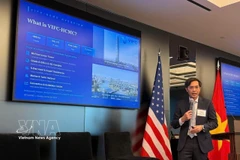
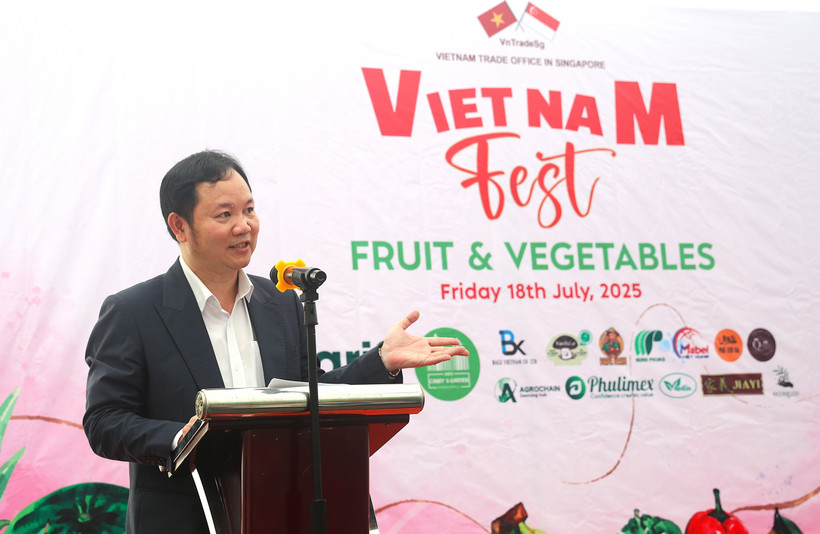
Cao Xuan Thang, Trade Counsellor and Head of the Vietnam Trade Office in Singapore, speaks at the festival (Photo: VNA)

Singapore (VNA) – The Trade Office of the Vietnamese Embassy in Singapore, in collaboration with the Singapore Fruits and Vegetables Importers and Exporters Association (SFVIEA), organised the Vietnam Fruit and Vegetable Festival 2025 on July 18, aiming to support Vietnamese enterprises in boosting exports and expanding access to international markets.

The festival brought together 11 Vietnamese fruit and vegetable exporters, along with several Vietnamese restaurants operating in Singapore. Participants showcased specialty agricultural products from Vietnam with strong potential for deeper entry into the island-state.

In his opening remarks, Vietnamese Ambassador to Singapore Tran Phuoc Anh said Vietnam takes pride in its dynamic agricultural sector, which has become one of the region’s leading exporters of fruits and vegetables. He described the festival as a meaningful trade promotion event that strengthens bilateral economic, trade, and investment ties and helps realise the economic cooperation contents of the Vietnam–Singapore Comprehensive Strategic Partnership.

He further stated that this model of trade connection could be replicated for other Vietnamese product categories in the future.

Leong Der Yao, Deputy CEO of the Singapore Food Agency (SFA), highlighted the importance of the festival in reinforcing the two countries’ commitment to cooperation in the agri-food sector. He noted that the event fostered valuable commercial connections, created mutually beneficial trade opportunities, strengthened existing relationships, and reflecting Singapore’s sectoral commitments.

Tai Seng Yee, Vice President of SFVIEA, briefed participants on the demands of the Singaporean market, including quality requirements for imported fruits and vegetables, and highlighted local consumer preferences and dietary habits.
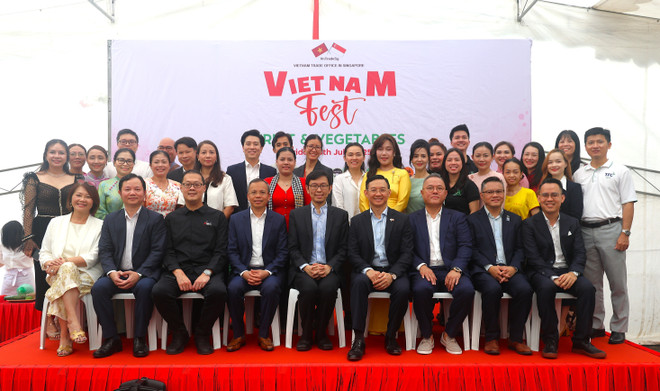
fruit-vegetable-festival.jpg
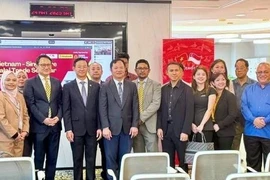
Participants pose for a group photo at the Vietnam Fruit and Vegetable Festival 2025. (Photo: VNA)

According to Cao Xuan Thang, Trade Counsellor and Head of the Vietnam Trade Office in Singapore, Singapore serves as a key transshipment hub. Therefore, strengthening the presence of Vietnamese goods in this market can help Vietnamese businesses gain access to other regional markets.

The festival created a vibrant space for Singaporean businesses and Vietnamese exporters to connect. Local authorities and importers expressed high appreciation for a wide variety of Vietnamese produce, including durian, Hoa Loc and Cat Chu mangoes, lychee, longan, coconut, dragon fruit, banana, rambutan, guava, pomelo, mushrooms, and leafy vegetables.

The highlight of the event was the the culinary demonstrations which featured celebrity chefs Daniel Koh and Maya Yi, who selected fresh Vietnamese produce displayed at the event to prepare high-quality dishes and beverages for guests.

In an interview with the Vietnam News Agency, Ambassador Tran Phuoc Anh described the collaboration between the Vietnam Trade Office and SFVIEA as an effective initiative to enhance trade ties across multiple sectors. He said that fruits and vegetables were selected as the initial area of cooperation due to their high potential, product diversity, freshness, quality, and competitive pricing, well-suited to Singapore’s market demands./.

VNA

See more

Workers process fruit for export at the Chanh Thu factory in Cho Lach commune, Vinh Long province. (Photo: VNA)

Vietnam works to maintain edge in key agricultural market

According to Le Hang, Deputy Secretary-General of the Vietnam Association of Seafood Exporters and Producers (VASEP), China and Hong Kong (China) remained bright spots for Vietnam’s aquatic exports in July, with revenue exceeding 267 million USD, up 24.7% year-on-year.

An estimated 6,300 workers are needed by the semiconductor industry in Bac Giang province during the 2025-2030 period. (Photo: VNA)

India's semiconductor strategy complementary to Vietnam's chip sector: expert

Sudhanshu Mittal, Director of Engineering Solutions at the National Association of Software and Service Companies (Nasscom) of India, noted that during the state visit to India by General Secretary of the Communist Party of Vietnam Central Committee and President To Lam in May, the two countries signed a number of cooperation agreements, with semiconductors identified as a priority area alongside artificial intelligence (AI), cybersecurity, and advanced technologies.

At the working session between Vietnamese Minister of Finance Ngo Van Tuan (right) and RMIT University’s Vice-Chancellor and President Professor Alec Cameron in Sydney on August 10 (Photo: tapchikinhtetaichinh.vn)

Vietnam, Australia seek to expand investment in rice value chain

During General Secretary of the Communist Party of Vietnam Central Committee and President To Lam’s state visit to Australia from August 9-12, Vietnamese Minister of Finance Ngo Van Tuan, authorised by the General Secretary and President, held working sessions with SunRice Group CEO Paul Serra and RMIT University’s Vice-Chancellor and President Professor Alec Cameron in Sydney on August 10.

Students practice microcontroller programming at the Vietnam-Korea College of Technology in Bac Ninh province (Photo: VNA)

Vietnam – one of most attractive destinations for leading US semiconductor companies: expert

Vietnam has built a solid semiconductor and electronics industry before joining ITSI, attracting major US semiconductor companies. Intel Products Vietnam is one of Intel's largest assembly and testing facilities worldwide, while chip design companies such as Synopsys, Cadence, Marvell and Qualcomm have established engineering and research centres in the Southeast Asian country.

Lawmakers on August 9 discuss a draft law amending and supplementing a number of articles of the Law on the State Bank of Vietnam, the Law on Anti-Money Laundering and the Law on Credit Institutions. (Photo: VNA)

Lawmakers discuss measures to ensure banking system safety, support digital economy

The draft law sets out provisions to control conflicts of interest when commercial banks act as agents managing collateral for corporate bonds. In this regard, Deputy Le Van The of Ninh Binh province said he supported the move, noting that it could provide a more professional approach to collateral management and help strengthen investor confidence if properly regulated.

A company in Da Nang operates a customer relationship management system supported by AI chatbots. (Photo: VNA)

AI drives rise of sleepless enterprises in Vietnam

The concept of a sleepless enterprise does not necessarily mean making employees stay on the job all the time. Instead, it's about building intelligent systems that can respond to customers, process transactions, monitor operations, analyse data and flag risks continuously.

Head of the Vietnam Trade Office in Australia Tran Thi Thanh My (Photo: VNA)

Vietnam, Australia eye 20 bln USD trade target

The head of the Vietnam Trade Office in Australia hoped that the visit by Party General Secretary and State President To Lam will mark a new milestone, opening the door for firms on both sides to forge stronger links and launch concrete cooperation agendas, helping hit that 20 billion USD trade goal sooner rather than later.

Phu Quoc pepper products, granted three stars under the OCOP programme in An Giang province, are displayed at an exhibition of outstanding OCOP products from the Mekong Delta. (Photo: VNA)

Phu Quoc leverages OCOP programme to take local specialities global

Better known as one of Vietnam’s premier island destinations, Phu Quoc is leveraging its “One Commune, One Product” (OCOP) programme to transform traditional specialities into internationally recognised products, integrating local agriculture, food processing and tourism to promote sustainable economic growth.