Hanoi (VNA) – Driving the development of strategic technologies such as semiconductors and artificial intelligence (AI) is seen as the key for Vietnam to accelerate its economic growth.
Milestones in strategic technology networks
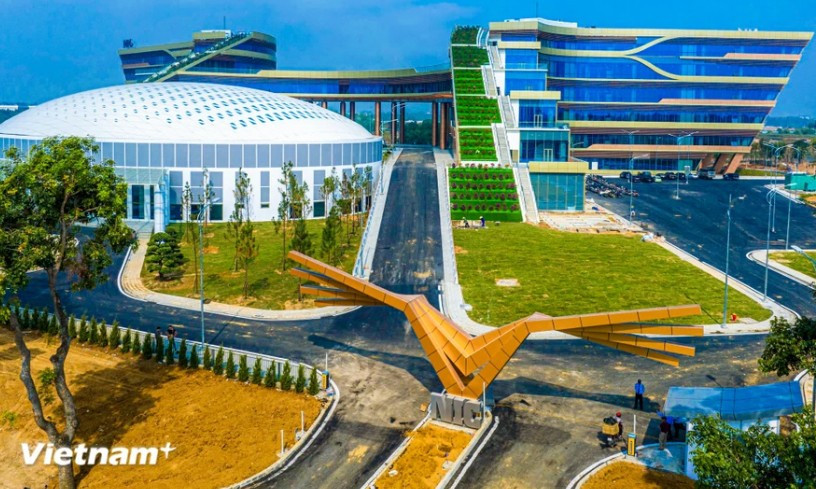
The National Innovation Centre under the Ministry of Finance has officially launched three new networks of innovation and strategic technology in quantum technology (VNQuantum), cybersecurity (ViSecurity), and aerospace and unmanned aerial vehicles (UAV Vietnam).
VNQuantum aims to put Vietnam on the global quantum technology map. ViSecurity is focused on mastering cybersecurity technologies and developing “Made in Vietnam” solutions to safeguard national digital infrastructure. UAV Vietnam seeks to move the country from a consumer market to a producer and innovator in the global aerospace and UAV value chain.
Deputy Minister of Finance Do Thanh Trung noted at the launching ceremony that strategic technologies such as quantum, cybersecurity, aerospace, and UAVs would not only serve as engines of economic growth, but are also closely linked to national security, digital sovereignty, and Vietnam’s international standing.Observers highlighted that globally, quantum, cybersecurity, and aerospace technologies are emerging as strategic pillars in the future economy, with markets estimated to reach trillions of USD in the coming decade. The creation of these networks, through an initial gathering of expertise, is an important starting point for Vietnam’s development of new strategic industries.
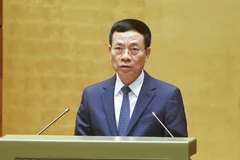
Deputy Prime Minister Nguyen Chi Dung stressed that the development of strategic technologies was not a matter of choice but a national imperative.In June 2025, the Prime Minister issued Decision No. 1131/QD-TTg identifying 11 groups of strategic technologies for Vietnam, including AI, semiconductors and aerospace.Networks in AI and semiconductors were launched in 2024, and the establishment of three more this year was seen as completing the innovation ecosystem in pioneering fields, offering Vietnam opportunities to integrate into global supply chains and gradually become a hub for innovation in these strategic areas.
Analysts said the formation of such industries could help Vietnam catch up with and even surpass competitors in key sectors, creating new drivers of national growth.Semiconductors and AI as catalysts for growth
While quantum, aerospace and related technologies may require time to build essential foundations, semiconductors and AI are already emerging as powerful catalysts for growth, particularly in attracting strategic investment projects.The Ministry of Finance reported that Vietnam currently hosts approximately 170 foreign-invested projects in the semiconductor and high-tech sectors, with total registered capital of nearly 11.6 billion USD. Several global players, including Intel, Amkor and HanaMicron, have established billion-dollar facilities in the country. Other companies, including Marvell, Siemens, Ampere and BE Semiconductor Industries, have also invested in Vietnam. NVIDIA and Qualcomm are focusing on research and development, especially in AI.Beyond the scale and number of projects, Vietnam has started to enter high-value-added stages of the semiconductor supply chain such as equipment, materials, components, packaging and chip testing.
Foreign investors have increasingly recognised Vietnam as an essential link in the global semiconductor supply chain, with the global market projected to reach 1 trillion USD by 2030.
At a meeting in early August 2025, Prime Minister Pham Minh Chinh, who is also Head of the National Steering Committee for Semiconductor Industry Development, underlined bottlenecks in attracting investment to the sector. These included the large scale of projects, high energy demand, the need for highly skilled workers and the early stage of new policies. The PM emphasised that addressing these constraints would be crucial to advancing the industry.
Following the meeting, the Government Office issued a notice assigning key tasks to relevant stakeholders. Ministries, agencies and localities were instructed to develop or propose policies to support enterprises and attract investment into semiconductors. The Ministry of Finance was tasked with intensifying efforts to attract foreign investment, particularly projects with advanced, high-tech, clean technologies and modern governance that could add value and integrate into global supply chains.
The Ministry of Industry and Trade was directed to coordinate with other bodies to ensure stable electricity supply, prioritising clean power for semiconductor development, and to study pricing mechanisms for chip manufacturing.
Analysts said these measures were vital to unlocking investment and advancing the semiconductor industry. They noted that similar efforts would be needed to attract investment in aerospace, UAVs, quantum and cybersecurity to sustain Vietnam’s momentum towards accelerated economic growth. Such opportunities should not be missed, they added./