Vietnam’s Government AI Readiness Index higher than global average

Vietnam ranked 6th out of the 10 ASEAN member countries and 55th globally in the 2022 Government AI Readiness Index, up seven places compared to 2021, according to the index report released by the UK’s Oxford Insights.
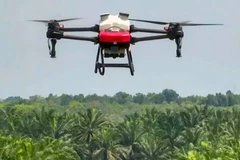
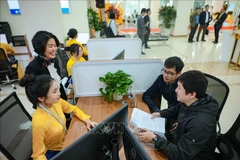
Vietnam’s Government AI Readiness Index higher than global average ảnh 1Vietnam ranked 6th out of the 10 ASEAN member countries and 55th globally in the 2022 Government AI Readiness Index.(Photo: Internet)

Hanoi (VNA) – Vietnam ranked 6th out of the 10 ASEAN member countries and 55th globally in the 2022 Government AI ReadinessIndex, up seven places compared to 2021, according to the index report releasedby the UK’s Oxford Insights.

The country earned an average score of 53.96 points in2022, increasing from 51.82 points in 2021 and surpassing the global average of44.61, according to Oxford Insights, which ranked 181 countries this year, upfrom 160 in last year’s iteration.

These are part of the article “Vietnam’s AI LeadershipStatus Is Blossoming” published last week by the US magazine Forbes. Thearticle summarises several research sources about Vietnam’s AI industry,indicating that it has an ambitious plan to lead the AI industry in Asia,turning it into top four countries in Asia in terms of artificial intelligenceadvancement.

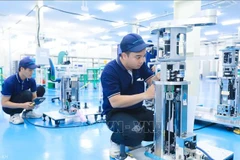
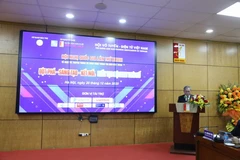
Vietnam’s Government AI Readiness Index higher than global average ảnh 2Digital solutions are introduced at a information and communications industry.(Photo: VNA)

Forbes highlighted Vietnam’s jump in the AI readinessindex when mentioning that the International Development Research Centre inCanada and the UK’s Oxford ranked Vietnam 6th in ASEAN and 62nd in the worldfor the 2021 Government Artificial Intelligence Readiness Score.

That was the first time Vietnam’sAI Readiness Score reached 51.82 out of 100, which surpasses the global average of 47.72 andhelps the country climb 14 places compared to the previous year. The readinessof a country or territory toward AI technology is evaluated through threepillars – the government, technology, and data infrastructure.

The article cited statistics from the Ministry ofInformation and Communications which says that Vietnam now has more than 64,000digital technology enterprises, an increase of 5,600 compared to2020, and nearly 1,000 Vietnamese branded ICT products and services.

It is estimated that it has more than 1 million ITworkers, and more than 80,000 university and college graduates majoring ininformation and communication technology.

Moreover, the Vietnamese government is investing heavilyin AI and other digital technologies such as machine learning, blockchain, bigdata analytics, the Internet of Things (IoT), and cloud computing.

Vietnam recently approved the National DigitalTransformation Programme by 2025 with an orientation towards 2030, whichcreates a foundation for a solid strategy for the country to become a powerful AIinnovator in the years to come.

However, besides positive signs for AI industrydevelopment, Vietnam is still facing challenges, particularly those relating tohuman resources with the necessary knowledge in AI, the article pointed out.

According to the World Intellectual Property Organisation(WIPO), there are fewer than 2,000 Vietnamese studying and working inAI-related fields, and fewer than 300 are considered AI experts. Currently,there are about 50 universities and academies in Vietnam that teach majorsubjects related to AI./. 

VNA

See more

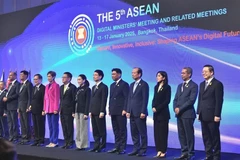
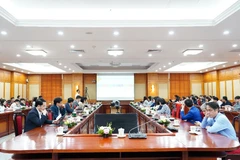
Participants at the 5th ASEAN Digital Ministers Meeting (ADGMIN) in Thailand. (Photo: VNA)

Hanoi to host 6th ASEAN Digital Ministers’ Meeting in January

Held annually on a rotating basis among ASEAN member states, the meeting plays a key role in shaping strategic orientations, formulating policies and promoting digital cooperation within ASEAN, while strengthening collaboration with partners and international organisations amid rapid digital and digital-economy transformation globally.

(Illustrative photo: Viettel)

Viettel records breakthrough in first 5G Advanced trial

The achievement, marked as Vietnam’s first 5G Advanced trial, was made possible by carrier aggregation (CA) technology, enabling mobile devices to operate across multiple frequency bands simultaneously instead of a single band.

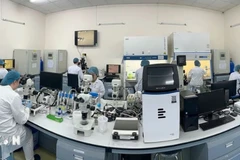
A biotechnology laboratory of the International University at Vietnam National University-Ho Chi Minh City. (Photo: VNA)

Resolution 57: Role of intellectuals in advancing science and technology research

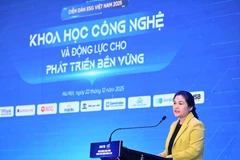
Prof. Dr. Tran Dai Lam, Director of the Institute of Materials Science at the Vietnam Academy of Science and Technology (VAST), emphasised that intellectuals should nurture national responsibility and ambition, be ready to take on challenges, evaluate research outcomes by international standards, and engage in collaboration across different sectors.

Professor Vu Minh Khuong, of the Lee Kuan Yew School of Public Policy (right), talks to a Vietnam News Agency correspondent in Singapore. (Photo: VNA)

Resolution 57 - catalyst for scientific and technological breakthroughs

The resolution also seeks to create stronger mechanisms to mobilise social and private resources and support an innovation ecosystem; link digital transformation in the public sector with the modernisation of national governance; and prioritise the development of elite human resources and internationally-standard research infrastructure.

Workers produce electronic components (Photo: VNA)

Science, technology drive Vietnam’s rising global profile: expert

Assoc. Prof. Le Duc Anh from Tokyo University held that for fast and sustainable development, Vietnam should prioritise science – technology and innovation as the main driver of productivity, focusing on sectors with high spillover effects such as semiconductors, AI, data, new energy and materials, biomedical technology, automation – robotics, and cybersecurity.

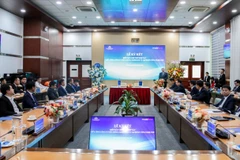
An overview of the workshop. (Photo: nafosted.gov.vn)

National portal expected to transform innovation into reality

The portal, which can be accessed at sangkien.gov.vn, was built to address the urgent need to mobilise collective intelligence and unlock the creativity of the entire population, in accordance with the directives of the steering committee for the implementation of the Politburo’s Resolution No. 57-NQ/TW on creating breakthroughs in science, technology, innovation and national digital transformation.

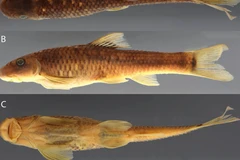
Sucker-mouthed minnow (Supradiscus varidiscus). (Photo: researchgate.net)

Vietnamese fish, bee named among 70 species newly identified in 2025

One of the most notable “hidden” finds is a small sucker-mouthed minnow endemic to Vietnam’s highlands, discovered in the Lo River. Scientifically named Supradiscus varidiscus, the specimen was collected and shelved some 25 years ago but has only now been studied and formally described.

The Ministry of Science and Technology launches a centralised one-stop-shop unit on December 19. (Photo: VNA)

Vietnam pushes sci-tech, innovation as growth drivers under Resolution 57

The Ministry of Science and Technology (MoST) bears the responsibility of “paving the way”, guided by a consistent spirit of transitioning from a management-oriented mindset to a facilitative one, from “input-based management” to “output-based evaluation”, and from fragmented investment to a focused approach centred on strategic technologies.