Vietnam strengthens appeal to long-term investors

As regional property markets enter 2026 on a more stable footing, Vietnam continues to stand out as a market with solid long-term growth prospects.

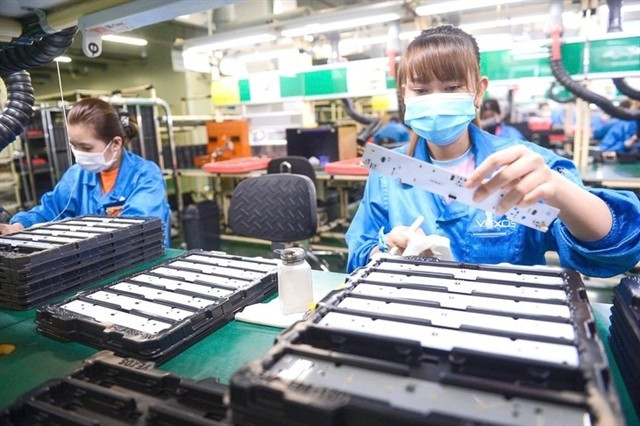
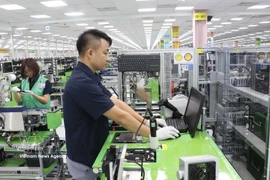
Workers at Vexos Company in Tan Thuan Export Processing Zone in HCM City (Photo: tuoitre.vn)

Ho Chi Minh City (VNS/VNA) - Vietnam is emerging as an increasingly attractive destination for long-term investors in the Asia–Pacific region, supported by macroeconomic stability, expanding domestic demand, and sustained inflows of foreign investment, according to Savills’ Asia Pacific Outlook 2026 report.

As regional property markets enter 2026 on a more stable footing, Vietnam continues to stand out as a market with solid long-term growth prospects.

Savills noted that the recovery of leasing demand, improving consumer activity, and more selective investment strategies are creating favourable conditions for economies with strong fundamentals.

Data from the General Statistics Office (GSO) show the country’s GDP growth reflecting resilience and steady recovery.

After expanding by around 8% in 2022, growth moderated to approximately 5.1% in 2023 amid global economic headwinds, before rebounding to about 7.1% in 2024 and reaching 8.02% in 2025.

Vietnam remains among the region’s fastest-growing economies, reinforcing investor confidence in the country’s medium- and long-term outlook.

Economic quality indicators have also improved significantly.

GDP per capita rose from roughly 3,700 USD in 2022 to nearly 5,026 USD by 2025.

Rising incomes and the rapid expansion of the middle class are underpinning domestic consumption while driving demand for infrastructure, logistics, urban development, and modern commercial services.

Savills said these factors are reshaping Vietnam’s property market, with growth increasingly anchored in real demand.

Demand for Grade A office space across the Asia–Pacific region is expected to remain positive, particularly in emerging talent hubs such as Vietnam.

Multinational corporations continue to expand their presence to access skilled labour at competitive costs.

In the retail segment, improving consumer spending, tourism recovery, and the return of international brands are contributing to a more optimistic outlook.

The country’s industrial and logistics property sector remains a key beneficiary of global supply chain restructuring, including “China plus one” strategies and production diversification.

Neil MacGregor, Managing Director of Savills Vietnam, said the country is entering a new phase of investment dynamics.

“It has moved beyond a period where investment was driven primarily by cost advantages. Capital is now increasingly directed towards higher value-added sectors such as advanced manufacturing, electronics, and modern logistics,” he said.

Total registered foreign direct investment (FDI) in 2025 reached approximately 38–40 billion USD, while disbursed capital hit a record high, reflecting sustained confidence among foreign investors.

European investment flows are becoming more selective, focusing on technology, high-tech manufacturing, processing industries, and logistics.

The progressive implementation of the EU–Vietnam Free Trade Agreement (EVFTA) is expected to further strengthen Vietnam’s role in global supply chains.

Large-scale public investment in infrastructure is also emerging as a central growth driver. The acceleration of key transport and logistics projects is expected to improve regional connectivity and stimulate new growth corridors.

MacGregor emphasised that infrastructure development would be the most important catalyst for Vietnam’s property market over the coming decade.

“Infrastructure will shape the next phase of growth. Markets supported by real demand, connectivity, and long-term planning will attract sustained investment,” he said./.
VNA

See more

Customers purchase petrol at Station No. 03 (Petrolimex Hung Yen) on Quang Trung Street, Tran Hung Dao ward, Hung Yen province. (Photo: VNA)

Hung Yen takes measures to curb speculation, stabilise fuel market

Petrolimex Hung Yen maintains regular reserves of about 5,500 cubic metres at directly managed outlets and roughly 2,000 cubic metres at franchised stations. The provincial Department of Industry and Trade has ordered closer monitoring of supply and demand and retail prices to detect shortages or unjustified price hikes.

The automobile assembly line of the Honda Phuc Yen factory in Phu Tho province (Photo: VNA)

Honda Vietnam sees decline in motorcycle, car sales

Sales of both motorcycles and automobiles by Honda Vietnam declined in February, dropping 19.6% and 41.8% year-on-year, respectively, according to the company’s latest business results released on March 11.

Team 2 of the Hanoi Market Surveillance Sub-department inspects operations of a Petrolimex petrol station on Tran Quang Khai street (Photo: VNA)

Hanoi maintains stable supply of petrol, LPG

The Hanoi Market Surveillance Sub-department said petrol and LPG trading activities across the city remain stable, with supply largely meeting demand despite volatility in global energy prices.

A Qatar Airways aircraft is seen at Noi Bai International Airport in Hanoi. (Photo: VNA)

Qatar Airways cancels 13 more flights amid Middle East conflicts

Statistics show that airspace across the Middle East has yet to return to normal operations, with multiple FIRs still imposing restrictions or partial closures. As a result, international flight operations through the region continue to face disruptions and route adjustments.

New FDI registrations remained robust in the first two months of 2026, with 620 newly licensed projects worth 3.54 billion USD, up 20.2% in the project number and 61.5% in registered capital compared to the same period last year. (Photo: VNA)

FDI attraction in 2026: Vietnam adapts to new global investment standards

To further enhance FDI attraction amid rising global and regional competition, Deputy Minister of Finance Tran Quoc Phuong said the ministry is drafting new strategies on foreign-invested economic development and next-generation FDI attraction, focusing on more open, transparent and competitive institutional frameworks.

Prime Minister Pham Minh Chinh speaks at the conference. (Photo: VNA)

PM highlights 'silver economy' as sustainable growth driver

The PM stressed that population ageing is an inevitable part of development, and the key challenge is not to avoid it but to respond proactively with sound policies and decisive action to turn the "silver economy" into a new driver of growth, innovation and sustainable development.

The first EU – Vietnam Global Gateway Business and Investment Forum is scheduled to take place in Hanoi on March 24, 2026. (Photo: vneconomy.vn)

EU – Vietnam Global Gateway business forum to be held in Hanoi

Key discussions will centre on sectors viewed as catalysts for Vietnam’s sustainable growth such as sustainable transport, energy transition, infrastructure connectivity, green and digital transformation, and the adoption of ESG standards in investment and business practices.

Vietnamese Ambassador to France Trinh Duc Hai meets with representatives of FPT at its office in the La Défense area of Paris on March 10. (Photo: VNA)

Vietnamese tech firm FPT expands footprint in France

According to Dang Tran Phuong, Deputy CEO of FPT Software in charge of the European and Middle Eastern markets, FPT considers France one of its key markets in Europe. Since opening its first office there in 2008, the company has built a solid presence with offices in Paris, Lyon, Toulouse and Marseille.

The authority also proposed allowing airlines to apply a fuel surcharge on domestic airfares, with a flexible adjustment mechanism based on fluctuations in Jet A-1 fuel prices. (Photo baochinhphu.vn)

CAAV proposes tax cuts, financial support for airlines

These include a proposal to exempt 100% of the environmental protection tax on aviation fuel until the end of May this year, and to add aviation fuel to the list of goods eligible for a reduced value-added tax (VAT) from 10% to a lower appropriate rate.