Vietnamese enterprises urged to adopt strategic measures amid US tariff threat

Amid unpredictable fluctuations in US tariff policies, Vietnamese businesses must take a proactive and strategic approach to sustain their exports to this key market, experts emphasised at a workshop held in Ho Chi Minh City on May 9.

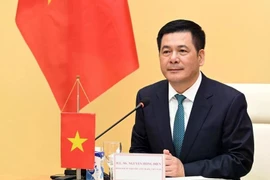
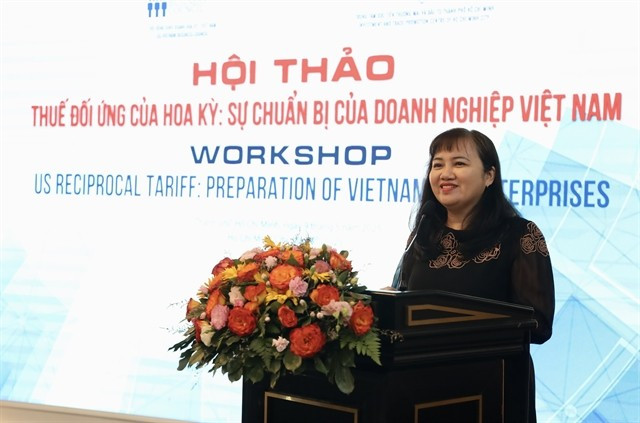
Cao Thi Phi Van, Deputy Director of the Investment and Trade Promotion Centre, speaks at the “US Reciprocal Tariff: Preparation of Vietnamese Enterprises” workshop in HCM City on May 9. (Photo: courtesy of ITPC)

HCM City (VNS/VNA) - Amid unpredictable fluctuations in US tariff policies, Vietnamese businesses must take a proactive and strategic approach to sustain their exports to this key market, experts emphasised at a workshop held in Ho Chi Minh City last week.

The workshop, titled “US Reciprocal Tariff: Preparation of Vietnamese Enterprises,” was hosted by the Investment and Trade Promotion Centre of Ho Chi Minh City (ITPC) in collaboration with the US-Vietnam Business Council, drawing strong participation from the local business community.

In her opening remarks, ITPC Deputy Director Cao Thi Phi Van reaffirmed the US position as Vietnam’s largest export market.

“Over the past five years, Vietnam has consistently maintained a substantial trade surplus with the US, rising from approximately 63.4 billion USD in 2020 to nearly 106 billion USD in 2024. Currently, Vietnam - like many other nations - is subject to the US’s reciprocal tariff measures.”

In response to this challenge, the Vietnamese government is intensifying negotiations with the US to foster a balanced and sustainable bilateral trade relationship.

Domestically, efforts are being intensified to monitor product origin, boost the domestic market, and facilitate bilateral investment projects.

Van also encouraged businesses to view these challenges as catalysts for growth and innovation.

She emphasised that the municipal administration and the business community are advancing strategic initiatives to diversify markets, products, and supply chains, enhance product quality and competitiveness, and remain agile in the face of global economic shifts.

In particular, leveraging the benefits of the 17 effective free trade agreements will serve as a critical foundation for expanding development space and strengthening international integration.

At the seminar, Dr. Tran Son, Assistant Professor of Business at SUNY Cobleskill, New York, and business development advisor at the US-Vietnam Business Council, highlighted the shift in US trade policy from “free trade” to “strategic trade” to focus on industrial policy and national security. This shift, he noted, presents both opportunities and challenges for trading partners.

Vietnam is viewed as a China+1 destination and the US is watching closely for anti-dumping, labour standards, mislabelling and rule-of-origin violations, Son said.

The US tariffs are here to stay, requiring Vietnam to adopt a proactive and strategic approach. Agility, trust, and innovation are key factors for success in this environment, he affirmed.

He outlined three key strategic options for Vietnamese firms: ensuring full compliance with regulations by strengthening supply chain documentation, maintaining transparent origin labeling, and early adoption of US and EU standards; moving up the value chain by shifting from Original Equipment Manufacturer (OEM) to Original Brand Manufacturer (OBM), investment in branding, innovation, and customer development; and actively working with trade associations and policymakers to position Vietnam as a reliable trade partner.

He also called for a long-term national and industry-level branding strategy to reposition Vietnam as a producer of high-value and distinctive products, particularly in handicrafts, agriculture, and seafood.

From a practical logistics perspective, Mohammed Selia, CEO of US-based FulfillPlus, provided an in-depth analysis of US import regulations across industry categories.

A fundamental principle exporters must understand, he said, is that US import duties are paid upon clearance at the port of entry, determined by the HTS code, declared value, and country of origin. Each industry requires thorough research and preparation.

Apparel and textiles are subject to tariffs ranging from 10% to 30% and must comply with strict labeling requirements from the Federal Trade Commission (FTC) and accurate product classification to avoid unnecessary delays.

The furniture industry, particularly wood products, must be wary of anti-dumping duties and comply with the Lacey Act, which prohibits trade in illegally sourced plant materials. Certain US states, such as California, have additional requirements for flame-retardant materials.

For agricultural and seafood products, FDA/USDA registration and advance import notice are mandatory. In many cases, maintaining the cold chain is also required.

In contrast, handicraft and artisan products often enjoy low or zero import duties, though it is essential to avoid materials derived from prohibited animal species.

To achieve long-term success in the US market, Selia emphasised the importance of maintaining local inventory to support faster delivery and improve customer satisfaction.

He also stressed the need for continuous investment in product quality, branding, attractive packaging, and partnering with reputable US logistics providers as a key strategic advantage./.

VNA
See more

Vietnam is emerging as a preferred destination for many foreign enterprises (Photo: hanoimoi.vn)

Vietnam emerges as bright spot of growth, trusted and responsible partner

Despite a volatile global environment, Vietnam recorded solid gains in 2025. With flexible and proactive policies under the leadership of the Communist Party of Vietnam and the Government, all 15 key socio-economic targets were met or exceeded, while GDP expanded by about 8.02%, surpassing expectations.

An image of a Vietnamese game. CIS region has potential for gaming developers from Viet Nam. (Photo: Courtesy of cellphones.com.vn_

CIS: Opportunity for game developers in Vietnam

The CIS region, which includes Eastern Europe and Central Asia, has potential for gaming developers from Vietnam as this market displays user behaviour patterns that are highly favourable for mobile gaming growth, particularly around major holiday periods.

Banks, including MB Bank, have issued alerts about scams conducted via social media platforms such as Zalo and Facebook, where criminals impersonate acquaintances. (Photo: The Courtesy of MBBank)

Financial scams surge ahead of Tet

As the Lunar New Year (Tet) approaches, financial and banking scams in Vietnam are showing a sharp upward trend, prompting banks and law enforcement agencies to issue repeated warnings.

Hai Phong targets 4.3 billion USD in FDI in 2026 (Photo: VNA)

Hai Phong city targets 4.3 billion USD in FDI in 2026

Hai Phong’s investment appeal is underpinned by a rapidly expanding development space, including the Southern Coastal Economic Zone covering more than 20,000 hectares, a planned free trade zone, deep-water ports at Lach Huyen, and 12 industrial parks newly established in 2025.

The relocation of check-in counters aims to better meet the travel needs of residents and visitors. (Photo: VNA)

Vietjet shifts domestic check-in at Tan Son Nhat from January 13

During the recent New Year 2026 holiday peak, Vietjet added 380 flights, equivalent to nearly 78,000 additional seats, on many key domestic routes linking Hanoi and Ho Chi Minh City with destinations such as Vinh, Thanh Hoa, Hai Phong, Da Nang, Phu Quoc, Nha Trang and Da Lat.

Commercial banks are providing approximately 88% of total green credit outstanding in Vietnam. (Photo: nhandan.vn)

Capital sources expanded for sustainable growth

According to the State Bank of Vietnam (SBV), by the end of November 2025, outstanding green credit was estimated at around 750 trillion VND (28.55 billion USD), with an average growth rate exceeding that of overall credit in the economy.

Customers select goods at a supermarket. (Photo: VNA)

Retail market expands sharply, sustainability challenges persist

According to a report on recently released by the Ministry of Industry and Trade’s Agency for Domestic Market Surveillance and Development, the size of the market reached more than 7 quadrillion VND (about 266 billion USD) in 2025, up around 10% compared with 2024.

Oil rigs at the Bach Ho oil field. (Photo: VNA)

Resolution 79: State economy to lead growth

Resolution 79 is described as a “clear action declaration” by the Politburo, saying the state economy is not only responsible for maintaining macroeconomic stability, but must also become the force leading a new growth model that is green and sustainable.

Workers at Garment 10 Corporation produce apparel for export. (Photo: Nhan Dan)

Vietnam leverages export advantages within RCEP region

In 2025, seafood exports to China alone exceeded 2.2 billion USD, up about 33% compared to 2024. Shipments to Japan fetched nearly 1.7 billion USD, a year-on-year increase of 14.6%, while those to the Republic of Korea and Australia grew by 9.6% and 3.2%, respectively.

Certificates of membership in the Vietnam International Financial Centre in Da Nang are awarded at the conference on January 9. (Photo: VNA)

Da Nang continues targeted investment promotion approaches

According to Chairman of the Da Nang People’s Committee Pham Duc An, the city prioritises building sustainable economic ecosystems and focuses on key breakthrough sectors with strong spillover effects, including high technology and digital transformation, logistics, urban infrastructure, finance, processing and manufacturing industries, high-tech agriculture, and the pharmaceutical and medicinal herb industry.