Vietnamese exporters urged to tap into South Asian markets

Given their large populations and rising incomes, South Asian countries are importing a diverse range of goods including consumer products, processed food, healthcare and beauty items, electronic components, and construction materials. Notably, there is a growing trend among them to diversify sourcing away from China, making Southeast Asia, and Vietnam in particular, a more attractive partner.

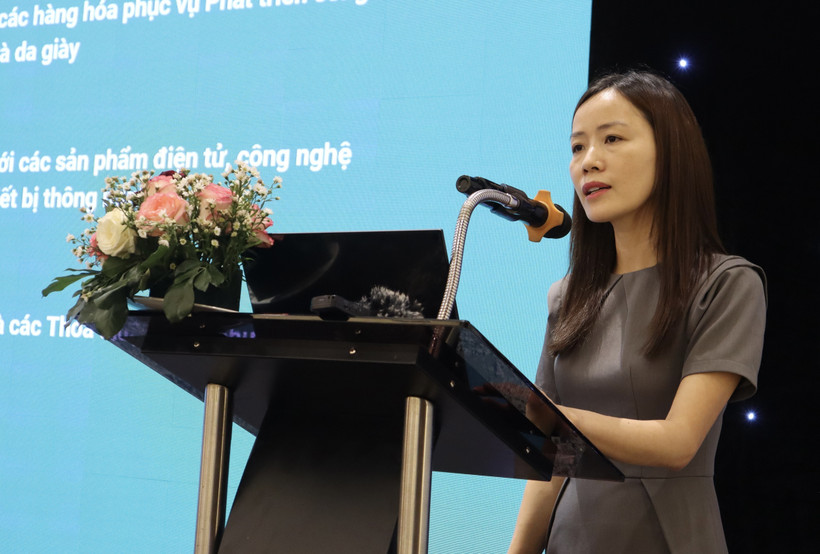
Le Thi Mai Anh from the Ministry of Industry and Trade speaks at the event (Photo: VNA)

HCM City (VNA) – South Asia presents major trade opportunities for Vietnamese exporters due to its large demand for goods and relatively modest quality requirements compared to Vietnam’s traditional export markets, Le Thi Mai Anh from the Ministry of Industry and Trade (MoIT) told a seminar in Ho Chi Minh City on June 26.

The event was co-organised by the MoIT’s department of overseas market development and the municipal international integration centre. Mai Anh noted that the South Asian region, comprising India, Pakistan, Bangladesh, Nepal, Bhutan, Maldives, Sri Lanka, and Afghanistan, has a combined population of over 1.8 billion, accounting for nearly a quarter of the global population. Among these, India, Pakistan, Bangladesh, and Sri Lanka are considered key potential markets for Vietnam to boost trade and investment cooperation.

She said given their large populations and rising incomes, South Asian countries are importing a diverse range of goods including consumer products, processed food, healthcare and beauty items, electronic components, and construction materials. Notably, there is a growing trend among them to diversify sourcing away from China, making Southeast Asia, and Vietnam in particular, a more attractive partner.

However, Mai Anh cautioned that newcomers face steep hurdles, as low average incomes make the markets highly price-sensitive and fiercely competitive. She also pointed to the risk of sudden policy shifts and a growing wave of protectionism across the region.

To succeed in South Asia, Vietnamese businesses should thoroughly research market conditions and partner needs, she said. With Vietnam’s manufacturing strengths, exporters can focus on the growing middle-class and youth-oriented consumer trends, actively join trade fairs, and make use of popular e-commerce platforms in India such as Amazon India, Flipkart, and Daraz.
2-south-asia-market-vna.jpg
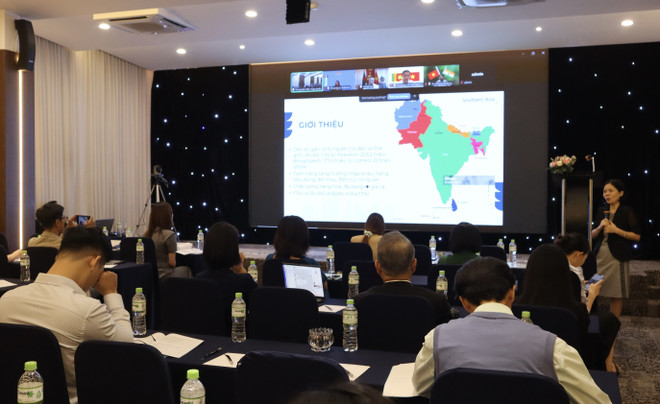
At the event (Photo: VNA)

Assoc. Prof. Dr. Trinh Thi Thu Huong from the Foreign Trade University said logistics remains a key barrier. Apart from India, most South Asian countries face challenges related to poor transport infrastructure, lack of intermodal connectivity, and high shipping costs. Customs procedures are still largely manual, leading to prolonged clearance times, which traders should factor into their planning.

Nevertheless, Huong noted that these challenges also represent opportunities. In markets with easy access, competition tends to be much higher.

Sharing insights from long-term business activities in Bangladesh, Do Van Trong, head of the Vietnamese community liaison board in Bangladesh, said only about 300 Vietnamese enterprises are currently operating in the country, with bilateral trade reaching around 1 billion USD annually.

For new market entry, Trong recommended that businesses consider establishing a direct presence and developing marketing strategies tailored to local tastes and cultural preferences./.

VNA

See more

Hai Phong targets 4.3 billion USD in FDI in 2026 (Photo: VNA)

Hai Phong city targets 4.3 billion USD in FDI in 2026

Hai Phong’s investment appeal is underpinned by a rapidly expanding development space, including the Southern Coastal Economic Zone covering more than 20,000 hectares, a planned free trade zone, deep-water ports at Lach Huyen, and 12 industrial parks newly established in 2025.

The relocation of check-in counters aims to better meet the travel needs of residents and visitors. (Photo: VNA)

Vietjet shifts domestic check-in at Tan Son Nhat from January 13

During the recent New Year 2026 holiday peak, Vietjet added 380 flights, equivalent to nearly 78,000 additional seats, on many key domestic routes linking Hanoi and Ho Chi Minh City with destinations such as Vinh, Thanh Hoa, Hai Phong, Da Nang, Phu Quoc, Nha Trang and Da Lat.

Commercial banks are providing approximately 88% of total green credit outstanding in Vietnam. (Photo: nhandan.vn)

Capital sources expanded for sustainable growth

According to the State Bank of Vietnam (SBV), by the end of November 2025, outstanding green credit was estimated at around 750 trillion VND (28.55 billion USD), with an average growth rate exceeding that of overall credit in the economy.

Customers select goods at a supermarket. (Photo: VNA)

Retail market expands sharply, sustainability challenges persist

According to a report on recently released by the Ministry of Industry and Trade’s Agency for Domestic Market Surveillance and Development, the size of the market reached more than 7 quadrillion VND (about 266 billion USD) in 2025, up around 10% compared with 2024.

Oil rigs at the Bach Ho oil field. (Photo: VNA)

Resolution 79: State economy to lead growth

Resolution 79 is described as a “clear action declaration” by the Politburo, saying the state economy is not only responsible for maintaining macroeconomic stability, but must also become the force leading a new growth model that is green and sustainable.

Workers at Garment 10 Corporation produce apparel for export. (Photo: Nhan Dan)

Leveraging export advantages within RCEP region

In 2025, seafood exports to China alone exceeded 2.2 billion USD, up about 33% compared to 2024. Shipments to Japan fetched nearly 1.7 billion USD, a year-on-year increase of 14.6%, while those to the Republic of Korea and Australia grew by 9.6% and 3.2%, respectively.

Certificates of membership in the Vietnam International Financial Centre in Da Nang are awarded at the conference on January 9. (Photo: VNA)

Da Nang continues targeted investment promotion approaches

According to Chairman of the Da Nang People’s Committee Pham Duc An, the city prioritises building sustainable economic ecosystems and focuses on key breakthrough sectors with strong spillover effects, including high technology and digital transformation, logistics, urban infrastructure, finance, processing and manufacturing industries, high-tech agriculture, and the pharmaceutical and medicinal herb industry.

In 2025, Hyundai sales reached 53,229 vehicles across the Vietnamese market. (Illustrative photo: Yonhap/VNA)

Hyundai sales in Vietnam rise almost 23% in December

In 2025, sales reached 53,229 vehicles across the market, a result considered a testament to the efforts by TC Group, Hyundai Thanh Cong, and the entire Hyundai dealership network nationwide amidst a volatile market.

Hydroponic vegetable cultivation model at the High-Tech Agricultural Park (Photo daibieunhandan.vn)

HCM City accelerates shift toward ecological urban agriculture

​The city’s agricultural sector is undergoing a strong transformation, restructuring toward higher value-added and sustainable development. In recent years, the sector has maintained steady growth, with agricultural, forestry and fisheries output rising by an estimated 2.5% annually.