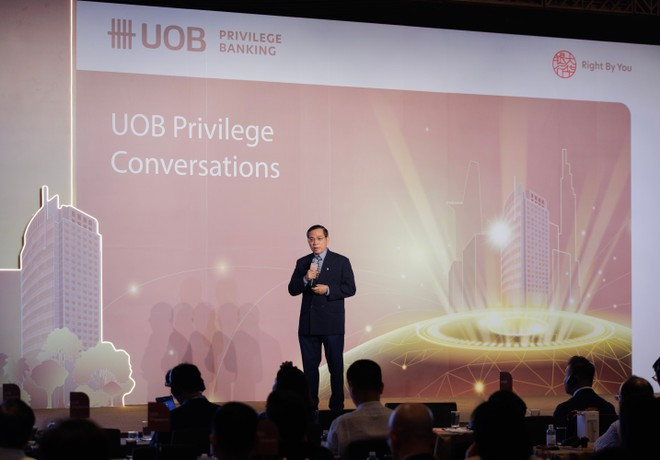
Hanoi (VNA) – Amidst escalating global trade tensions, Vietnam’s economy is poised to maintain stable growth in 2025, UOB Vietnam experts said at their recent “global and Vietnam economic outlook 2025” event.
The global tariff war
Abel Lim, Head of Wealth Management Advisory and Strategy at UOB, said that global economic growth for 2025 is expected to slow down but will remain in an expansionary phase. The world's economic outlook will heavily depend on US President Trump's policies, which remain unclear at present, potentially creating a divergence in growth trajectories, with the US projected to continue developing while other economies face significant trade obstacles.
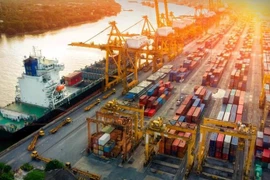
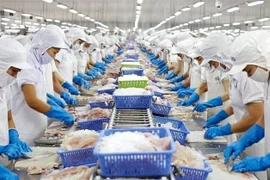
According to him, rising tariffs are disrupting bilateral trade activities, increasing the costs for businesses and consumers alike. The US imposition of higher tariffs on a range of imported goods has prompted retaliatory tax measures from key trading partners, harming exporters and causing shifts in the global trade flows.
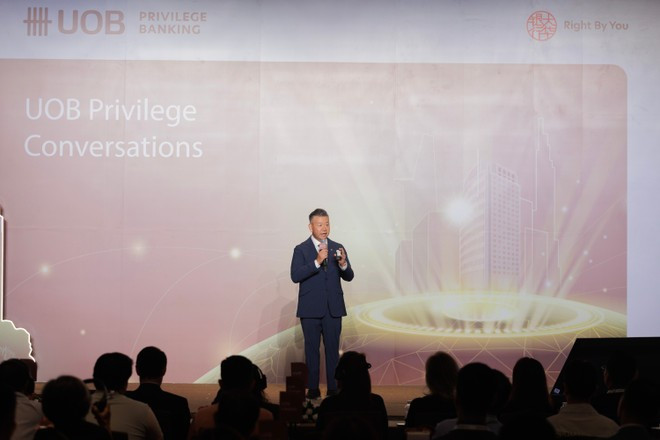
He further noted that ASEAN economies, due to their heavy dependence on trade and deep integration in global supply chains, are particularly vulnerable to trade wars. Within the bloc, Vietnam and Thailand face the highest risk of encountering tariffs or trade restrictions from the US as both have maintained trade surpluses with the US.
These two economies could face increased risk if Trump imposes additional tariffs or implements trade policies aimed at reshaping production and trade in ways that benefit the US, he explained.
Vietnam’s strategy to mitigate negative impacts
Le Thanh Hung, investment director at UOB Asset Management (UOBAM) Vietnam Co.,Ltd, said Vietnam's economy is expected to continue strong growth in 2025, driven by domestic economic stimuli through public investment, credit growth, and recovery in domestic consumption and real estate markets.
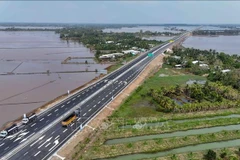
The Government has summited to the National Assembly a proposal for the 2025 public investment plan of 875 trillion VND (34.12 billion USD), a significant increase compared to the 2024 actual disbursement of 568 trillion VND. This is creating momentum to boost public sector investment and strengthening confidence across other economic sectors.
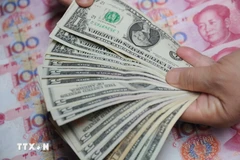
However, Hung raised concerns about the impact on Vietnam's economy during President Donald Trump's second term. He said Vietnam’s export revenue could be negatively affected if the US imposes tariffs on Vietnamese goods and the USD/VND exchange rate could be under pressure as the USD continues to strengthen significantly.
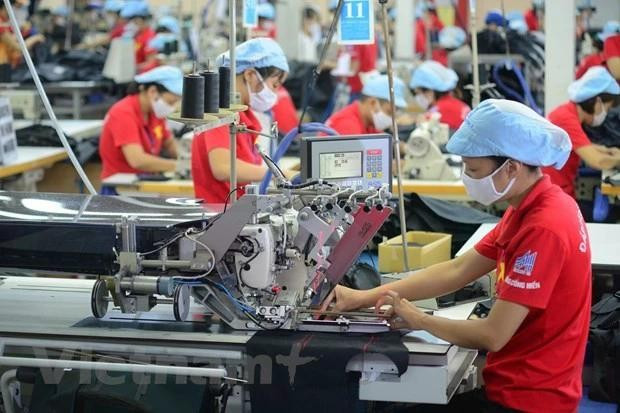
These concerns stem from the fact that the US is Vietnam's second-largest bilateral trading partner, following China, and Vietnam's largest export market, and has the largest trade deficit with Vietnam.
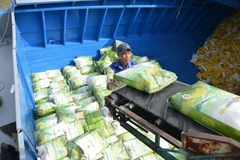
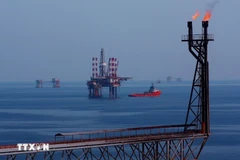
Against that backdrop, Hung suggested Vietnam increase imports from the US, including liquefied natural gas, aircraft, and agricultural products, to reduce its trade surplus with the country. Simultaneously, Vietnam should boost internal growth drivers such as increasing public investment in transportation infrastructure and energy projects, promoting domestic consumption, and stimulating credit growth to enhance capital resources for the economy.
It is necessary for Vietnam to expand its multilateral relations, upgrade ties with countries to comprehensive strategic partnerships to broaden export markets, attract investment capital, and reduce dependence on the US market, Hung said.
He went on to highlight that Vietnam’s public investment plan in 2025 will be maintained with key projects including the North – South high-speed railway with total investment of 67.3 billion USD, Long Thanh International Airport valued at 16 billion USD, and nuclear power plants.
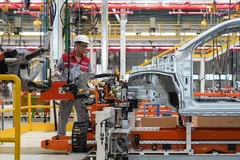
According to the UOBAM representative, high-tech industry is the new growth motive for the Vietnamese economy during 2025-2050. US restrictions on semiconductor technology from China present significant opportunities for Vietnam to attract foreign investment in this sector over the next 25 years.
UOB experts maintain that Vietnam's semiconductor industry prospects look promising, with several major global semiconductor companies already expressing interest in investing in Vietnam.
Sharing the same viewpoint, Abel Lim said the Vietnamese government is not missing this opportunity, as major semiconductor manufacturing companies have come to the country to explore investment opportunities. With the Vietnamese Government's strong commitments to promoting economic growth, combined with powerful drivers from increasing FDI flows, expanding public investment, and opportunities from the semiconductor industry, Vietnam's economy is certainly forecast to grow positively in 2025./.