Vietnam’s green transport push hits roadblocks as motorbikes, cars clog streets: expert

A UK-based expert advocated a phased and tailored approach to low emission zone rollout, recognising it as a long-term and complex process that requires careful planning and incremental steps.

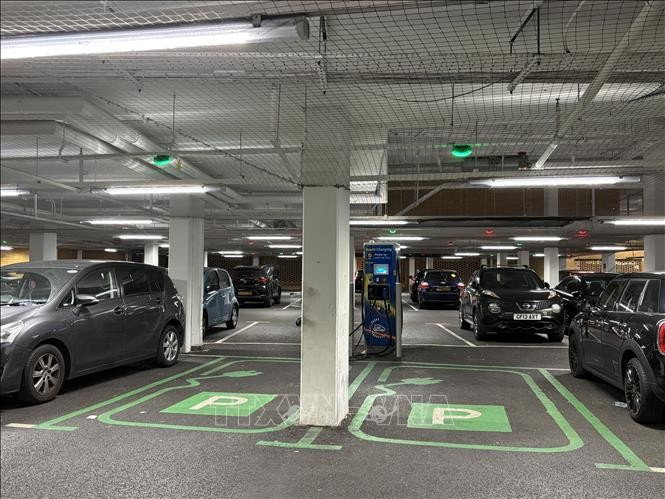
An EV parking lot in the UK (Photo: VNA)

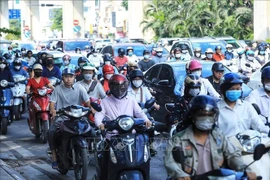
London (VNA) – Major urban areas like Hanoi are grappling with steep technological and socio-economic hurdles in their bid to shift toward greener transportation, with motorbikes and private cars still ruling their roads, according to Assoc. Prof. Dr. Dinh Quang Truong from the Energy Innovation Centre at the UK’s University of Warwick.

Talking with Vietnam News Agency reporters based in London, Truong warned that rolling out ultra low emission zones (ULEZ) or low emission zones (LEZ) there is no easy feat. Infrastructure gaps, particularly in electric power systems, are a major sticking point. Limited grid capacity and restricted access to renewable energy hinder large-scale electrification, risking grid stability and affecting electricity access for households, industries, and social activities.

The electric vehicle (EV) charging network is also lagging, with too few stations, poorly planned locations, and weak management systems holding back progress, Truong noted.

Beyond physical infrastructure, investment in smart technologies for real-time data, communication, safety, and cybersecurity across users, operators, providers, and government agencies is lacking. These systems, he stressed, are fundamental for LEZs to function effectively.

Socio-economic barriers add another layer of complexity. EVs and cleaner transport options remain out of reach for low-income residents, and access to reliable low-or zero-emission public transit is uneven. Without hefty government subsidies or social support, he cautioned, emission zone policies could hit vulnerable groups hardest.
assoc-prof-dr-dinh-quang-truong.jpg
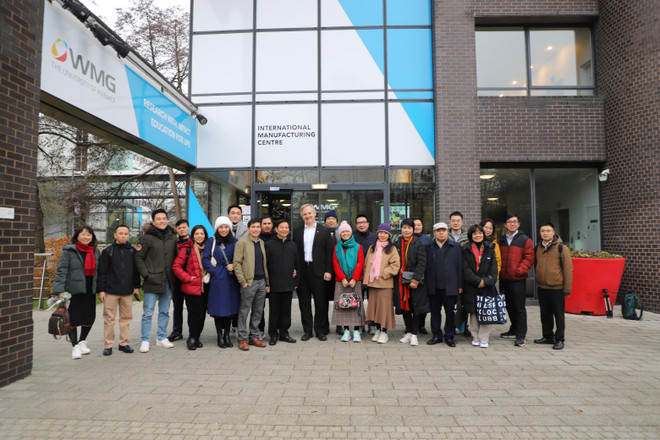
Assoc. Prof. Dr. Dinh Quang Truong (front, sixth from left) in a photo with a delegation of the Ministry of Science and Technology on a visit to the University of Warwick in Decemdber 2024. (Photo: VNA)

To address these issues, Truong called for a deep dive into the transport sector’s path to net-zero emissions, especially for road transport. LEZ policies must sync with national and local decarbonisation plans to support long-term sustainability goals.

Before rolling out LEZs, he urged comprehensive impact assessments covering technical feasibility (infrastructure readiness, vehicle data), economic impacts (costs and benefits to governments, commuters, and public health), social implications on low-income groups and behavioural shifts, and operational needs (enforcement, data governance, safety, and cybersecurity).

Crucially, he advocated for a phased and tailored approach to LEZ rollout, recognising it as a long-term and complex process that requires careful planning and incremental steps. Pilot LEZs, he suggested, should be introduced in high-traffic or heavily polluted areas such as central districts, with moderate restrictions that could gradually tighten as enforcement capacity and public acceptance improve.

For Hanoi specifically, he recommended targeted support for low-income workers and small businesses reliant on older gasoline or diesel vehicles. These could include subsidies, vehicle trade-in schemes, and investments in affordable public transport options.

To win public backing, he proposed widespread education campaigns on air quality and health impacts, alongside training courses for academics, engineers, urban planners, and technicians to fast-track the shift to low- and zero-emission transport systems./.
VNA

See more

Cultural activities are held at the 2026 Vietnamese Language Summer Camp in Klinok village on the outskirts of Minsk, Belarus. (Photo: VNA)

Vietnamese language preserved across globe

In the new context, Politburo Resolution No. 23-NQ/TW, dated August 2, 2026, continues to place the preservation of the Vietnamese language within the strategic vision of mobilising resources from the Vietnamese community abroad and promoting Vietnamese cultural values around the world.

Overseas Vietnamese teachers participating in the 2026 training course on Vietnamese language teaching methods (Photo published VNA)

Leveraging overseas Vietnamese resources for Vietnam-France ties

As Vietnam enters a new era of prosperous and harmonious development, top leader To Lam's official visit to France will significantly contribute to the special dynamics of bilateral relations while fostering shared commitments to international peace, security, and stability.

Ambassador Nguyen Huong Tra briefs representatives of the Vietnamese communities in Belgium and Luxembourg on the country's situation. (Photo: VNA)

Overseas Vietnamese ready to contribute to national transformation

Affirming that overseas Vietnamese are an integral part of the nation and partners in its development and creation, Vietnamese Ambassador to Belgium and Head of the Vietnamese Mission to the European Union (EU) Nguyen Huong Tra pledged to listen to them openly and responsibly, and convey their recommendations to authorities at home.

The operation to remove the bomb is carried out cautiously and meticulously by military forces. (Photo: VNA)

Phu Tho: 200kg bomb safely relocated, detonated

According to a report by the Phu Tho Military Command, local residents spotted the bomb on August 31 in the Da River after the river water receded, exposing it beneath mud and soil on the riverbed. The bomb remained intact, including its fuse, and was located about 300m from a residential area.

Quang Ninh's seaport infrastructure, including the Ha Long International Cruise Port, is capable of serving large cruise ships. (Photo: VNA)

Quang Ninh 2030: Ambitious targets for a breakthrough

These objectives reflect the principle that economic development must not become detached from living standards; rather, the benefits of growth should create opportunities for all residents to share in its achievements.

A police officer guides a citizen on how to use VNeID app. (Photo: VNA)

Shift to data-driven administrative procedures needs acceleration

Under a draft decree replacing Decree 63, authorities will have to proactively pull information from databases and records for informational or technical procedures. Applicants would no longer be required to resubmit documents, and certification or information requests could not be turned into discretionary licensing through an “ask – give” mechanism.

Cuban journalist Luis Manuel Arce Isaac, author of the article published in Mexico’s Voces del Periodista magazine. (Photo: Screenshot/VNA)

Mexican journalist praises Vietnam’s profound transformation

According to the article, Vietnam’s progress over the past decades has turned President Ho Chi Minh’s aspiration for a country that would be more dignified and more beautiful into reality in ways that have far exceeded what was initially envisioned.

The Liaison Board of the Vietnamese Community in Singapore organises the annual Mid-Autumn Festival to strengthen community bonds and spread Vietnamese language and culture. (Photo: VNA)

Continued efforts made to nurture love for homeland through mother tongue

From language classrooms and community activities to digital platforms, Vietnamese is being preserved through increasingly diverse approaches. More than a means of communication, the mother tongue carries memories, culture and affection for the homeland. Ensuring that Vietnamese remains naturally present in the daily lives of overseas Vietnamese is therefore an important way to nurture their lasting bond with the Fatherland.