Vietnam’s manufacturing industry at historic crossroads

Vietnam’s manufacturing industry is showing strong signs of transformation from mindset to action, with the goal of competing on a fair playground in the international market.

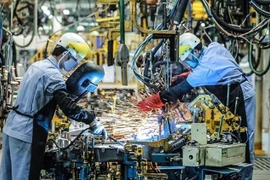
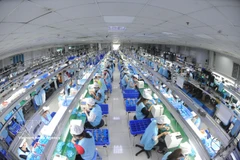
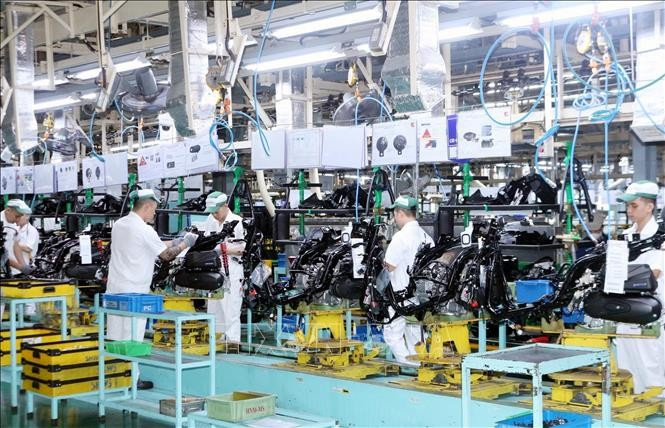
Honda Vietnam's production line at Dong Van II Industrial Park. (Illustrative photo: VNA)

Hanoi (VNA) - Vietnam’s manufacturing industry is standing at a historic crossroads. Having long held a position primarily focused on semi-processing and assembly, the sector is now expected to “level up” to compete fairly in both regional and global markets.

This is an ambitious aspiration that comes with numerous challenges. According to experts, the road ahead for this industry demands a strong transformation, from macro-level policy shifts to individual enterprise efforts, along with breakthrough solutions that will enable the sector to make a leap forward and expand its reach.

Removing bottlenecks

According to the Vietnam Association for Supporting Industries (VASI), expectations for upgrading the sector are high, but in reality, it is facing many systemic challenges. These are not only internal barriers within enterprises themselves but also stem from the broader business environment and global fluctuations.

VASI Chairman Phan Dang Tuat stated that the first and most persistent bottleneck lies in the challenge of developing a high-quality workforce. Although Vietnam has an abundant labour force, the proportion of highly skilled engineers and technicians with deep expertise who are capable of meeting the demands of modern production lines remains low. According to many businesses in the industry, there is a significant gap between academic training programmes and actual production requirements. Educational institutions tend to focus heavily on theory, lack modern practical equipment, and have instructors with limited real-world experience. As a result, many graduates require extensive time and financial investment for retraining once they enter the workforce.

This issue is even more pressing in sectors that demand high precision and advanced technology, such as mechanical engineering and component manufacturing. It hampers businesses from expanding production, slows down technological innovation, and increases reliance on foreign experts.

In addition, amidst deepening global integration, Vietnamese manufacturing enterprises face intense competitive pressure from both domestic and international players. Multinational corporations are imposing increasingly strict requirements in terms of quality, technical standards, and delivery timelines. Meanwhile, global economic disruptions, such as trade wars and geopolitical conflicts, further elevate supply chain risks.

According to experts, in response to these challenges, many enterprises have begun to undergo transformation, with focus on market diversification and greater transparency in their supply chains. The strategy of not “putting all eggs in one basket” is not only a smart business move but also a critical survival tactic to mitigate risks when major markets experience disruptions.

Transformation and the roadmap for breakthrough

In the face of significant challenges, Vietnam’s manufacturing industry is showing strong signs of transformation from mindset to action, with the goal of competing on a fair playground in the international market.

One of the core strategies being promoted by industry associations and enterprises is “localisation” and “multi-dimensional linkage.” Localisation not only helps reduce dependence on imported raw materials but also serves as a pathway to enhance production capacity and generate greater domestic added value.
manufacturing-2.png
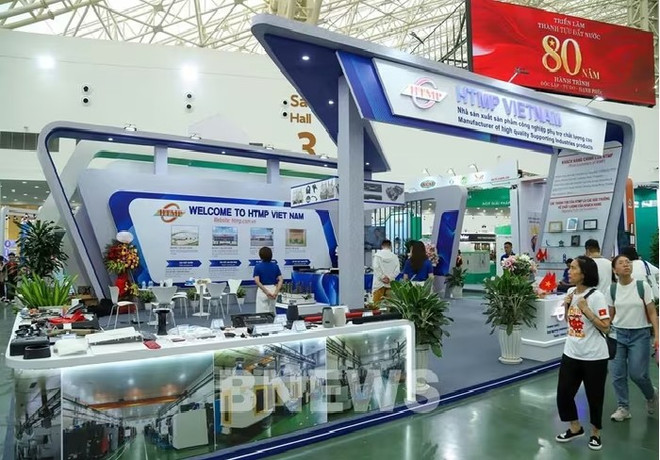
Having long held a position primarily focused on semi-processing and assembly, the manufacturing sector is now expected to “level up” to compete fairly in both regional and global markets. (Photo: VNA)

To achieve this, close collaboration among the public sector, private enterprises, research institutes, and educational institutions is key. The government must play an enabling role by designing strong incentive policies that encourage businesses to invest in technology and R&D. Training institutions need to reform curricula, increase hands-on learning, and align more closely with the practical needs of industry. Meanwhile, businesses must proactively partner with research institutes to develop new products and work with universities to train a workforce tailored to their specific needs, according to the VASI Chairman.

From the perspective of foreign direct investment (FDI) enterprises operating in Vietnam, Otsuka Tetsuhisa, board member of NC Network Japan and CEO of NC Network Vietnam Joint Stock Company, stated that Vietnam’s manufacturing enterprises have faced significant risks in recent times due to their reliance on just a few major export markets. Therefore, companies in this sector need to actively seek and expand into emerging markets, and make the most of the Free Trade Agreements (FTAs) that Vietnam has signed.

In addition, enhancing supply chain transparency through technologies such as blockchain and QR codes offers a long-term competitive advantage. This not only helps meet the stringent requirements of developed markets regarding traceability, labour, and environmental standards, but also builds global customer trust in the “Made in Vietnam” brand which signifies quality and responsibility, he stressed./.
VNA

See more

Prime Minister Pham Minh Chinh addresses he third meeting of the National Steering Committee implementing the Politburo’s Resolution 68 in Hanoi on December 20. (Photo: VNA)

PM pushes trust, breakthroughs to accelerate private sector growth

Prime Minister Pham Minh Chinh noted that since the rollout of Resolution 68, alongside supporting resolutions from the National Assembly (NA) and Government, there has been a marked change in understanding the private sector’s critical position and role in Vietnam’s socialist-oriented market economy.

PM Pham Minh Chinh chairs the meeting (Photo: VNA)

Private sector thrives eight months after Resolution 68’s launch: PM

The private sector has shown marked progress eight months after the launch of Resolution 68, registering about 18,000 new enterprises monthly and pushing the nationwide total to nearly 1.1 million, Prime Minister Pham Minh Chinh told the third meeting of the National Steering Committee in Hanoi on December 20.

Phin Ho Tra – a national five-star OCOP product. (Illustrative photo: VNA)

Hanoi to host Vietnam OCOP Festival 2025

The festival is seen a practical activity celebrating the achievements made by the capital and the country in 2025, affirming OCOP’s role in rural economic development, contributing to realising Vietnam’s aspiration for strong economic growth in the context of deep integration.

The expanded Hoa Binh Hydropower Plant (Photo baochinhphu.vn)

EVN launches major power projects

Among the flagship projects inaugurated was the expanded Hoa Binh Hydropower Plant with a total installed capacity of 480MW per year and average annual output of about 488 million kWh.

An ultra-intensive shrimp farming model linked with environmental protection in Ca Mau province. (Photo: VNA)

Fisheries take the lead in the Mekong Delta’s green transition

Across the Mekong Delta, leading aquaculture producers, processors and exporters, along with suppliers of inputs, are transitioning to circular, high-tech and clean production models that cut greenhouse gas emissions and comply with international certification standards.

A perspective view of the Red River Landscape Boulevard project in Hanoi (Photo: VNA)

Works starts on Hanoi’s Red River Landscape Boulevard Axis project

The project is among the 234 key works and projects being launched, inaugurated or technically opened simultaneously across 34 cities and provinces nationwide to mark the 14th National Party Congress. Its launch contributes to implementing the country’s strategic development orientations while concretising Hanoi’s development goals in the new period.

The ground-breaking ceremony of the Yen Bai 1 biomass power plant in Lao Cai province on December 19. (Photo: VNA)

Work starts on 114-million-USD biomass power plant in Lao Cai

The project, developed by Erex Yen Bai Biomass Power Co. Ltd. is located in Dong Cuong commune, Lao Cai province. It is backed by Japan’s Erex Group and falls under the Joint Crediting Mechanism, a bilateral initiative between Vietnam and Japan to reduce greenhouse gas emissions.

At the inauguration ceremony (Photo: VNA)

Vietnam Railways Corporation unveils upgraded coaches, digital tools

These moves reflect the VNR's commitment to fulfilling six priority tasks set by the Prime Minister, including leading in innovation and digital transformation, applying sci-tech in line with the Politburo’s Resolution No. 57-NQ/TW, and spearheading advances in digital, green and circular economy.

Producing MDF panels for export at Hai Duong MDF Construction and Manufacturing Co., Ltd., in Ho Chi Minh City (Photo: VNA)

HCM City targets 15 billion USD in wood exports by 2035

The merger of HCM City with Binh Duong and Ba Ria – Vung Tau is expected to give the local wood industry a strong boost into a phase of high-quality growth driven by linkages, innovation, sustainability, and deeper integration into global value chains.

Delegates cut a ribbon to inaugurate the expanded Terminal T2 at Noi Bai International Airport in Hanoi on December 19, 2025. (Photo: VNA)

Expanded Terminal T2 at Noi Bai International Airport makes debut

The project expands the terminal’s floor area to over 200,000 sq.m, increases passenger capacity from 10 million to 15 million, even up to 18 million per year, and boosts operational capacity with boarding gates rising from 17 to 30 and jet bridges from 14 to 27, meeting strong growth in international travel demand.