VinFuture 2025 attracts over 1,700 global nominations

The number of official nominating partners has seen exceptional growth, reaching 14,772, more than a twelvefold increase from the 1,200 recorded in the inaugural season, and a 60% jump from 2024.

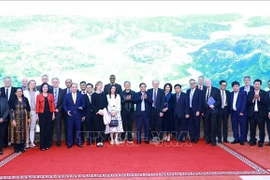
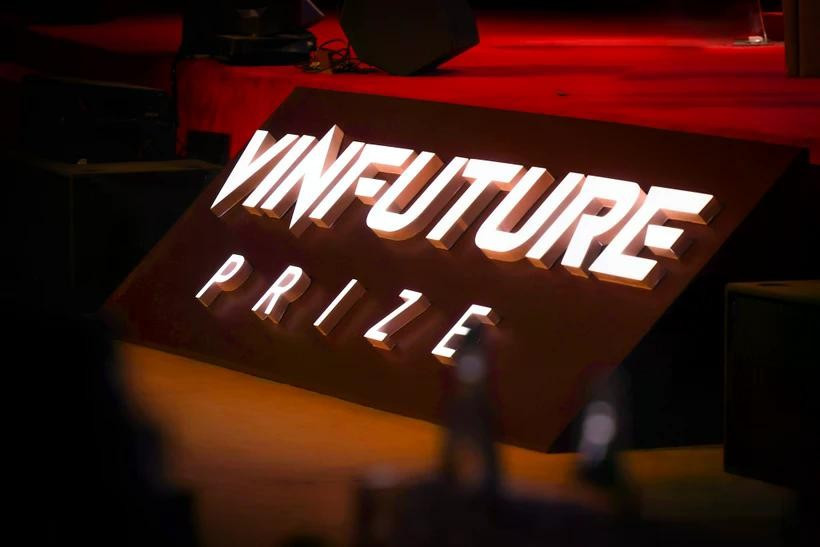
The VinFuture Prize has rapidly established its international stature and prestige within just five years. (Photo: VNA)

Hanoi (VNA) – The VinFuture Prize, a global science and technology award, concluded its nomination round for its fifth season, receiving 1,705 applications from around the world, the organising board said on May 22.

Notably, the number of official nominating partners has seen exceptional growth, reaching 14,772, more than a twelvefold increase from the 1,200 recorded in the inaugural season, and a 60% jump from 2024.

Among these, the majority of nominating partners are from the Americas (31%), followed by Europe (28.6%), Asia (26.8%), Africa (7.1%), and Oceania (6.5%).

Nearly half of the nominators are experts from leading universities and research institutions worldwide like Harvard University, the Massachusetts Institute of Technology, Stanford University (the US); the University of Cambridge, the University of Oxford (the UK); the University of Melbourne (Australia); the University of Toronto (Canada); and the National University of Singapore (Singapore), among others.

Remarkably, 1,395 nominating partners are scientists ranked among the top 2% most-cited researchers globally, based on the prestigious list compiled by experts at Stanford University.

The 2025 nominations continue to span essential fields of life and global sustainable development. Medicine and healthcare lead with 36.7% of submissions, while energy, transportation, and construction account for 17.8%. Environment and earth sciences also represent 17.8%, and agriculture and food 11.3%. These vital areas reflect prevailing trends in scientific and technological advancement, and are drawing significant global attention.

VinFuture's nominating partners work on a voluntary basis, playing a crucial role in discovering and recommending deserving scientific works that create positive impacts on human life while enhancing VinFuture Prize’s stature within the international scientific community.

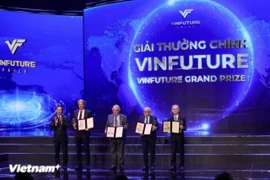
In 2024, following a nomination by Professor Monica Lam, a leading computer scientist at Stanford University, Jensen Huang, CEO and co-founder of NVIDIA, was honoured as one of the 2024 VinFuture Grand Prize laureates for his industry-driven contributions to the advancement of deep learning.

Dr. Le Thai Ha, Managing Director of the VinFuture Foundation, said that the extraordinary growth in nominating partners alongside the increasingly high quality of nominated works each year not only demonstrates the international scientific community's growing confidence in the prize but also reflects the urgent need for breakthrough scientific and technological solutions to build a world where humanity thrives in harmony with a sustainable environment.

The 2025 VinFuture pre-screening round will take place from May 26 to August 31, enabling the 10-member Pre-Screening Committee to meticulously evaluate the most impactful and award-worthy nominations for advancement to the final round.

To ensure scientific integrity, fairness, and transparency, the committee will assess the nominations through a rigorous evaluation process based on the highest international standards and core criteria. These criteria include the degree of scientific or technological advancement, the impact on people’s lives, and the project’s scale and sustainability.

Within just five years, the VinFuture Prize has rapidly established its international stature and prestige, as evidenced by the growing list of laureates honoured with prestigious global accolades.

Notable examples include Dr. Katalin Kariko and Prof. Drew Weissman (laureates of the 2021 VinFuture Grand Prize and 2023 Nobel Prize in Physiology or Medicine); Dr. Demis Hassabis and Dr. John Jumper (laureates of the 2022 VinFuture Special Prize and 2024 Nobel Prize in Chemistry); Prof. Geoffrey Hinton (laureate of the 2024 VinFuture Grand Prize and 2024 Nobel Prize in Physics); Prof. Yoshua Bengio, Prof. Geoffrey Hinton, Jensen Huang, Prof. Yann LeCun, and Prof. Fei-Fei Li (laureates of the 2024 VinFuture Grand Prize and 2025 Queen Elizabeth Prize for Engineering); and Prof. Daniel Joshua Drucker, Prof. Joel Francis Habener, Prof. Jens Juul Holst, and Assoc. Prof. Svetlana Mojsov (laureates of the 2023 VinFuture Special Prize and 2025 Breakthrough Prize)./.

VNA
See more

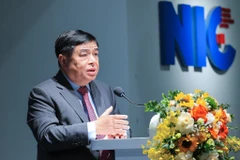
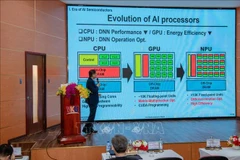
An expert speaks at the International Conference on Semiconductors (ICOS) 2026 (Photo: VNA)

ICOS 2026 highlights pathways for Vietnam’s semiconductor development

This was the first international, specialised semiconductor conference held in central Vietnam and the first time the country hosted a large-scale academic forum dedicated exclusively to this sector. Organised in line with international standards, it featured plenary sessions, technical presentations and industry forums, reflecting major research trends shaping the semiconductor sector.

Resolution No.57: People should be put at centre of AI governance

Resolution No.57: People should be put at centre of AI governance

Assessing the role of AI, Minister of Science and Technology Nguyen Manh Hung emphasised that it is an “intellectual infrastructure.” More than an applied technology, AI is increasingly becoming a form of national infrastructure, comparable to electricity, telecommunications or the Internet.

In Vietnam, 5G technology infrastructure has begun to be widely deployed by domestic network operators (Photo: VNA)

5G technology expansion expected to boost Vietnam’s digital economy

The Ministry of Science and Technology reported that by 2025, 5G had been commercialised nationwide, covering more than 90% of the population. Viettel alone has deployed 30,000 5G base stations, achieving 90% outdoor coverage and 70% indoor coverage, exceeding its commitments to the Government.

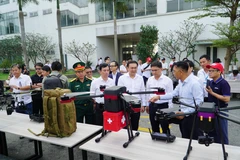
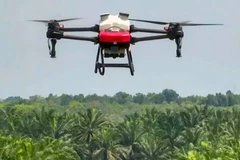
At a display of UAVs (Photo: VNA)

HCM City pilots UAVs for delivery services

HCM City aims to promote UAV use in urban delivery - a promising field contributing to smart logistics and postal services for e-commerce, smart cities and high-tech public services, while fostering UAVs as a strategic technology sector underpinning the innovation ecosystem.

Viettel's virtual assistant for searching administrative units helps shorten time and simplify searches for people. (Photo: Viettel)

Viettel’s virtual assistant among Top 10 technology products

The accolade recognises the mastery of core technologies by the Viettel Artificial Intelligence and Data Services Centre (Viettel AI), while reaffirming the group’s capacity to successfully deploy “Make in Vietnam” artificial intelligence solutions in international markets.

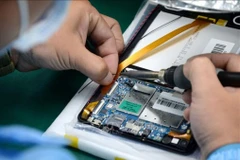
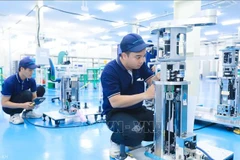
Workers are operating a robotic wafer conveyor assembly line in the semiconductor industry. (Illustrative image. Photo VNA)

Innovation – Driver for new development phase

The draft action programme of the Party Central Committee to implement the Resolution of the 14th National Party Congress identifies the shift to a new growth model, economic restructuring, and accelerated industrialisation and modernisation, with science, technology, innovation and digital transformation as the core engines, as key tasks.

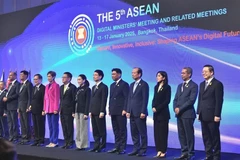
Participants at the 5th ASEAN Digital Ministers Meeting (ADGMIN) in Thailand. (Photo: VNA)

Hanoi to host 6th ASEAN Digital Ministers’ Meeting in January

Held annually on a rotating basis among ASEAN member states, the meeting plays a key role in shaping strategic orientations, formulating policies and promoting digital cooperation within ASEAN, while strengthening collaboration with partners and international organisations amid rapid digital and digital-economy transformation globally.

(Illustrative photo: Viettel)

Viettel records breakthrough in first 5G Advanced trial

The achievement, marked as Vietnam’s first 5G Advanced trial, was made possible by carrier aggregation (CA) technology, enabling mobile devices to operate across multiple frequency bands simultaneously instead of a single band.

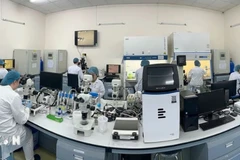
A biotechnology laboratory of the International University at Vietnam National University-Ho Chi Minh City. (Photo: VNA)

Resolution 57: Role of intellectuals in advancing science and technology research

Prof. Dr. Tran Dai Lam, Director of the Institute of Materials Science at the Vietnam Academy of Science and Technology (VAST), emphasised that intellectuals should nurture national responsibility and ambition, be ready to take on challenges, evaluate research outcomes by international standards, and engage in collaboration across different sectors.

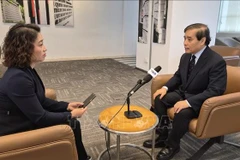
Professor Vu Minh Khuong, of the Lee Kuan Yew School of Public Policy (right), talks to a Vietnam News Agency correspondent in Singapore. (Photo: VNA)

Resolution 57 - catalyst for scientific and technological breakthroughs

The resolution also seeks to create stronger mechanisms to mobilise social and private resources and support an innovation ecosystem; link digital transformation in the public sector with the modernisation of national governance; and prioritise the development of elite human resources and internationally-standard research infrastructure.

Workers produce electronic components (Photo: VNA)

Science, technology drive Vietnam’s rising global profile: expert

Assoc. Prof. Le Duc Anh from Tokyo University held that for fast and sustainable development, Vietnam should prioritise science – technology and innovation as the main driver of productivity, focusing on sectors with high spillover effects such as semiconductors, AI, data, new energy and materials, biomedical technology, automation – robotics, and cybersecurity.