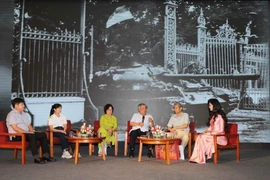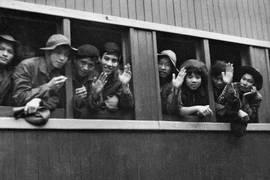
Hanoi (VNA) – In the crucible of Vietnam’s war-torn past, the war correspondents of the Vietnam News Agency (VNA) were more than journalists; they were soldier-storytellers on the front lines, wielding pens and cameras alongside rifles. These brave souls bore witness to a nation’s epic struggle, documenting not only its triumphs but also the piercing sorrow, loss, and unbreakable resolve of their fellow countrymen.
Veterans like Tran Mai Huong and Le Cuong carry memories that weigh heavy on their hearts: colleagues fell in battle, their cameras and half-finished reports still in hand. These haunting images, etched into their minds, become symbols of bravery and perseverance.
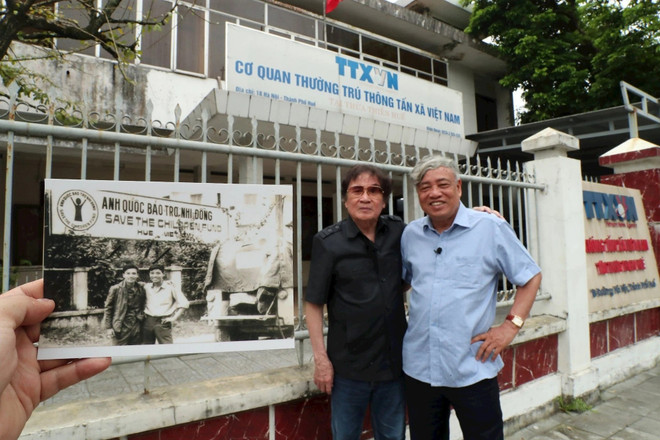
On roads scorched by war, personal longings were often set aside for duty. Even when fate granted fleeting reunions with loved ones amid the chaos, these correspondents chose their mission over tender embraces, driven by an ironclad commitment to delivering the truth to Hanoi and the world. For some, those brief encounters during the historic 1975 Spring Offensive left indelible scars that time could never fade.
The long journey home
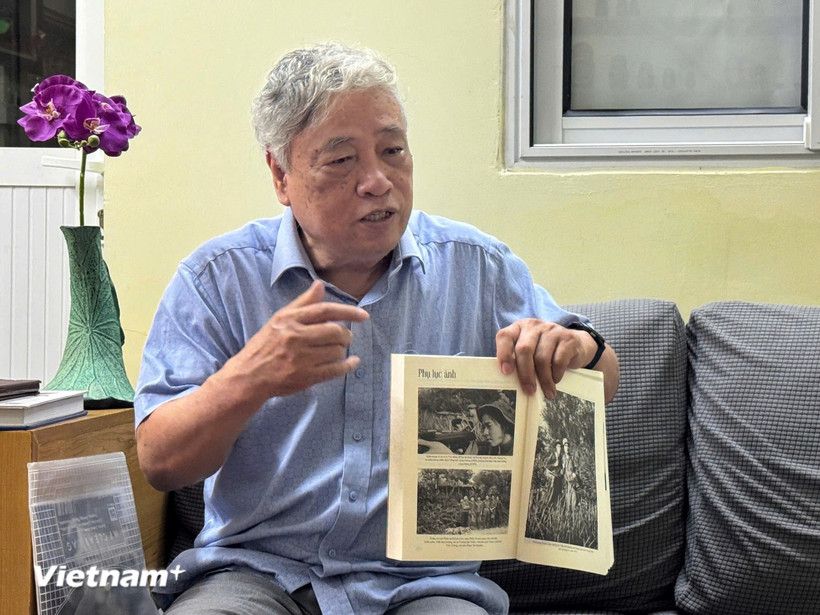
Fifty years since Vietnam’s reunification, Huong, now in his late 70s, his white hair and weathered skin bearing the scars of a life on the front lines, recounted with fervour the defining moment of his career: the fall of the Saigon puppet regime on April 30, 1975.
Standing at the Independence Palace alongside his elder brother, Tran Mai Hanh, a fellow VNA correspondent, Huong was at the heart of a nation’s triumph. Though they arrived via separate military paths, the brothers captured moments that would echo through history.
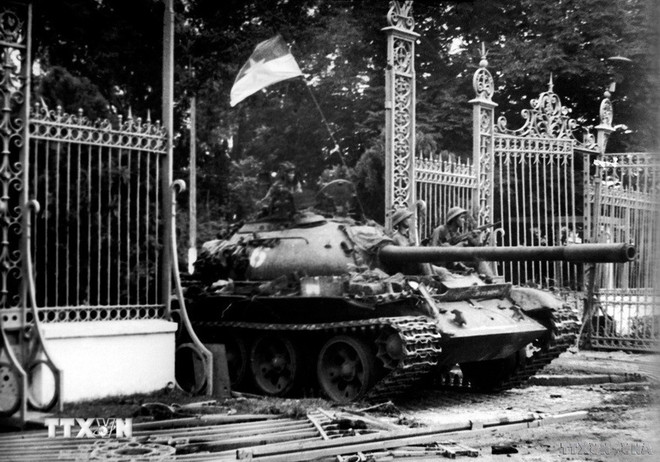
Hanh’s pen delivered the iconic piece, “Ho Chi Minh City glows with golden stars”. Huong, meanwhile, froze time with his lens. His photo, “A liberation tank storms the gates of Independence Palace at noon on April 30, 1975”, has now become the global emblem of freedom. Together, these VNA brothers crafted works that are part of Vietnam’s historical legacy.
Just weeks earlier, on March 25, 1975, after the liberation of Hue, fate briefly reunited them. In a fleeting, tear-filled exchange, they locked eyes, knowing time would not allow more. Duty called, and they pressed on.
That brush with history later inspired Hanh’s acclaimed book, “War Memoirs 1-2-3-4.75”, which earned top honours from the Vietnam Writers’ Association and the ASEAN Literature Award. Huong’s photo, “A liberation tank storms the gates of Independence Palace at noon on April 30, 1975” – a searing portrait of triumph, remains synonymous with the Spring Victory.
In 2024, the brothers embarked on a pilgrimage to heal old wounds, retracing their wartime journey across Vietnam. “It was a trip I had longed to take,” Huong said, his voice alive with purpose. “We travelled past the 17th parallel, Hien Luong Bridge, Ben Hai River — places that once divided our land, through Hue, Da Nang, Quang Nam, Quang Ngai, Binh Dinh, Phu Yen, Nha Trang, Phan Rang, Phan Thiet, Xuan Loc, and finally to Saigon, now Ho Chi Minh City”.
For Huong and Hanh, this “journey home” was more than a road trip; it was the closure they had waited decades to complete.
A dreamlike reunion amid war
The American War tore countless Vietnamese families apart, and VNA journalist Le Cuong’s was no exception. After graduating from VNA’s GP10 course, Cuong became a battlefield photojournalist, braving the Ho Chi Minh Trail under relentless enemy fire. His younger brother, Le Van Cuong, remained with their mother in Hanoi before enlisting in 1973.
Communication was sparse as only front-line troops could send letters home. For years, the brothers were adrift from one another.
“After Lunar New Year in 1974, while on assignment in the southwestern front, I heard my brother had joined the army in May 1973 and crossed Truong Son Mountains in October 1973,” Cuong recalled, his voice tinged with longing. “He was in Regiment 1, somewhere nearby. I searched, but it felt like a long shot.”
In October 1974, a tip led Cuong to Tieu Can district. At dusk, he set out, navigating by boat and on foot through rice paddies and dense forests until he reached a hidden outpost - a lone hut in the wild. “In the darkness, I heard a familiar sound, a quirk,” Cuong said. “I called out, ‘Is that Tien? (my brother’s nickname)’ He answered, ‘Is that you, brother Cuong?’ We shouted ‘Oh my God!’ and ran to each other, our flashlights revealing tear-streaked faces.
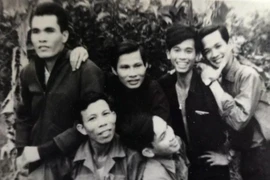
Before parting again at dawn, they fulfilled their mother’s wish: a photo together. She had told her younger son, “If you go South, find your brother, take a photo, and send it home”. Against all odds, they did.
The next night, their meeting place was reduced to rubble by bombs. Cuong stayed in Tra Vinh, his brother moved on to Vinh Long. Contact vanished once more.
During the 1975 Spring Offensive, Cuong joined the troops moving to liberate Tra Vinh at the same time the Saigon regime fell at 12:30 pm on April 30. “On May 15, I jumped for joy when I saw my younger brother marching in a military parade in Vinh Long, an AK rifle over his shoulder,” Cuong said. “The Americans were gone. The puppet regime had collapsed”.
That reunion photo, a fragile relic of a miraculous moment, still hangs in their Hanoi family home.
“My brother later became a construction engineer and passed away in 2006 after a long illness,” Cuong said, his voice trembling with emotion. “Our mother, now 92, shares that photo with her grandchildren and great-grandchildren, recounting the day her sons found each other amid the chaos of war”./.