Hanoi (VNA) – As science, technology, and innovation increasingly become key drivers of national growth, Vietnam National University, Ho Chi Minh City (VNU-HCM) has asserted its pioneering role, contributing significantly to national research, technology application, and innovation efforts.
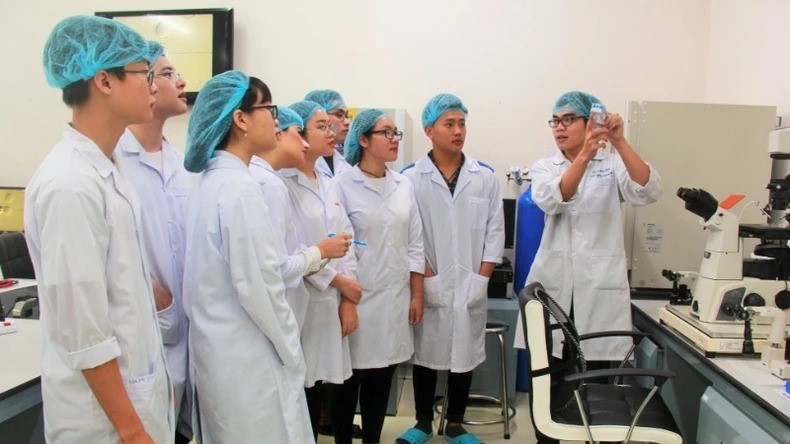
Associate Professor Dr Vu Hai Quan, Chancellor of VNU-HCM, emphasised that scientific research, technology, and education are closely linked. VNU-HCM has, therefore, set its goal to become a leading centre for scientific research and technology transfer in Vietnam, while also providing highly skilled human resources to support industrialisation and modernisation. Its development strategies closely follow the Party’s resolutions.
Over the past time, VNU - HCM has carried out a series of initiatives to strengthen the training of high-quality technology personnel, contributing to the implementation of the Politburo's Resolution No. 57-NQ/TW on science, technology, innovation, and digital transformation.
Recently, VNU-HCM, together with the National Innovation Centre (NIC) and Coherent Vietnam (Dong Nai) Company Limited, under Coherent Corp. specialising in optical and electronic manufacturing for the semiconductor industry, signed a Memorandum of Understanding (MoU) for 2025–2030 to jointly develop highly skilled personnel and promote innovation in Vietnam’s semiconductor sector.
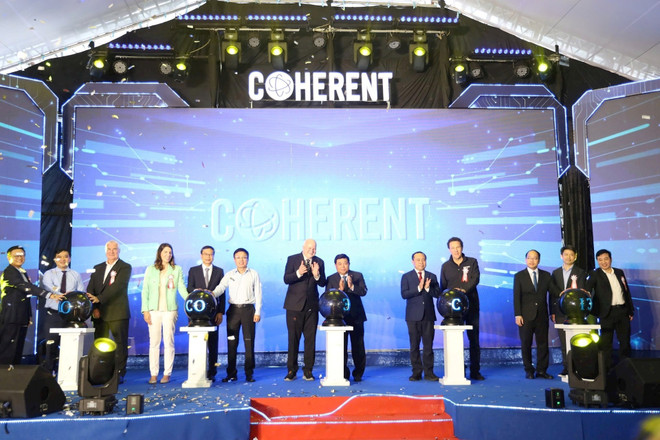
The MoU was signed by Quan, NIC Director Vu Quoc Huy, and Giovanni Barbarossa, Coherent’s Chief Strategy Officer. The partnership will roll out training programmes and professional development initiatives in science and technology, with a particular focus on the semiconductor industry.
It also includes establishing the COHERENT-VNU TECH LINK technology connection centre, exploring advanced training centres in artificial intelligence (AI) and robotics, supporting semiconductor process development, and implementing R&D activities at NIC and VNU-HCM laboratories. These initiatives are carried out in line with a programme on developing human resources for the semiconductor industry until 2030 with a vision to 2050 approved by the Prime Minister under Decision No. 1017/QD-TTg.
Under the decision, Vietnam aims to train and develop high quality human resources for the semiconductor industry by 2030, and a strong contingent of semiconductor personnel capable of joining the global value chain of the industry by 2050.
Specifically, by 2030, Vietnam expects to have at least 50,000 engineers and workers with bachelor's and higher degrees in all stages of the semiconductor value chain, along with at least 5,000 personnel with intensive expertise in artificial intelligence serving the semiconductor industry.
The collaboration will organise training courses and workshops on AI, big data, IoT, ESG, and digital governance, while also contributing to experimental legal frameworks (sandbox) and long-term strategies for education, science, and technology in Vietnam.
From 2014 to 2020, VNU-HCM collaborated with the Vietnam Academy of Science and Technology to implement scientific and technological programmes for sustainable development in the Southwest region.The university has also established the Climate Change Institute under An Giang University.
The Vietnamese Party and State have always affirmed the importance of scientific and technological research in the country’s industrialisation and modernisation. This is reflected not only in development policies but also in strong investment in research, education, and the training of high-quality human resources./.