Beijing (VNA) - The upcoming 14th National Congress of the Communist Party of Vietnam (CPV) has drawn great attention from Chinese scholars and experts who asserted that it will be a significant milestone for Vietnam.
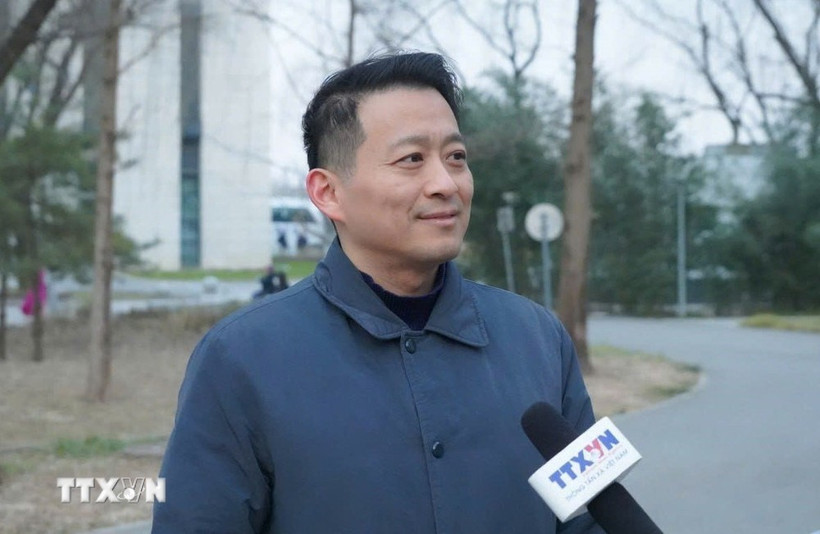
Professor Qu Qiang of Minzu University of China said that the congress will open a new development phase characterised by a “strategic breakthrough,” in which science, technology, innovation and institutional reform play a decisive role.
According to Professor Qu, viewed against both international and regional backdrops, Vietnam’s position in Southeast Asia has continued to rise. With a population of around 100 million, a young demographic structure and rapid urbanisation, Vietnam possesses strong fundamentals for medium- and long-term development.
Building on achievements from the 12th to the 13th congress, Vietnam has emerged as one of the region’s most dynamic growth economies, while maintaining political and social stability, deepening international integration and steadily enhancing national competitiveness, he noted.
However, the current development context differs markedly from previous periods. The global economy is experiencing complex fluctuations, global supply chains face mounting disruptions, strategic competition among major powers is intensifying, and regional conflicts and geopolitical instability remain unpredictable. In this context, Professor Qu noted that Vietnam, as an important emerging economy and a key link in ASEAN supply chains, needs well-calibrated strategic choices to sustain growth momentum and improve growth quality.
He pointed out that since the 12th National Party Congress, Vietnam has persistently pursued anti-corruption efforts, structural reforms and stronger discipline, sending a clear message that reform must go hand in hand with stability. Maintaining political orientation, development pathways and ideological unity remains a prerequisite for reform success.
The scholar also stressed that amid the new circumstances, countries should prioritise cooperation rather than competition, focusing on key areas such as high technology, artificial intelligence, energy, regional market building and supply chain connectivity, thereby contributing to peace, stability and shared development in East Asia. In this regard, the 14th National Party Congress is of special significance, as it will shape Vietnam’s development strategy for many years ahead, with decisions that carry implications not only for Vietnam but also for the region and the world.
Other Chinese experts and scholars have also offered positive or neutral assessments, highlighting continuity and stability in Vietnam’s political landscape and prospects for Vietnam–China cooperation in the new period.
Cheng Hanping of Zhejiang University of Technology noted that following the 14th National Party Congress, Vietnam is likely to maintain a flexible, multilateral foreign policy, balancing relations with both the US and China.
Chinese media have cited official Vietnamese sources to provide basic information about personnel preparations and the anticipated timing of the congress, while several online platforms have reported on its scale and key figures.
On Chinese social media platforms such as Weibo and WeChat, the 14th National Congress of the CPV has also attracted considerable discussion, with attention focused mainly on Vietnam’s institutional reforms ahead of the event.
Notably, many Chinese netizens have expressed surprise and admiration for Vietnam’s large-scale administrative reforms carried out in 2025 in preparation for the congress, particularly efforts to streamline the political system’s organisational apparatus, which are seen as contributing to anti-corruption and the reduction of bureaucracy.
Overall, Chinese online opinion ahead of the 14th National Congress of the CPV reflects diverse perspectives but notable consensus. Most assessments commend Vietnam’s reform and internal restructuring efforts, viewing them as signs of a neighbouring country rising strongly, while also expressing expectations that Vietnam will continue to maintain political and economic stability after the congress./.
VNA