ASEAN adopts 10-year action plan to combat transnational crime

The 19th ASEAN Ministerial Meeting on Transnational Crime (AMMTC) on September 10 endorsed the ASEAN Plan of Action on Combating Transnational Crime for 2026–2035, providing a framework to address transnational crime challenges over the next decade.

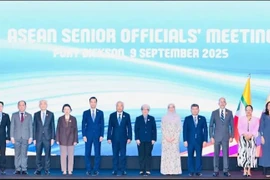
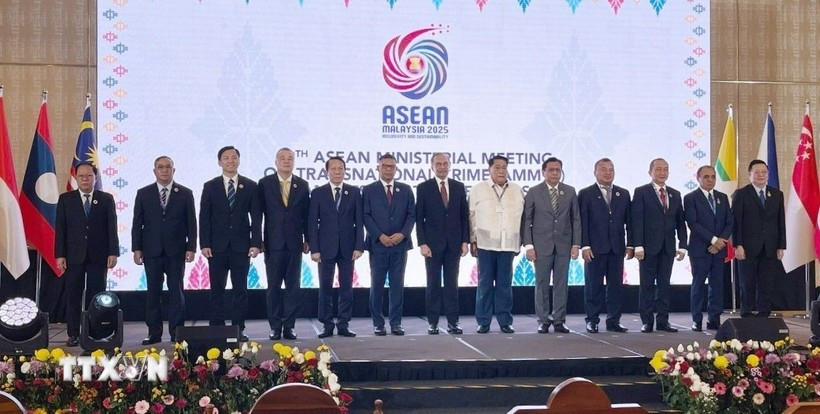
Vietnamese Minister of Public Security Gen. Luong Tam Quang (fifth, left), poses for a group photo with Malaysian Prime Minister Datuk Seri Anwar Ibrahim (centre) and delegates attending the meeting. (Photo: VNA)

Kuala Lumpur (VNA) – The 19th ASEAN Ministerial Meeting on Transnational Crime (AMMTC) on September 10 endorsed the ASEAN Plan of Action on Combating Transnational Crime for 2026–2035, providing a framework to address transnational crime challenges over the next decade.

According to Malaysia’s Home Ministry, the adoption reflects ASEAN’s collective commitment to keeping pace with an increasingly complex threat landscape and further strengthening regional cooperation.

The meeting also approved the establishment of an ASEAN Senior Officials’ Meeting on Transnational Crime (SOMTC) Working Group on Anti-Money Laundering as a new platform to enhance regional efforts against financial crime. In addition, the ASEAN Border Management Cooperation Roadmap was adopted to streamline inter-agency coordination on immigration and border control, the ministry said in a statement.

Delegates agreed to support Vietnam’s initiative to adopt an ASEAN Leaders’ Declaration on enhancing the effectiveness of tracking fugitives at the 47th ASEAN Summit, scheduled to take place in Malaysia in this October.

Several important documents were released, including the Melaka Declaration on Combating Transnational Crime and ASEAN statements on countering people smuggling, cybercrime, and online fraud; combating money laundering; and strengthening cooperation in apprehending fugitives.

The meeting also agreed to extend a number of action plans to counter extremism and coordinate cross-border and cross-sectoral measures to address the threat of violent extremism in the region.

The joint statement stressed that AMMTC not only reviewed achievements of the past decade but also opened a more comprehensive new chapter, underscoring ASEAN’s determination to remain at the forefront of the fight against increasingly sophisticated transnational crime.

Speaking at the event, Vietnamese Minister of Public Security General Luong Tam Quang noted that in the context of extensive globalisation and integration, transnational crime remains a major challenge for all countries, including Vietnam. He proposed four measures to enhance regional cooperation, which were welcomed by other member states. These include actively sharing information and identifying new criminal methods; building mechanisms for joint investigations and operations; strengthening cooperation in applying science and technology in crime prevention; and developing a shared ASEAN database to support judicial assistance, extradition, and transfer of sentenced persons.

On the sidelines of the event, Minister Quang held meetings with Malaysian Home Minister Saifuddin Nasution Ismail, Vice Minister of Justice of the Republic of Korea Lee Jin Soo, and Chinese Vice Minister of Public Security Wang Zhizhong, and to discuss future cooperation in crime prevention and control.

Following the meeting, Malaysia’s Ministry of Home Affairs announced that the two sides focused on boosting security cooperation under the cross-border Memorandum of Understanding (MoU) between Malaysia and Vietnam, particularly in cybersecurity. Malaysia is also in the process of acceding to the Budapest Convention on Cybercrime and will officially sign the UN Convention against Cybercrime in Hanoi this October./.

VNA

See more

Thailand uses tech to convert plastic waste into oil

Thailand uses tech to convert plastic waste into oil

Patcharatarasmi Thongsaluaykorn, deputy spokesperson for the Office of the Prime Minister, said on August 16 that the Government is working to reduce living costs and generate income for the public by applying science, technology, and innovation to turn "waste" around people into career and income opportunities for households while easing the community's landfill burden.

A house damaged by the earthquake on Flores Island, Indonesia, August 15, 2026. (Photo: Xinhua/VNA)

Indonesia steps up earthquake search, rescue, relief efforts

Indonesia is stepping up search and rescue operations and providing assistance to residents following a 7.7-magnitude earthquake that struck offshore near Flores Island in East Nusa Tenggara (NTT) province on the morning of August 15, the Indonesian news agency Antara reported.

Rescuers search for victims following the earthquake in Flores, Indonesia, on August 15, 2026. (Photo: Xinhua/VNA)

Indonesia earthquake death toll rises, 2,000 evacuated

The earthquake struck off Flores Island near Mbay town in Nagekeo district, East Nusa Tenggara province, triggering strong aftershocks. Several houses and other structures were damaged, while landslides disrupted roads in some areas.

Cambodia moves to keep pace with growing EV market

Cambodia moves to keep pace with growing EV market

A report from the Ministry of Public Works and Transport showed that as many as 6,174 new EVs were registered in the Southeast Asian country during the first half of this year, bringing the total number of officially registered EVs to 15,239.

China-ASEAN trade up over 18% in H1

China-ASEAN trade up over 18% in H1

Trade in intermediate goods, including parts, components and production inputs, rose 24.5% to 2.86 trillion CNY during the period, accounting for around two-thirds of total bilateral trade.

The Petronas Twin Towers in Kuala Lumpur, Malaysia. (Photo: Xinhua/VNA)

Malaysia eyes becoming ASEAN’s AI hub

Malaysia possessed the fundamentals to emerge as ASEAN's digital and AI hub, including its strategic location, strong connectivity, growing digital ecosystem and rising investor confidence, said Digital Minister Gobind Singh Deo.

Malaysia is pursuing a vision of becoming one of the Asia-Pacific’s leading air connectivity hubs. (Illustrative photo: AFP/VNA)

Malaysia eyes regional air transport hub status

Stronger connectivity was essential for the movement of capital and goods, while helping deepen Malaysia's economic ties with major regional centres, said Transport Minister Anthony Loke.

A perspective of the passenger terminal at Long Thanh International Airport in its first phase. (Photo: ACV)

Vietnam, India emerge on Asia-Pacific aviation map

Vietnam is considered one of the most promising markets in Southeast Asia in terms of international visitor numbers and travel demand. The country plans to increase the number of airports to 30 by 2030 to meet the needs of its rapidly growing economy.