ASEAN Secretary-General: Higher education will shape the region’s future

The ASEAN chief revealed that the ASEAN Socio-Cultural Community (ASCC) Strategic Plan designates education as a driver for equity and sustainable development. Its agenda calls for enhancing access to quality education, promoting lifelong learning, and integrating green skills into curricula. In short, academic purpose serves societal and community purpose.

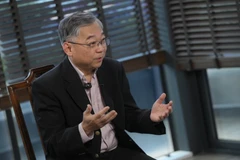
ASEAN Secretary-General Kao Kim Hourn (Photo: Bernama)

Kuala Lumpur (VNA) – ASEAN Secretary-General Kao Kim Hourn on November 4 called on regional leaders and higher-education institutions across the region to lead transformation efforts to realise the ASEAN Community Vision 2045.

Speaking at the opening ceremony of the ASEAN Higher Education Leadership Forum (ASHELF) 2025 under the framework of the Festival of Ideas (FOI) 2025 in Malaysia, the Secretary-General said that higher education in the Association of Southeast Asian Nations (ASEAN) must move beyond alignment and take a leadership role in shaping the region’s future.

He revealed that the ASEAN Socio-Cultural Community (ASCC) Strategic Plan designates education as a driver for equity and sustainable development. Its agenda calls for enhancing access to quality education, promoting lifelong learning, and integrating green skills into curricula. In short, academic purpose serves societal and community purpose.

Meanwhile, the forthcoming ASEAN Education Work Plan 2026-2030 articulates the foundation for regional cooperation in education, emphasising mobility, digital transformation, and Technical and Vocational Education and Training (TVET).

He pointed out the “six guiding stars” for higher education transition in the region. First, higher education must move from rigid curricula to Adaptive Learning and Values-Based Education. The world no longer needs graduates who simply know facts. It needs agile, resilient learners who can unlearn and relearn. The systems must embrace micro-credentials, lifelong learning, and flexible educational pathways.

Second, university research must deliver tangible regional benefits and tackle real challenges in the ASEAN community. Universities should foster a responsible, impact-oriented ASEAN research and innovation ecosystem, for example, by developing solutions for sustainable agriculture, affordable healthcare, and green technologies.

Third, universities need to create leadership pathways for emerging scholars, preparing young researchers and lecturers not only to lead departments but also to drive institutional transformation. This requires a shift away from the entrenched publish or perish culture, which stifles innovation and mentorship.

Fourth, higher education must harness the power of artificial intelligence to boost innovation in learning, improve administrative efficiency, and enable breakthrough research, while grounding this development in ethics and strong technological governance. Universities should take the lead in building ASEAN-centric AI governance frameworks.

Fifth, knowledge of planetary health must be integrated across all disciplines, not confined to environmental studies. Graduates should become champions of the circular economy, climate-resilient policymaking, and a more sustainable ASEAN.

Finally, higher education must elevate and strengthen technical and vocational education and training (TVET) across the region. In the era of AI and digital transformation, TVET is a core driver of ASEAN’s economic dynamism. The region needs leaders in TVET who can build strong industry–academia partnerships, align training with emerging sectors, and equip young people with future-ready skills.

The ASEAN chief stressed that while these six directions are essential, they will fall short without bold collective action. He underlined that ASEAN’s strength lies in unity and its shared commitment to “One Vision, One Identity, One Community.” A comprehensive transformation of higher education along these directions will help retain talents, prepare the workforce for future challenges and, ultimately, realise the ASEAN Community Vision 2045./.

VNA

See more

Malaysian Deputy Prime Minister Datuk Seri Fadillah Yusof (Photo: Bernama)

Malaysia accelerates clean energy transition

Delivering a speech at the Clean Energy Transition Asia (CETA) Summit 2025 in Kuala Lumpur, Fadillah, who is also the energy transition and water transformation minister, said that the Southeast Asian region now drives more than half of the global energy demand.

Indonesian localities extend state of emergency amid natural disasters

Indonesian localities extend state of emergency amid natural disasters

As disaster-related losses continue to rise, authorities in the affected provinces have decided to extend the state of emergency to ensure resources and legal mechanisms for response efforts. West Sumatra extended it to December 22, North Sumatra to December 24, and Aceh to December 25.

Malaysian Deputy Prime Minister Datuk Seri Fadillah Yusof delivers his opening keynote address at the Global AI, Digital and Green Economy Summit 2025 in Kuala Lumpur, December 15, 2025. (Photo: Bernama)

Malaysia eyes AI-driven energy future

Malaysia’s direction is to focus on building a modern grid, a digital economy powered by trustworthy AI, and climate finance systems that deliver real-world decarbonisation.

Air passengers at the departure terminal of the Phnom Penh International Airport. (Photo: khmertimeskh.com)

Air travel between Cambodia, Thailand remains operational

In a statement released on his Facebook post, Hun Sen explained that his earlier message, advising the Royal Government to consider suspending cross-border travel, referred specifically to land routes, as tensions are escalating along the entire land border, with some spillover into maritime areas.

Thailand, Myanmar boost anti-drug cooperation

Thailand, Myanmar boost anti-drug cooperation

Myanmar authorities have handed over three drug-related fugitives wanted by Thailand and one Thai national who was residing illegally in Myanmar to Thai authorities, according to the Myanmar Police Force.

An aerial drone photo shows a bridge damaged by floods in Bener Meriah regency, Aceh, Indonesia, (Photo: Xinhua)

Indonesia: Over 200 people remain missing after floods, landslides

The floods and landslides that struck three provinces on Indonesia's Sumatra Island have caused damage to about 1,200 public facilities, as well as 219 health facilities, 581 educational establishments, 434 places for worship, 290 office buildings and 145 bridges.

Director General of Customs and Excise Djaka Budhi Utama (Photo: cncbindonesia.com)

Indonesia’s customs warns of emerging smuggling “hotspot”

To prevent similar smuggling activities, Indonesia’s Directorate General of Customs and Excise is conducting strict surveillance along the coast. The areas under surveillance include Belawan, Tanjung Balai Asahan, Dumai, Jambi, and the Riau Islands.

Prime Minister of Timor-Leste Kay Rala Xanana Gusmão on December 11 delivers a policy speech at the ASEAN Headquarters/ASEAN Secretariat. (Photo: VNA)

Timor Leste PM: Admission into ASEAN – a dream comes true

Prime Minister of Timor-Leste Kay Rala Xanana Gusmão emphasised that becoming a member of ASEAN is “a dream comes true" for the people of Timor Leste, affirming that joining ASEAN marked a significant turning point, helping Timor Leste move towards the future and integrate into the broader regional community.

Tourists visit Bangkok, Thailand. (Photo: Xinhua/VNA)

Foreign arrivals to Thailand down nearly 10% year-on-year

For 2026, Thailand expects 34.9 million foreign visitors, a 4% increase, earning 1.63 trillion THB in revenue, up 8% year-on-year. Total tourism revenue, including domestic travel, is forecast at 2.79 trillion THB (88 billion USD).