Australian expert hails performance of 15th NA, People’s Councils at all levels

During the 15th term, NA deputies raised a number of critical issues with government ministers during question time regarding environmental protection, land administration, and food safety. Deputies were particularly engaged during discussions on amendments to the 2013 Constitution and the Law on the Organisation of Local Administration.

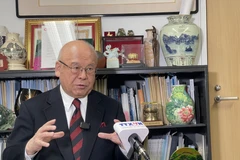
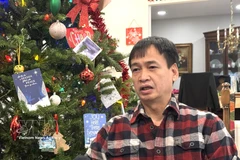
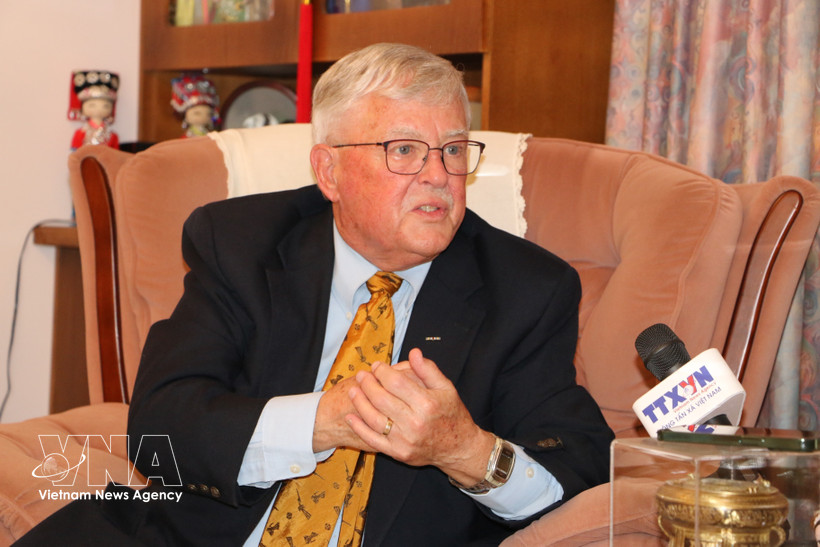
Professor Carl Thayer from the Australian Defence Force Academy at the University of New South Wales speaks to the Vietnam News Agency (VNA)'s resident correspondent in Sydney. (Photo: VNA)

Sydney (VNA) – Professor Carl Thayer from the Australian Defence Force Academy at the University of New South Wales has spoken highly of the performance of the 15th National Assembly (NA) and People’s Councils at all levels in Vietnam for the 2021–2026 term, on the threshold of the election of deputies to the 16th legislature and People’s Councils at all levels for the 2026–2031 tenure.

The 15th National Assembly held ten statutory legislative sessions, along with nine extraordinary sessions that mainly addressed personnel issues. The final 10th session witnessed the passage of a record 51 laws during a fast-track session, he said in an interview with the Vietnam News Agency (VNA)'s resident correspondent in Sydney.

During the 15th term, NA deputies raised a number of critical issues with government ministers during question time regarding environmental protection, land administration, and food safety. Deputies were particularly engaged during discussions on amendments to the 2013 Constitution and the Law on the Organisation of Local Administration.

Prof. Thayer described this as a heavy task. However, Vietnam has succeeded in achieving its goals.

In 2025, Vietnam reduced the number of provinces and cities to 34, including 23 newly merged provinces and 11 provinces or cities that remained unchanged. This required restructuring the People’s Councils in the newly merged provinces, he said.

As a researcher on Vietnam, Prof. Thayer observed that in the past, Vietnam used to hold elections for the NA a full year after the national congress of the Communist Party of Vietnam. This schedule was later changed so that elections were held in May or five months after the national congress.

The 14th National Party Congress set forth important development goals for the country in the new era, which need to be urgently implemented by the new Party and Government leadership. Therefore, moving the NA elections forward was a necessary step to elect new Government leaders, including the State President, the Prime Minister, and members of the Cabinet, according to the professor.

Following the streamlining of the political system and the merger of provinces, new People’s Councils will be elected at the same time as the NA. This is a significant move, as the People’s Councils will need to receive direction from the new ministers so they can begin implementation immediately.

According to Prof. Thayer, both the NA and the People’s Councils face a mammoth task in reviewing and revising existing laws, resolutions, directives, conclusions, and other guidance to achieve the specific development goals adopted by the 14th National Party Congress in an orderly and efficient manner.

The international geopolitical system is undergoing a transformation, and there is great uncertainty about the impact of this change on the global economy and supply chains.

To promote inter-regional and global economic cooperation, it is necessary to ensure that each bilateral and multilateral free trade agreement (FTA) achieves maximum effect, the expert said. For Vietnam, this includes not only bilateral FTAs but also the ASEAN Free Trade Area, ASEAN’s FTAs with its dialogue partners, the EU–Vietnam Free Trade Agreement, the Eurasian Economic Union-Vietnam FTA, the Regional Comprehensive Economic Partnership, and the Comprehensive and Progressive Agreement for Trans-Pacific Partnership.

Prof. Thayer recommended that Vietnam ensure it maintains proactiveness in working with its network of comprehensive and strategic partners, particularly its comprehensive strategic partners. Vietnam must constantly consult with its partners and respond swiftly to mitigate negative geopolitical impacts.

Regarding efforts to promote parliamentary cooperation between Vietnam and Australia for greater benefits to bilateral relations, the professor recalled that Australia and Vietnam signed a Parliamentary Cooperation Agreement in 2022 and elevated their ties to a Comprehensive Strategic Partnership in 2024. According to the expert, the 2022 cooperation agreement should be reviewed to ensure it addresses opportunities under the upgraded relationship.

The two sides have already identified climate change, energy transition, digital transformation, trade, and regional security as common areas of concern. Their respective legislative committees should explore new priority areas as a follow-up to Vietnam’s 14th National Party Congress, such as artificial intelligence, hi-tech agriculture, and current geopolitical issues affecting the rules-based global order./.
VNA

See more

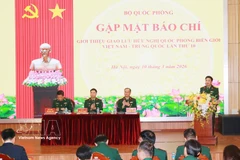
An overview of the press briefing in Hanoi on March 10 to introduce the 10th Vietnam–China Border Defence Friendship Exchange. (Photo: VNA)

Tenth Vietnam–China border defence friendship exchange to feature innovations

Scheduled for March 18–19 in Quang Ninh province of Vietnam and China’s Guangxi Zhuang Autonomous Region, the exchange aims to realise high-level common perceptions between the two Parties and countries on deepening substantive defence cooperation, strengthening friendship and solidarity, and promoting practical collaboration among border protection forces, local authorities and people in border areas, thereby contributing to building a border of peace, friendship, stability, cooperation and development.

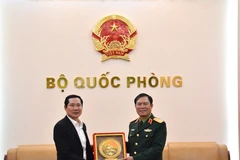
General Nguyen Tan Cuong (right), Chief of the General Staff of the Vietnam People's Army and Deputy Minister of National Defence, presents a souvenir to Senior Lieutenant General Saichay Kommasith, Chief of the General Staff of the Lao People’s Army and Deputy Minister of National Defence of Laos, at their meeting on March 9. (Photo: qdnd.vn)

Vietnam, Laos strengthen defence cooperation

General Nguyen Tan Cuong proposed both sides continue effectively implementing the agreed cooperation areas, including holding high-level delegation exchanges, maintaining consultation and dialogue mechanisms, and coordinating to successfully organise the annual meeting of the defence ministers of Vietnam, Laos and Cambodia.

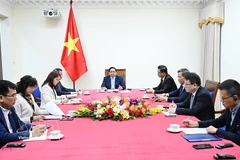
Prime Minister Pham Minh Chinh holds phone talks with the Prime Minister and Minister of Foreign Affairs of the State of Qatar, Sheikh Mohammed bin Abdulrahman bin Jassim Al-Thani. (Photo: VNA)

Vietnamese PM holds phone talks with Qatari counterpart

Emphasising Vietnam's opposition to the use of force against sovereign states, especially against civilian infrastructure that results in numerous casualties, PM Chinh called for a peaceful solution to the region based on respect for international law, the United Nations Charter, and ensuring the legitimate rights of all parties.

Prime Minister Pham Minh Chinh in the phone talks with Kuwaiti Prime Minister Sheikh Ahmed Abdullah Al-Ahmad Al-Sabah on March 9 (Photo: VNA)

Vietnamese, Kuwaiti PMs hold phone talks

PM Pham Minh Chinh commended Kuwait’s efforts and called on Kuwait and relevant countries to continue exercising restraint, promoting de-escalation efforts and seeking peaceful solutions based on respect for international law and the United Nations Charter, while ensuring the legitimate interests of all parties.

General Secretary of the Communist Party of Vietnam Central Committee To Lam (right) receives Scott Strazik, President and CEO of GE Vernova, in Hanoi on March 9, 2026. (Photo: VNA)

Party leader receives President and CEO of US’s GE Vernova

Vietnam always values and creates favourable conditions for US energy corporations to invest and operate in the country, bringing tangible benefits to the people and businesses of both nations while contributing to the development of bilateral ties, said Party leader To Lam.

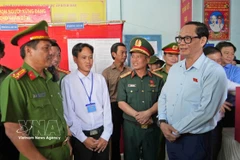
NA Vice Chairman Tran Quang Phuong (first, right) examines election preparations at Polling Station No. 1 in Kenh Dao hamlet, Dat Mui commune, Ca Mau province, on March 9. (Photo: VNA)

NA Vice Chairman urges Ca Mau to ensure safe elections

Ca Mau was asked to give special attention to ethnic minority communities, residents in remote and disadvantaged areas, the elderly living alone, and people with disabilities, so they can fully take part in voting.

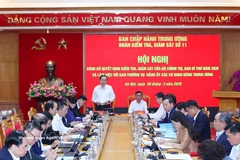
An overview of the conference to announce a decision of the Politburo and the Secretariat. (Photo: VNA)

Politburo, Secretariat announce inspection of Party Committee of Central Party Agencies

NA Chairman Tran Thanh Man said the inspection and supervision aim to comprehensively evaluate the leadership and direction of the Standing Board of the Party Committee of Central Party Agencies in implementing the Resolution of the 14th National Party Congress – a resolution carrying special significance, as it provides strategic orientation for the country’s development in the new phase.

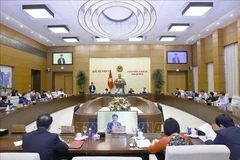
The 55th session of the National Assembly Standing Committee on March 2, 2026. (Photo: VNA)

📝OP-ED: Streamlining state apparatus: A foundation for rapid, sustainable development

The election is unfolding as Vietnam presses ahead with sweeping administrative reforms, including efforts to streamline the state apparatus and implement a two-tier local government model from the central level to grassroots authorities. Amendments to key laws are also aimed at strengthening decentralisation, improving the management of public assets and accelerating digital transformation, enabling citizens to access information more easily while fostering a leaner, more transparent governance system that better upholds people’s rights.

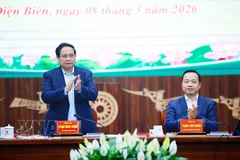
Prime Minister Pham Minh Chinh (L) at the working session with leaders of the Dien Bien provincial People’s Committee on March 8. (Photo: VNA)

PM asks Dien Bien province to make greater efforts for prosperity, people’s happiness

PM Chinh highlighted Dien Bien’s strategic location, sharing long borders with Laos and China, as well as its large natural area and rich cultural heritage of 19 ethnic groups, and strong growth potential for agriculture, industry, renewable energy, services and tourism, calling for greater efforts to create new momentum for sustainable development.

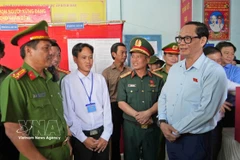
National Assembly Vice Chairman Tran Quang Phuong (right) inspects election preparations at Polling Station No. 1 in Kenh Dao hamlet, Dat Mui commune, Ca Mau province. (Photo: VNA)

NA Vice Chairman inspects election preparations in southernmost Ca Mau province

The delegation noted that local authorities had launched preparations early and in a well-organised manner, reflecting strong determination and a high sense of responsibility. Communication activities have been carried out in various forms to disseminate official information and create a positive atmosphere ahead of the election.