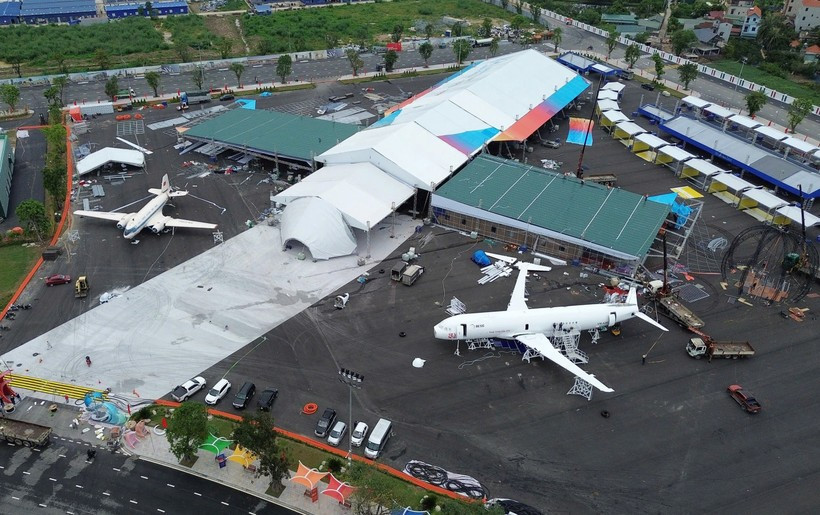
Hanoi (VNA) – Marking the nation’s 80-year journey, Vietnam’s aviation sector is presenting a dedicated space titled “Aspiration for the Sky” at the ongoing national achievements exhibition, offering a vivid portrayal of its history, progress, and future ambitions.
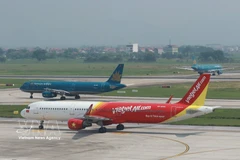
Spanning around 10,000 square meters, the aviation zone brings together 10 leading enterprises and institutions, including Vietnam Airlines, Vietjet Air, Bamboo Airways, Vietravel Airlines, Army Corps 18 of the Ministry of National Defence, the Vietnam Air Traffic Management Corporation, the Aerospace Engineering Services JSC (AESC), Flying Legend, and the Vietnam National Space Centre. The showcase is designed to highlight milestones while also reflecting Vietnam’s growing role in regional and global aviation.
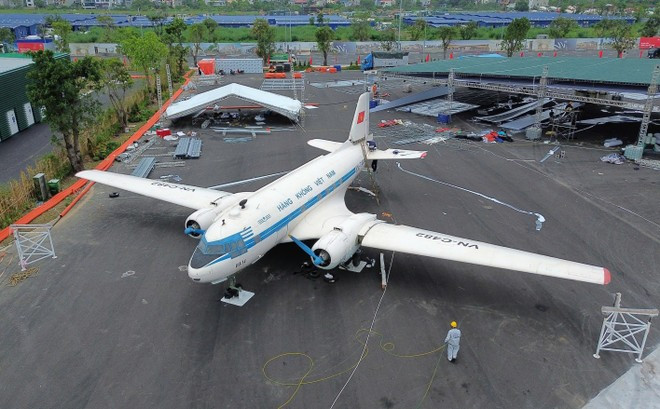
Uong Viet Dung, Director of the Civil Aviation Authority of Vietnam, said four aircraft models are on display outdoors, illustrating different stages of Vietnam’s aviation journey. Among them is IL-14, one of the five aircraft provided by the former Soviet Union in 1957. The aircraft coded VN-C482 was gifted personally to President Ho Chi Minh and later used as a state aircraft to transport Party and State leaders during the wartime years.
Another key highlight is the Airbus A320 training aircraft of the AESC. Visitors can experience interactive activities such as simulated ticket purchases, business lounge services, 3D mapping displays on the aircraft body, cockpit exploration, and emergency evacuation training guided by aviation professionals.
Alongside, a Vietnamese-designed TP-150 light aircraft is also on show, reflecting the industry’s growing design capacity. Meanwhile, a helicopter from Army Corps 18 illustrates the diverse roles of aviation in national defence, search and rescue, tourism, and socio-economic development.
Dung said the exhibition structure itself draws inspiration from the image of the Lac Bird, an ancient Dong Son-era symbol, presented with wings stretching toward the sky. This motif is intended to capture Vietnam’s enduring aspirations for freedom, prosperity, and connectivity.
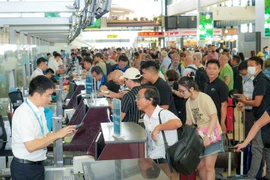
Indoor exhibition areas are organised to resemble an airport terminal, with dedicated zones representing check-in, security screening, boarding gates, and passenger services. Exhibitors are using this space to present achievements in passenger and cargo services, air traffic management, international cooperation, and digital transformation.
Advanced technologies also feature prominently. Visitors can explore flight simulators, air traffic control models, 3D avatar booths for immersive photo experiences, multilingual AI-enabled robots, and displays of cabin interior products, technical components, and maintenance solutions developed by domestic enterprises.
Representatives noted that the exhibition is not only a retrospective but also a statement of intent to establish an aviation industry capable of competing internationally while maintaining strong cultural identity and sustainability commitments.
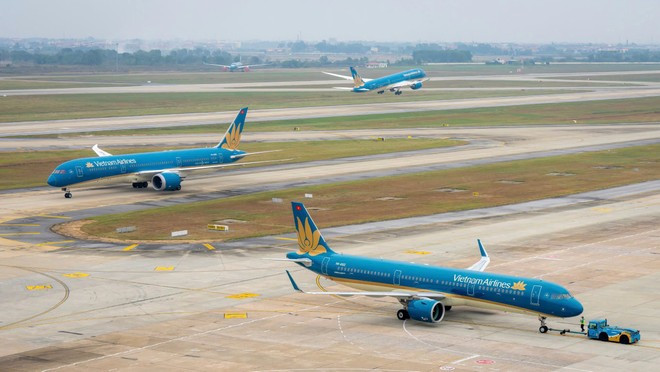
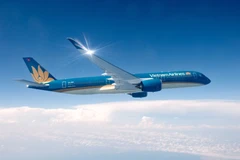
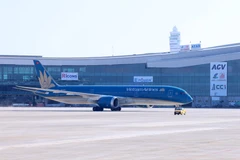
Vietnam Airlines has recorded strong growth with the ambition to go global. (Photo: VietnamPlus)
With a 1,500-square-meter pavilion, Vietnam Airlines is presenting exhibits that connect its heritage with its vision for the future. Among the centerpieces is a model of the Airbus A350 engine, developed with Rolls-Royce’s latest XWB technology. This new-generation aircraft is recognized for its fuel efficiency and reduced environmental impact, thanks to its carbon-fiber reinforced polymer construction.
The pavilion recreates a passenger’s journey from check-in to boarding, designed as a simulated flight. Visitors can watch documentaries retracing 80 years of Vietnam’s aviation history on LED screens, experience inflight dining services, try on crew uniforms, and step into replica cabins across different travel classes.
The airline is also offering a close look at cargo facilities, aircraft engines, and an A320 cockpit simulator, where participants can attempt piloting under the guidance of technical specialists. Such interactive experiences aim to foster greater public understanding and pride in Vietnam’s aviation achievements.
The exhibition is more than just a showcase of aircraft and technology. It reflects Vietnam’s ambition to expand its aviation footprint globally, while contributing to tourism, trade, and cultural exchange.
The event is also seen as an opportunity to strengthen public-private partnerships, encourage investment in aviation infrastructure, and highlight Vietnam’s capacity to integrate advanced technologies such as artificial intelligence and digital platforms into civil aviation operations.
A representative of Vietnam Airlines underscored that the exhibition highlights the national carrier’s pioneering role and its determination to expand internationally.
The airline noted that the exhibition serves as a bridge linking the past, present, and future, while affirming Vietnam Airlines’ commitment to accompany the nation in building a green and sustainable future for generations to come./.