Hanoi (VNA) – In the relentless flow of globalisation, Vietnam aims to elevate international integration to keep up with the world while identifying and seizing opportunities to position the country within the global current over the next 10 to 20 years.
For Vietnam, therefore, the integration process is not merely about opening its economy but represents a strategic decision, marking a historic turning point that drives the country toward a sustainable and prosperous future and deeper integration into the world.
From inevitable choice to national strategy
Three decades ago, Vietnam took its first steps of international integration by joining the Association of Southeast Asian Nations (ASEAN) and normalising diplomatic relations with the US. The 1995 integration milestone became another important historical milestone, following the launch of Doi moi (renewal) in 1986.
If Doi moi opened the door to the domestic market, integration became the path for Vietnam to reach global markets. After years of isolation and embargo, Vietnam established its place on the global economic map.
The 9th National Party Congress set forth the policy of “international economic integration” for the first time. Meanwhile, the 11th Party Congress marked a shift in the mindset, from “international economic integration” to “international integration across all fields”. Since then, integration has been officially recognised as a major policy of the Party and State, serving as a strategic driver for national development.
From a once-isolated country, Vietnam has established diplomatic relations with 194 countries worldwide and set up strategic and comprehensive partnerships with 34. Notably, as of May 16, 2025, Vietnam maintains comprehensive strategic partnerships with 13 countries, including China, Russia, India, the Republic of Korea, the US, Japan, Australia, France, Malaysia, New Zealand, Indonesia, Singapore, and Thailand.
In addition, Vietnam is an active member of over 70 regional and international organisations, and boasts deep and substantive political, defence, and security ties with other nations.
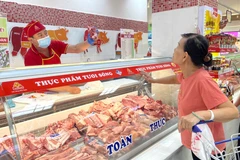
From a poor, backward, and isolated economy under embargo, Vietnam has become one of the world’s 34 largest economies, nearly 100 times larger than in 1986, and recorded average per capita income surging from under 100 USD to nearly 5,000 USD.
It has proactively joined and signed numerous bilateral and multilateral free trade agreements (FTAs), notably the Comprehensive and Progressive Agreement for Trans-Pacific Partnership (CPTPP), the EU – Vietnam FTA (EVFTA), and the Regional Comprehensive Economic Partnership (RCEP) agreement.
The participation in these new-generation FTAs has helped to not only expand export markets or attract foreign investment, but also drive institutional reforms, reform the growth model, and strengthen national competitiveness.
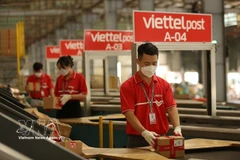
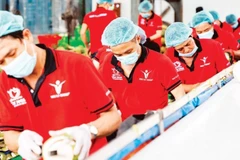
These cooperation agreements have connected Vietnam with over 60 key economies, enabling deeper engagement in global production and supply chains. As a result, it now ranks among the world’s top 20 trading economies and the 10 countries with the largest remittance inflows globally. It has also been one of the top 20 recipients of foreign investment since 2019.
To reach the global stage, Vietnam has not only relied on external opportunities but also enhanced internal capacities. Accordingly, the Politburo issued Resolution No. 59-NQ/TW on January 24, 2025, on international integration in the new context, marking a new development phase of Vietnam’s path of comprehensive integration.
Party General Secretary To Lam stated that Resolution 59 captures the momentum of the era and “elevates” international integration as seen in its highly revolutionary, breakthrough, national, scientific, and timely perspectives. The resolution marks a historic turning point in Vietnam’s international integration process, identifying integration as a strategic motivation for the country to confidently step into a new era.
Coordinating action to elevate integration
To successfully implement Resolution 59-NQ/TW and enable Vietnam to confidently advance to an era of prosperous and robust development, strong, comprehensive, and decisive action by the entire political system is a must, along with the consensus, support, and unity of the people.
International integration is not only a great strategy but also a national mission in the context of increasingly deep globalisation and fierce competition.
The Party chief stressed that the resolution is a “breakthrough decision”, marking a historic turning point in the country’s integration process, as it defines international integration as a crucial driver for Vietnam step into a new era. This lays a foundation for Vietnam to proactively access the global arena, create opportunities, and elevate its national standing.
In his article “Rising in international integration”, Party General Secretary To Lam emphasized: “In the interdependent world today, the development of each nation cannot be isolated or immune to the impacts of the world and the era, or the prevailing circumstances. The country is facing a great opportunity to ascend, but it is also confronted with immense challenges. The achievements in integration thus far have contributed to building the strength and momentum for the next breakthroughs. Building on this spirit, Resolution 59 marks a significant shift in our Party's mindset and orientation for international integration in the upcoming period, creating motivation to propel the country toward the glorious stage of independence, freedom, happiness, prosperity, and lasting success./.