AI offers breakthrough opportunities for businesses

Under the Poliburo’s Resolution 57-NQ/TW on breakthroughs in science, technology, innovation, and national digital transformation, Vietnam aims to be among the top three ASEAN countries and the top 50 globally in AI development by 2030.

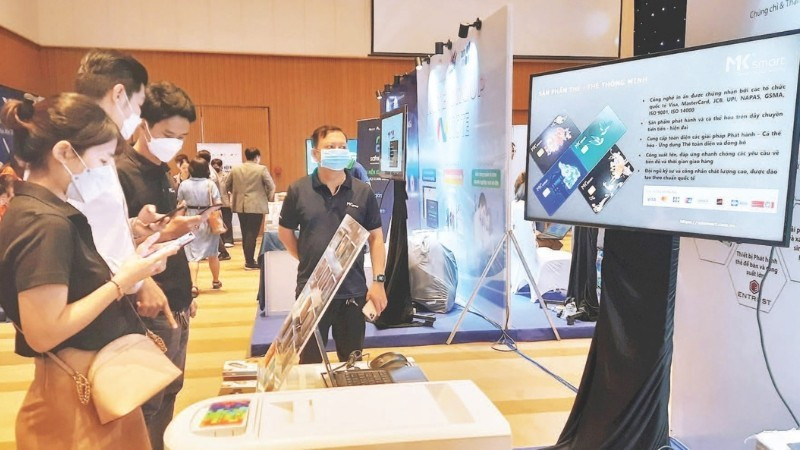
Digital transformation solutions are displayed in Ho Chi Minh City in response to National Digital Transformation Day. (Photo: nhandan.vn)

Hanoi (VNA) – Artificial intelligence (AI) is opening up unprecedented opportunities for Vietnamese businesses, enabling them to improve operational efficiency, cut costs, increase revenues, and enhance their competitiveness on the global stage.

Vietnam has identified AI as a key strategic technology to elevate its global standing. Under the Poliburo’s Resolution 57-NQ/TW on breakthroughs in science, technology, innovation, and national digital transformation, Vietnam aims to be among the top three ASEAN countries and the top 50 globally in AI development by 2030. The government has also listed AI as a top priority in its national strategy on emerging technologies.

Recently, Vietnam introduced its first legal framework for AI with the adoption of the Law on Science, Technology and Innovation, and the Law on the Digital Technology Industry.

Phan Thi Thanh Ngoc, Director of AI Consulting at VNPT AI - a subsidiary of the VNPT Group, Vietnamese firms are not just adopting AI quickly, but also building their own ecosystems and platforms to serve domestic needs and compete with global tech giants.

VNPT began its AI research and development over five years ago and now offers a diverse range of AI products for multiple customer segments.

ai.jpg
Illustrative photo (Photo: vneconomy.vn)

In the public sector, VNPT uses AI to enhance digital governance. For individuals, the company is developing virtual AI assistants. In the enterprise sector, its AI-powered solutions help businesses increase revenue, improve profits, and enhance customer experiences.

One standout product is VNPT’s AI-based eKYC system, which ranks among the world’s top 10 for accuracy. VNPT has also developed a Vietnamese-optimised large language model (LLM) that currently leads domestic rankings. All these technologies are fully developed in-house, demonstrating Vietnam’s capacity to compete internationally in AI.

Tech giant VNG is also making comprehensive investments in AI across infrastructure, platforms, and applications. Its cloud subsidiary GreenNode launched Southeast Asia’s first large-scale AI Cloud in June 2024. Within six months, it had generated significant revenue due to high market demand.

Vietnam is now one of the first three Southeast Asian countries to develop its own LLM, with Zalo’s KiLM model achieving performance on par with GPT-4 in just six months. Notably, around 20% of Zalo’s 75 million users—roughly 15 million people—now use AI-powered features like translation and AI avatars daily.

AI is also transforming banking operations. Previously, loan processing required large teams to manually enter and cross-check data. With AI document extraction from GreenNode, banks now process millions of documents annually, saving billions of Vietnamese dong in operational costs. Processing time has improved by at least 30%, allowing banks to serve more customers efficiently.

GreenNode Product Director Vu Thanh Tung observed that both government and enterprise sectors are accelerating practical AI applications.

In public administration, AI is automating resume processing. In insurance, it helps digitise and streamline claims handling and other paperwork-heavy processes.

Despite these advancements, broad AI adoption in Vietnamese businesses still faces several barriers including high infrastructure costs, deployment challenges, and limited awareness.

“If business leaders lack a broad understanding and long-term vision to assess the value of AI, they may hesitate to invest in it. Some also worry AI could replace jobs,” said Ngoc.

She emphasised the need for clear investment strategies and a focus on safety, security, and privacy. “Vietnamese companies should prioritise ‘Made in Vietnam’ AI solutions tailored to local needs,” she advised.

From a technical standpoint, Tung pointed out two key concerns of data and security.

“With biometric authentication, deepfake attacks are emerging as a new threat. Meanwhile, effective AI deployment depends on having clean, well-organised, and centralised data,” he said.

To address this, GreenNode is developing Data Bloom, a platform that consolidates fragmented data sources. This allows even non-technical business teams to access and analyse data for AI applications.

“These AI models don’t have to be ChatGPT. There are open-source, low-cost alternatives like DeepSeek, Qwen, or LlaMA,” Tung added./.


VNA

See more

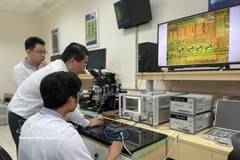
A biotechnology laboratory of the International University at Vietnam National University-Ho Chi Minh City. (Photo: VNA)

Resolution 57: Role of intellectuals in advancing science and technology research

Prof. Dr. Tran Dai Lam, Director of the Institute of Materials Science at the Vietnam Academy of Science and Technology (VAST), emphasised that intellectuals should nurture national responsibility and ambition, be ready to take on challenges, evaluate research outcomes by international standards, and engage in collaboration across different sectors.

Professor Vu Minh Khuong, of the Lee Kuan Yew School of Public Policy (right), talks to a Vietnam News Agency correspondent in Singapore. (Photo: VNA)

Resolution 57 - catalyst for scientific and technological breakthroughs

The resolution also seeks to create stronger mechanisms to mobilise social and private resources and support an innovation ecosystem; link digital transformation in the public sector with the modernisation of national governance; and prioritise the development of elite human resources and internationally-standard research infrastructure.

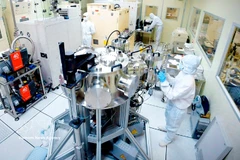
Workers produce electronic components (Photo: VNA)

Science, technology drive Vietnam’s rising global profile: expert

Assoc. Prof. Le Duc Anh from Tokyo University held that for fast and sustainable development, Vietnam should prioritise science – technology and innovation as the main driver of productivity, focusing on sectors with high spillover effects such as semiconductors, AI, data, new energy and materials, biomedical technology, automation – robotics, and cybersecurity.

An overview of the workshop. (Photo: nafosted.gov.vn)

National portal expected to transform innovation into reality

The portal, which can be accessed at sangkien.gov.vn, was built to address the urgent need to mobilise collective intelligence and unlock the creativity of the entire population, in accordance with the directives of the steering committee for the implementation of the Politburo’s Resolution No. 57-NQ/TW on creating breakthroughs in science, technology, innovation and national digital transformation.

Sucker-mouthed minnow (Supradiscus varidiscus). (Photo: researchgate.net)

Vietnamese fish, bee named among 70 species newly identified in 2025

One of the most notable “hidden” finds is a small sucker-mouthed minnow endemic to Vietnam’s highlands, discovered in the Lo River. Scientifically named Supradiscus varidiscus, the specimen was collected and shelved some 25 years ago but has only now been studied and formally described.

The Ministry of Science and Technology launches a centralised one-stop-shop unit on December 19. (Photo: VNA)

Vietnam pushes sci-tech, innovation as growth drivers under Resolution 57

The Ministry of Science and Technology (MoST) bears the responsibility of “paving the way”, guided by a consistent spirit of transitioning from a management-oriented mindset to a facilitative one, from “input-based management” to “output-based evaluation”, and from fragmented investment to a focused approach centred on strategic technologies.

Prime Minister Pham Minh Chinh visits a display of science and technology development, innovation and digital transformation. (Photo: VNA)

Gov't leader requests greater efforts to step up development of sci-tech, innovation

Emphasising three strategic digital breakthroughs - digital institutions, digital infrastructure and digital human resources - PM Chinh called for close integration of science and technology development, innovation, administrative reforms, digital transformation and Project 06 with efforts to streamline the organisational apparatus and modernise leadership, management and working styles.

Doctors from Cho Ray Hospital (Ho Chi Minh City) and Vinh Long General Hospital (Vinh Long province) test the operation of a linear accelerator radiotherapy system for cancer treatment (Photo: VNA)

Vietnam sets orientations for applying nuclear energy across sectors

The plan aims to ensure the effective implementation of Decision No. 245/QD-TTg dated February 5, 2025, which approved the national master plan, while concretising objectives, orientations, solutions and resources for applying radiation and radioisotopes across sectors. It also assigns responsibilities to ministries, sectors and localities, and sets roadmaps and priorities for key programmes and projects.