HCM City, Intel cooperate in training AI human resources

Kenneth Tse, General Director of Intel Vietnam, noted that in nearly 20 years of operations in the country, Intel Vietnam has exported over 4 billion products, contributing more than 100 billion USD to Vietnam’s export revenue.

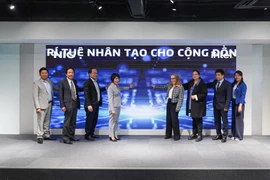
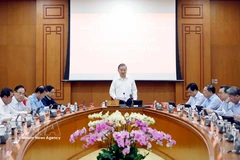
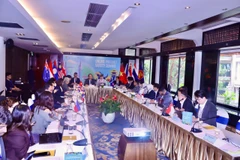
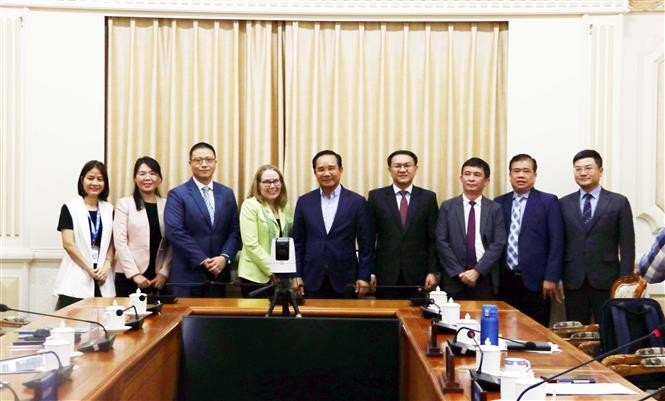
Nguyen Van Duoc (middle), Chairman of Ho Chi Minh City People's Committee, holds a working session with Sarah Kemp (4th from left), Vice President of International Government Affairs at Intel Corporation on July 8. (Photo: VNA)

HCM City (VNA) – Chairman of the Ho Chi Minh City People’s Committee Nguyen Van Duoc expressed his hope that Intel Corporation would expand investment in the city, particularly in training high-tech engineers and human resources in the fields of artificial intelligence (AI) and semiconductors.

At a working session on July 8 with Sarah Kemp, Vice President for International Government Affairs at Intel Corporation, he also expected that Intel Vietnam and the Saigon Hi-Tech Park (SHTP) would soon reach concrete agreements on cooperation in AI human resource development, tailored to practical needs and aimed at producing tangible, measurable outcomes. HCM City also hopes the corporation to replicate successes of Intel Vietnam and attract more high-tech investors to the southern metropolis, Duoc said.

The municipal leader praised Intel Vietnam’s contributions over the past two decades to the development of the city’s scientific and technological ecosystem and its broader socio-economic growth.

Sharing the city’s development vision, Duoc noted that following the mergence with Binh Duong and Ba Ria-Vung Tau provinces, HCM City gain a significantly larger development space and stronger regional connectivity. The city is poised to become a leading hub for economic growth, innovation, logistics, and finance both in Vietnam and in the region, opening up vast potential for cooperation with US partners in high-tech industries, education, clean energy, healthcare, and beyond.

For her part, Kemp congratulated the city on its strong development potential and voiced cautious optimism regarding the ongoing US-Vietnam tariff negotiations, expressing her hope that semiconductors and high-tech products would be included in the list of goods eligible for tariff exemptions or preferential treatment.

Praising Vietnam’s strategy for semiconductor and high-tech development, Kemp highlighted that Intel was among the first technology companies to implement public-private partnerships in AI human resource training in Vietnam. She affirmed Intel Vietnam’s readiness to support the training of municipal officials in AI application as well as to provide essential skill training for current and future professionals in the field.

Kemp further stated that Intel is committed to accompanying and assisting HCM City in developing transport infrastructure and exploring investment cooperation in renewable energy.
nguyen-van-duoc.jpg
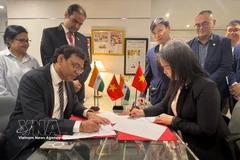
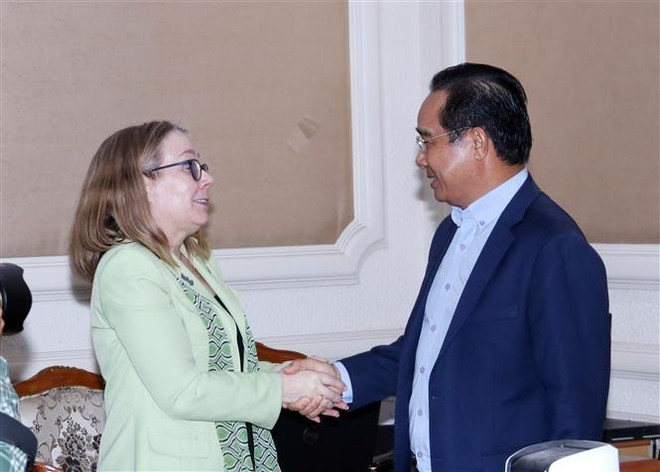
Chairman of the Ho Chi Minh City People’s Committee Nguyen Van Duoc (right) shakes hands with Sarah Kemp, Vice President of International Government Affairs at Intel Corporation (Photo: VNA)

Kenneth Tse, General Director of Intel Vietnam, noted that in nearly 20 years of operations in the country, Intel Vietnam has exported over 4 billion products, contributing more than 100 billion USD to Vietnam’s export revenue. The company is also adopting Intel’s latest technologies in its local production. Over the past three months, it has started producing the company’s most advanced 18A semiconductor chips in Vietnam, providing the country with access to cutting-edge technology and enhancing the quality of its tech workforce.

Nguyen Ky Phung, Head of the SHTP Management Board, emphasised the fruitful relationship between the SHTP and Intel Vietnam. He said Intel’s AI training programme in HCM City currently targets public employees and graduates with a need for AI application skills.

A joint working group has been established to develop a cooperation framework and training content, under which Intel Vietnam will provide training materials while the SHTP will recruit and organise the target trainees, he said./.

VNA

See more

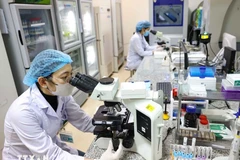
A biotechnology laboratory of the International University at Vietnam National University-Ho Chi Minh City. (Photo: VNA)

Resolution 57: Role of intellectuals in advancing science and technology research

Prof. Dr. Tran Dai Lam, Director of the Institute of Materials Science at the Vietnam Academy of Science and Technology (VAST), emphasised that intellectuals should nurture national responsibility and ambition, be ready to take on challenges, evaluate research outcomes by international standards, and engage in collaboration across different sectors.

Professor Vu Minh Khuong, of the Lee Kuan Yew School of Public Policy (right), talks to a Vietnam News Agency correspondent in Singapore. (Photo: VNA)

Resolution 57 - catalyst for scientific and technological breakthroughs

The resolution also seeks to create stronger mechanisms to mobilise social and private resources and support an innovation ecosystem; link digital transformation in the public sector with the modernisation of national governance; and prioritise the development of elite human resources and internationally-standard research infrastructure.

Workers produce electronic components (Photo: VNA)

Science, technology drive Vietnam’s rising global profile: expert

Assoc. Prof. Le Duc Anh from Tokyo University held that for fast and sustainable development, Vietnam should prioritise science – technology and innovation as the main driver of productivity, focusing on sectors with high spillover effects such as semiconductors, AI, data, new energy and materials, biomedical technology, automation – robotics, and cybersecurity.

An overview of the workshop. (Photo: nafosted.gov.vn)

National portal expected to transform innovation into reality

The portal, which can be accessed at sangkien.gov.vn, was built to address the urgent need to mobilise collective intelligence and unlock the creativity of the entire population, in accordance with the directives of the steering committee for the implementation of the Politburo’s Resolution No. 57-NQ/TW on creating breakthroughs in science, technology, innovation and national digital transformation.

Sucker-mouthed minnow (Supradiscus varidiscus). (Photo: researchgate.net)

Vietnamese fish, bee named among 70 species newly identified in 2025

One of the most notable “hidden” finds is a small sucker-mouthed minnow endemic to Vietnam’s highlands, discovered in the Lo River. Scientifically named Supradiscus varidiscus, the specimen was collected and shelved some 25 years ago but has only now been studied and formally described.

The Ministry of Science and Technology launches a centralised one-stop-shop unit on December 19. (Photo: VNA)

Vietnam pushes sci-tech, innovation as growth drivers under Resolution 57

The Ministry of Science and Technology (MoST) bears the responsibility of “paving the way”, guided by a consistent spirit of transitioning from a management-oriented mindset to a facilitative one, from “input-based management” to “output-based evaluation”, and from fragmented investment to a focused approach centred on strategic technologies.

Prime Minister Pham Minh Chinh visits a display of science and technology development, innovation and digital transformation. (Photo: VNA)

Gov't leader requests greater efforts to step up development of sci-tech, innovation

Emphasising three strategic digital breakthroughs - digital institutions, digital infrastructure and digital human resources - PM Chinh called for close integration of science and technology development, innovation, administrative reforms, digital transformation and Project 06 with efforts to streamline the organisational apparatus and modernise leadership, management and working styles.

Doctors from Cho Ray Hospital (Ho Chi Minh City) and Vinh Long General Hospital (Vinh Long province) test the operation of a linear accelerator radiotherapy system for cancer treatment (Photo: VNA)

Vietnam sets orientations for applying nuclear energy across sectors

The plan aims to ensure the effective implementation of Decision No. 245/QD-TTg dated February 5, 2025, which approved the national master plan, while concretising objectives, orientations, solutions and resources for applying radiation and radioisotopes across sectors. It also assigns responsibilities to ministries, sectors and localities, and sets roadmaps and priorities for key programmes and projects.