Da Nang (VNA) - As Vietnam pushes to secure the removal of the European Commission (EC)’s "yellow card" warning over illegal, unreported and unregulated (IUU) fishing, authorities said success will depend not only on strict enforcement but also on building trust with fishermen to encourage voluntary compliance with regulations.
A rescue that keeps a crew at sea
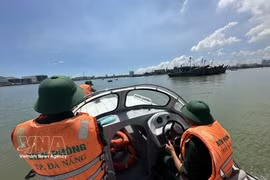
The morning quiet off the coast of Gia Lai province broke with the growl of an engine as a patrol team peeled away from Coast Guard vessel 390 and aimed for two fishing boats in the distance.
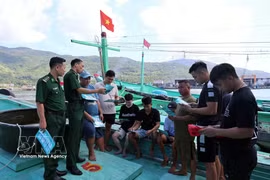
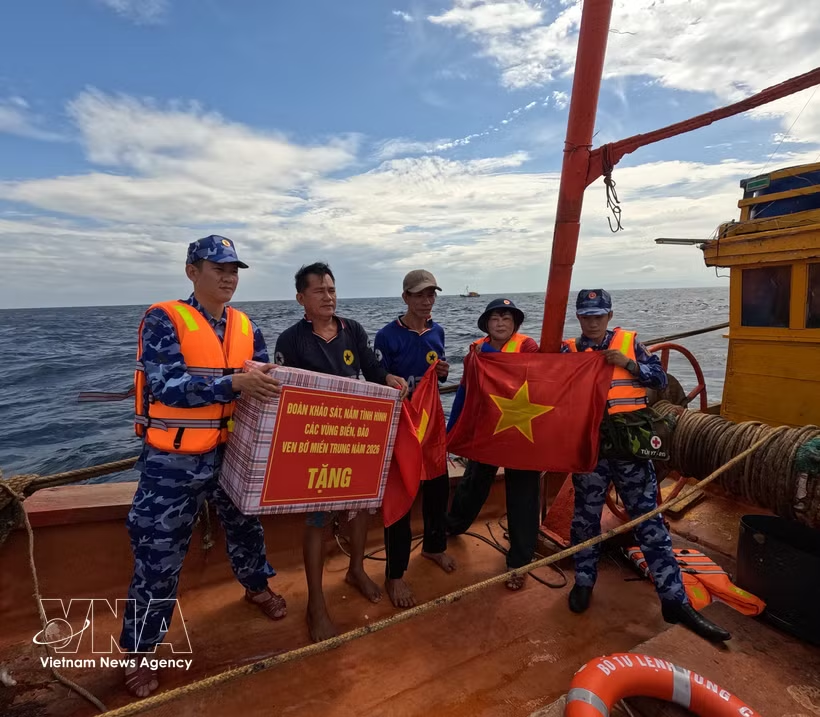
The Coast Guard Region 2 Command unit was tasked with inspecting regulatory compliance, raising awareness of fishing rules, and handing out national flags and gifts to keep fishermen working at sea.
But as the patrol boat sidled up to the first vessel, a fisherman frantically pointed toward another boat nearby.
"Someone on that boat has been badly burned,” he shouted. “Two days of pain. Please, help him”.
The coast guard team didn’t blink. Half of them scrambled aboard the first fishing boat to start the inspection. The other half called vessel 390 to rush over a military medic with a medical kit. Minutes later, the medic was standing on the deck of the second boat.
The injured fisherman, in his 60s, had taken a splash of scalding cooking oil to the leg. For two days at sea, the wound had gotten nothing but rough first aid from whatever was on hand. With no real medicine on board, the crew was seriously thinking about cutting the trip short and heading back to shore.
Right there on the cramped deck, the medic cleaned the wound, applied new bandages, handed over medication, and instructed the crew exactly how to care for the injury over the days ahead.
The patrol team then resumed its inspection, reviewing fishing licenses, voyage monitoring system (VMS) and compliance with fishing regulations. Officers detailed the rules on keeping VMS running continuously and fishing only in permitted zones.
Small gestures, lasting trust
A day earlier, another patrol from vessel 390 had pulled up to a fishing boat from Nghe An province operating off Quang Ngai.
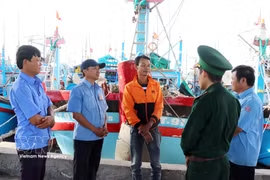
Captain Le Van Son and his crew aboard NA 91512 TS were waiting to greet the officers. After asking about how the fishing was going, the team dug into the permits, the VMS and the paperwork. That’s when they spotted it - some documents were just photocopies.
Instead of firing off a warning, an officer patiently walked through the regulations and advised the captain to carry certified copies on long trips so the originals wouldn’t get lost. Son took it all in and nodded.
When the inspection wrapped, every crew member walked away with a Vietnamese flag and a small gift in hand.
Though the two patrols unfolded on consecutive days under different circumstances, they delivered the same message: coast guard missions aren’t just about inspections and rulebooks. They’re about listening, lending a hand, and standing shoulder to shoulder with those who spend their lives at sea.
Col. Le Huy, Political Commissar of Coast Guard Region 2 Command, said supporting fishermen is as much a political obligation as enforcing maritime law and it’s the most direct way the unit shows up for coastal communities.
Once fishermen understand the regulations, trust law enforcement forces and know they can count on timely help at sea, running VMS, keeping logbooks and carrying proper documentation will no longer feel like box-ticking for inspections. They will become the responsibility of every vessel owner and captain, he explained.
That, he said, is what actually builds a sustainable, law-abiding fishing industry and it’s what Vietnam needs to finally convince the EC to lift that yellow card for good./.