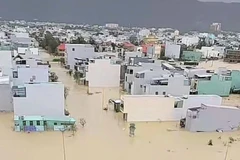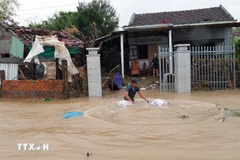
Hanoi (VNA) – As Vietnam prepares its socio-economic development plan for the 2026–2030 period, experts have emphasised that adaptation to climate change and protection of vulnerable groups, especially children, must be placed at the centre of future policy frameworks.
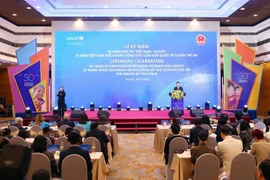
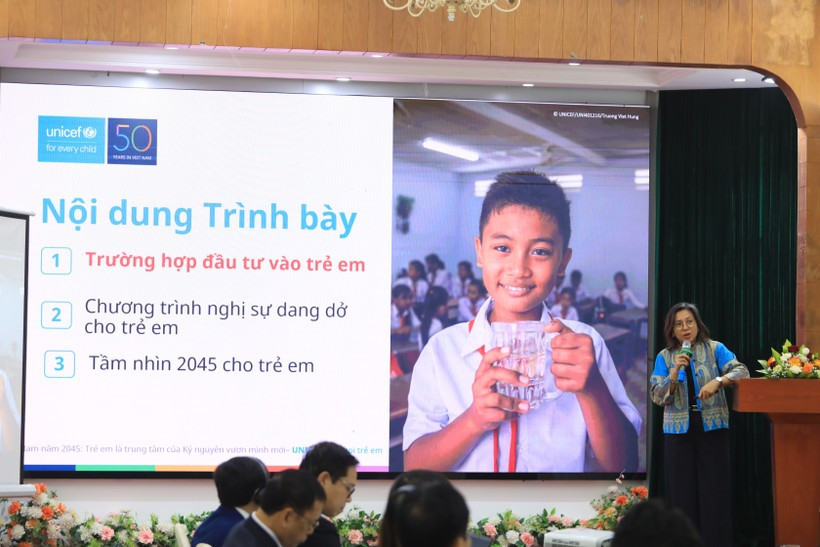
At a workshop organised on December 11 by the Institute of Policy and Development in collaboration with the United Nations Children’s Fund (UNICEF) Vietnam, scholars and policymakers discussed how to integrate climate resilience and child-centred policies into the next five-year strategy.
Experts affirmed that investing in children is not only a social responsibility, but also a strategic investment in Vietnam’s long-term sustainable development.
Climate impacts and policy gaps
Associate Professor Dr Tran Trong Nguyen, Director of the Institute of Policy and Development, described the workshop as “highly significant” as the country develops its socio-economic strategy towards the 14th National Party Congress and breakthrough priorities in education and health.
Nguyen urged participants to propose concrete measures to embed child education, protection, nutrition and social welfare into national development planning.
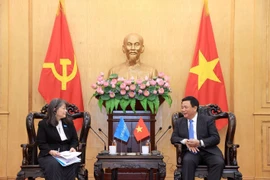
Speaking from an international perspective, Michaela Bauer, Deputy Representative of UNICEF in Vietnam, highlighted that children are among the groups most severely affected by climate change. Yet, she said, “the voices and needs of children are still not fully reflected in many development strategies and programmes.”
Bauer expressed hope that the workshop would mark the beginning of stronger cooperation to ensure that development policies tangibly benefit children.
Anjanette Saguisag, Chief of Social Policy and Governance at UNICEF Vietnam, pointed to stark statistics underscoring child vulnerability. She noted that globally, children under five account for up to 88% of the disease burden related to climate change. In Vietnam, one in five adolescents faces mental health challenges. Persistent issues include violence, abuse, early labour and early marriage, while social welfare for children remain limited: only 1.4% of children receive cash transfer benefits.
Representing the Ministry of Finance, Dao Xuan Tung Anh provided an overview of the draft socio-economic development plan for 2026–2030. He said Vietnam aims for average GDP growth of 10% or more over the period and per capita GDP of around 8,500 USD by 2030.
However, Anh acknowledged significant headwinds, including global instability, technological gaps, population ageing, and increasingly severe impacts from natural disasters and health crises.
These challenges require robust policy responses if Vietnam is to sustain high-quality, inclusive growth, he said.
Strengthening mechanisms and resources
Experts identified policy gaps in current budgetary and institutional arrangements. Dr Nguyen The Hung, Vice Director of the Institute of Policy and Development, pointed out that although Vietnam’s public spending on education and health is relatively high within the region, budget allocations for children’s issues remain insufficient and fragmented.
Currently, there is no separate classification, statistical monitoring or reporting on public expenditure for children, he explained. Budget allocations are spread across ministries and local governments without central coordination, leading to resource shortages in disadvantaged areas.
To overcome these shortcomings, Hung recommended that the Politburo adopt a National Strategy on Children to 2045, serving as a guiding framework for incorporating child-specific targets into sectoral and provincial plans and ensuring commensurate resource allocation.
Other proposed measures include developing a system of indicators to evaluate public spending on children, prioritising funding for climate risk reduction projects that account for child vulnerability, and implementing breakthrough reforms in education and health in line with Politburo Resolutions 71 and 72.
Experience from localities further highlights the need for policy specificity. Dr Nguyen Quynh Hoa of the National Economics University found that although national strategies emphasise “leaving no one behind,” provincial targets and budget plans often remain broad and insufficiently focused on vulnerable groups.
Notably, the participation of children and women in planning processes is still largely formalistic, creating a gap between policy commitments and practical outcomes.
Hoa proposed strengthening the link between national climate plans and local development strategies to turn commitments into funded programmes and projects with clearly defined budgets. She also called for meaningful consultation mechanisms to ensure that the voices of children and other vulnerable groups truly influence resource allocation decisions.
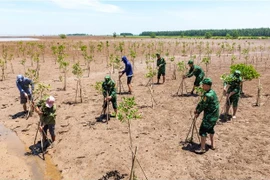
She further suggested that development partners support pilot initiatives at the provincial level and establish pathways for scaling effective inclusive models such as green schools, mangrove-based livelihood projects, and climate-resilient housing with systematic evaluation and replication. Additionally, she advised exploring innovative financing tools such as blended finance and climate bonds to help provinces access international funds while incorporating inclusive safeguards into development loans./.