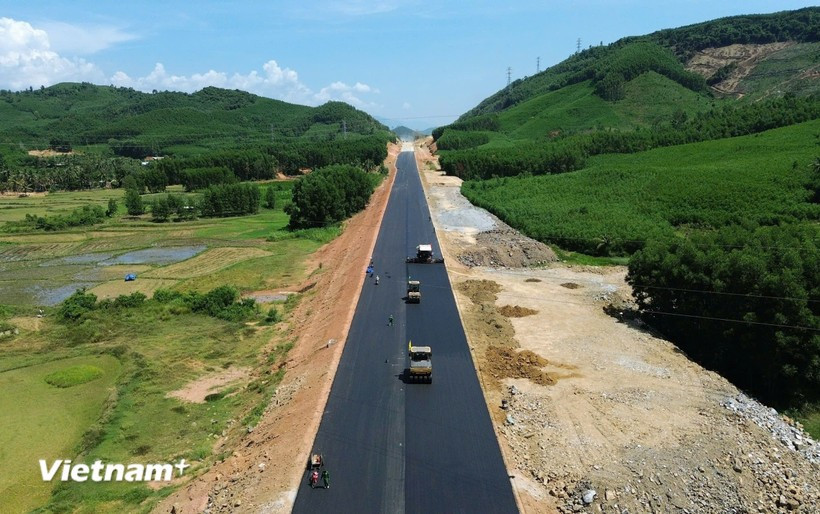
Hanoi (VNA) – The completion of 3,000 kilometres of expressways in 2025 marks a major milestone in Vietnam’s transport infrastructure development, reflecting not only unprecedented investment momentum but also the growing expertise of investors and contractors.
According to the Ministry of Construction, around 3,290 km of expressways are expected to be put into operation nationwide this year. During the 2021–2025 period, the pace of expressway construction has accelerated sharply, averaging about 400 km per year, more than four times the rate recorded in earlier phases.
Le Quyet Tien, Director of the Department of Economics and Construction Investment Management under the Ministry of Construction, said the target posed a formidable challenge given the massive workload, tight timelines and complex technical requirements. However, project owners, contractors and supervision consultants adopted innovative approaches to construction organisation, implementing round-the-clock working schedules under the principle of “three shifts, four crews, working through holidays and Lunar New Year.”
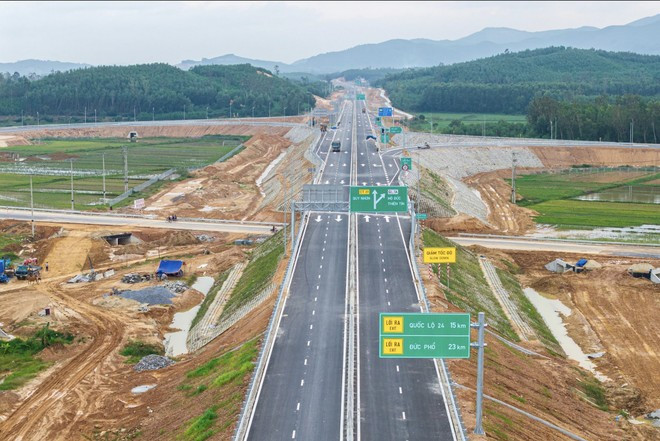
The maximum mobilisation of manpower, machinery and construction materials, combined with synchronised deployment across entire routes, has enabled projects to advance at record speed. Tien noted that the swift development of the expressway network in recent years is the result of strong leadership, breakthrough policy mechanisms, proactive involvement by local authorities and the significantly improved capacity of domestic contractors, along with an unrelenting work ethic at construction sites nationwide.
Colonel Nguyen Tuan Anh, Deputy Commander of Army Corps 12 and Deputy General Director of Truong Son Construction Corporation, who directly oversaw construction of six major component projects on the eastern North–South Expressway, observed that over the past four to five years, contractors have shifted towards a spirit of mutual support and shared responsibility.
In the final stages of projects, contractors that remain on schedule are often willing to share equipment, materials and manpower to assist partners facing urgent workloads, helping to ensure overall progress along entire routes. This collaborative approach has become particularly evident as projects near completion, contributing to both efficiency and quality.
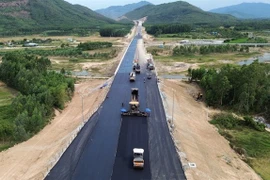
A notable example was seen on a delayed 13-km section of the Van Phong–Nha Trang Expressway. Acting on instructions from Project Management Unit 7, Lizen Joint Stock Company stepped in to support Hai Dang Joint Stock Company and VNCN E&C Joint Stock Company. Lizen supplied asphalt materials, undertook construction items beyond Hai Dang’s capacity, and assisted with asphalt paving on bridge decks for VNCN E&C, while also providing support to other contractors on site.
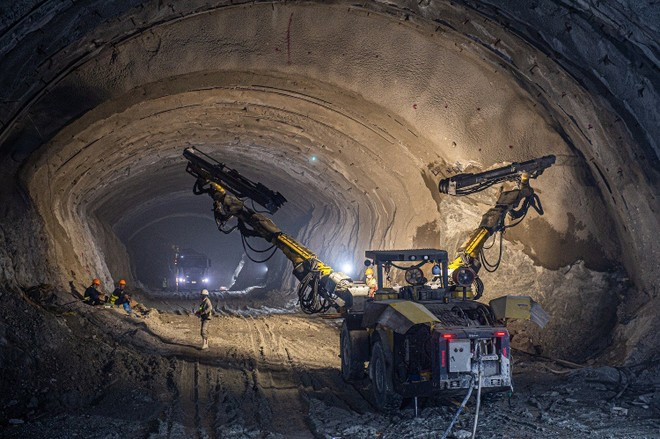
According to Lizen Deputy General Director Banh Van Anh, the remaining workload at the time involved technically complex items valued at tens of billions of VND. The company mobilised experienced teams and large volumes of machinery to work continuously in three shifts over several weeks, while deploying technical supervisors to closely monitor each layer of subgrade, base and asphalt concrete. As a result, the entire section was completed on schedule, meeting technical, safety and aesthetic standards.
Beyond individual projects, the expressway programme has served as a crucial testing ground for the domestic construction industry. Pham Van Khoi, Chairman and General Director of Phuong Thanh Transport Construction and Investment Joint Stock Company, said expressway projects are not merely applications of standard engineering knowledge but also training grounds for strengthening corporate capacity, management skills and resilience.
During the 2021–2025 phase of the eastern North–South Expressway, Phuong Thanh has demonstrated its ability to undertake construction packages worth more than 5 trillion VND (190 million USD), covering sections of 25–50 km—roughly double the scale of projects it handled in previous years. This progress reflects the broader transformation of domestic contractors as they expand both scale and technical capability.
Nguyen The Minh, Deputy Director of the Department of Economics and Construction Investment Management, noted that during the 2017–2020 phase, construction packages typically ranged from 1–3 trillion VND. In contrast, packages in the 2021–2025 period have increased to between 3–8 trillion VND, underscoring the growing strength of domestic enterprises in management, financial capacity and resource mobilisation. Many firms are now capable of handling multiple packages simultaneously across different expressway routes.
Associate Professor Dr Tran Chung, Chairman of the Vietnam Association of Road Traffic Investors (VARSI) emphasised that the 3,000-km milestone also reflects more effective State management. Authorities have proactively addressed bottlenecks related to material supply, land clearance and investment procedures, while introducing flexible mechanisms to accelerate project implementation.
He added that Vietnam’s expressway construction workforce has made remarkable progress, with many private enterprises achieving breakthroughs in applying modern technologies across surveying, design, construction and operation. Each kilometre of expressway, he said, represents not only steel and concrete, but also the combined expertise, dedication and confidence of Vietnamese engineers and workers as the country advances toward its long-term infrastructure goals./.