Hanoi (VNS/VNA) - As Vietnam's e-commerce sector grows rapidly, cross-border e-commerce has been identified as a strategic pillar, offering a golden opportunity for Vietnamese goods to gain a stronger foothold on international trade and enhance the nation's competitiveness within the global value chain.
The country's e-commerce market reached over 25 billion USD last year, marking a year-on-year growth of 20%, said Deputy Minister of Industry and Trade Phan Thi Thang.
This accounted for approximately 10% of the country’s total retail and consumer service revenue, securing Vietnam's position among the top three largest e-commerce markets in Southeast Asia.
With this strong momentum, many Vietnamese brands and local products have established themselves on domestic platforms and are now expanding to international markets through global platforms, according to Thang.
Cross-border e-commerce is not only a key trend for businesses - it is a strategic driver for national exports, and has now been integrated into the Government's GoGlobal Plan.
The global cross-border e-commerce market was valued at 791.5 billion USD last year and is forecast to grow by more than 30% in the coming years.
Vietnamese businesses are expanding their online presence in key markets like the US, China, the EU, Japan, and the Republic of Korea, while also exploring new potential markets in ASEAN, the Middle East, Russia, and Australia.
Digital export strategy
Under the National E-commerce Development Master Plan for the 2026-2030 period, cross-border e-commerce has been designated as a key strategic pillar.
The goal is to build a sustainable digital export ecosystem, boost the international competitiveness of Vietnamese businesses and help Vietnamese goods reach further across the global trade map, according to Thang.
To achieve this vision, the Ministry of Industry and Trade and the Vietnam E-commerce and Digital Economy Agency will implement a range of coordinated solutions.
These include improving policies and institutions, providing training and capacity-building support for businesses, connecting them with major global e-commerce platforms and coordinating closely with Vietnamese trade offices abroad to promote exports through e-commerce channels.
Nguyen Thi Hoai An, Vice President of the Global Alliance for Cross-Border E-Commerce and chairwoman of ACBC Vietnam, told the Nhan Dan (The People) newspaper that she believed cross-border e-commerce was not just a new platform for global trade, but also an "extended arm" of globalisation, allowing products, value and knowledge to flow without borders.
An said she considered this a "golden moment for Vietnam to break through", citing strategic advantages such as a favourable geographical location to become a regional logistics hub, abundant resources, a young workforce, and rapidly advancing digital transformation capability.
She noted that cross-border e-commerce had helped Vietnamese goods gain a presence in international markets and created opportunities to export knowledge and services, shaping Vietnam's national brand on the global trade map.
An advised Vietnamese businesses to prepare thoroughly in several key areas. First, products must meet high quality standards, have a clear brand story and be managed through professional processes.
She also stressed that companies should not focus solely on processing or manufacturing for foreign partners, but should build their own unique brands to establish a strong market position.
Another crucial strategy would be to adopt a direct-to-consumer (D2C) sales model, which helps products reach buyers faster while building a stronger bond and greater trust.
Finally, using modern technology to ensure transparent product traceability and obtaining reputable international certifications could help build solid trust with global consumers.
E-commerce logistics network
According to Dinh Thanh Son, Deputy General Director of ViettelPost, logistics is the backbone of e-commerce.
ViettelPost is heavily investing in infrastructure, technology and operational systems to shorten delivery times, optimise costs and enhance service quality, helping Vietnamese goods access international markets faster and more efficiently.
Vietnam is increasingly solidifying its position in the global supply chain. Major logistics corporations like DHL, FedEx and UPS have been in Vietnam for decades, establishing direct networks to the US, Europe and Northeast Asia.
Meanwhile, domestic companies like ViettelPost are expanding their logistics networks to communes and craft villages.
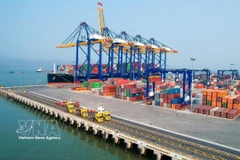
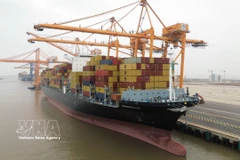
Deep-water port infrastructure is another significant advantage. From Cai Mep Thi Vai, goods can reach the US in just 16 days and Europe in 21 days.
In terms of air transport, direct flights to the US, Japan and the Republic of Korea have significantly reduced international e-commerce delivery times.
Land routes are also crucial, with thousands of container trucks crossing borders daily at checkpoints like Huu Nghi, Mong Cai, Lao Cai, and Moc Bai, connecting directly to China and the Mekong region, which has a population of nearly 1.4 billion.
Son said he believed that with a clear strategic vision and strong determination, Vietnam could quickly become a crucial and reliable link in the global supply chain.
"Made in Vietnam" products would likely appear on more online shopping channels worldwide and could become a symbol of quality, he said.
At the same time, global platforms like Amazon Global Selling, Shopee and domestic tech companies like Yugeeks and Torus AI are supporting Vietnamese businesses by providing solutions in management, marketing, logistics and AI.
These solutions aim to optimise the supply chain, enhance customer experience and scale up exports./.
VNA