Digital transformation - A lever for expanding market reach

The Ministry of Industry and Trade's Trade Promotion Report for 2021–2025 confirms that digital transformation is one of the three key pillars, alongside institutional reform and business capacity building. The goal is to create an intelligent trade promotion ecosystem by 2030, where market research, national branding, and e-commerce activities are integrated into a single platform.

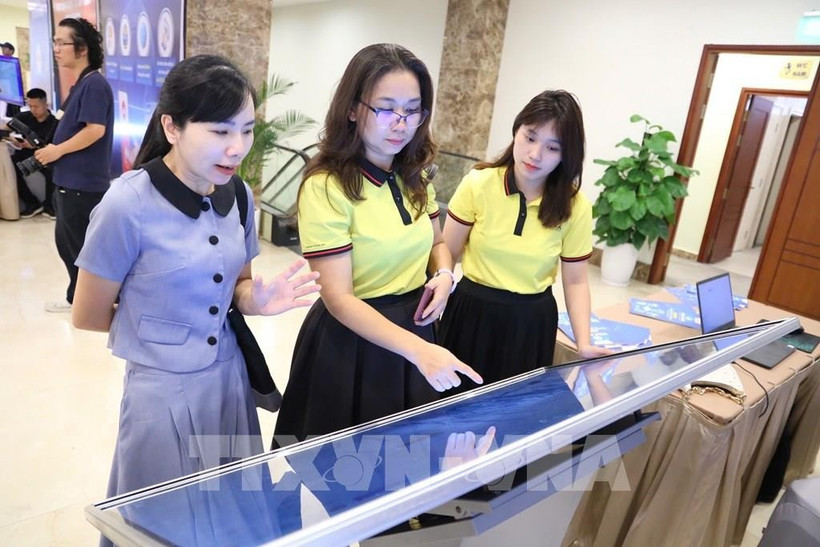
Delegates experience digital transformation at a national forum to support businesses in digital transformation and e-commerce development (Photo: VNA)

Hanoi (VNA) – Amid global economic volatility, fierce trade competition, and shifting consumer demands, digital transformation is essential for businesses, enabling them to broaden market reach, allowing cross-border transactions, promotions, and trade activities beyond the limits of time and geography.

The Ministry of Industry and Trade (MoIT) reported that over the past five years, the export value of goods through digital platforms has increased by 35% annually. This growth is particularly notable in agricultural products, processed foods, handicrafts, and consumer goods. These figures underscore the importance of digital transformation as a crucial factor in trade promotion, enabling Vietnamese products to reach international consumers effectively.

Nguyen Thanh Duong, Vice Director of the MoIT’s Vietnam Trade Promotion Agency (Vietrade), noted that the department has partnered with major platforms like Alibaba, Amazon, and TikTok to implement national pavilions, assisting businesses in building brands and exporting directly. Preliminary results show that over 50% of participating businesses secured orders, averaging tens of thousands of USD.

However, the digital capabilities of most Vietnamese businesses remain modest, from managing international online stores to handling cross-border logistics. Growing demands for traceability, environmental standards, and labour conditions mean that businesses can no longer rely solely on cost advantages. They must invest systematically to stay competitive. To support this, the MoIT has launched initiatives like the National E-Commerce Development Strategy for 2026-2030, the Go Export Programme, and the Vietnam National Pavilion on Alibaba, aimed at building Vietnamese brands on global platforms.

The Vietrade is also collaborating with the Department of E-Commerce and Digital Economy to develop a digital transformation readiness index for trade promotion, targeting government agencies, support organisations, and businesses. Furthermore, the agency is emphasising practical training in skills such as managing online stores, cross-border livestream selling, and using AI for advertising and consumer behaviour analysis, boosting competitive capabilities in the digital space.

Cao Xuan Thang, Vietnam’s Trade Counsellor in Singapore, explained that the Trade Office has developed a comprehensive data system to support trade promotion, including work schedules, business information, and events, offering a 360-degree view. Integrated e-marketing tools help businesses connect and participate in conferences and events efficiently.

Additionally, it has implemented a blockchain-based product traceability system, a Vietnamese agricultural product health map, and online training platforms for small businesses and cooperatives. These solutions reflect a commitment to integrating technology into every aspect of trade promotion, from data management to training and market connectivity.

Nguyen Thi Hoang Thuy, Vietnam’s Trade Counsellor in Sweden, observed that relying solely on costly and inefficient trade fairs or delegations is no longer sufficient. The Trade Office has thus digitised its operations by creating websites, social media, and industry databases to promote Vietnamese products year-round. In the Nordic region, businesses now view digital portfolios as trade visas, demanding transparency and standards. This reinforces the idea that digital transformation is a necessity for sustainable market presence.

These experiences from Singapore and Sweden highlight how digital transformation is fundamentally changing trade promotion. Trade offices are evolving from information channels to data hubs, enabling faster and more accurate decision-making.

According to Vu Ba Phu, Director of Vietrade, digital transformation has helped Vietnamese exporters reduce costs, shorten delivery times, increase transaction speed, and expand their market reach, contributing significantly to the country's impressive export achievements.

The agency continues to expand its digital trade promotion efforts, adapting to real-world conditions and the rapidly changing market environment. Programmes are designed for practical, long-term impact, tailored to businesses of varying sizes and product types.

In collaboration with domestic and international partners, it is spreading trade promotion efforts more effectively, especially as global trade increasingly demands digitalisation, traceability, and product data transparency.

The MoIT’s Trade Promotion Report for 2021–2025 confirms that digital transformation is one of the three key pillars, alongside institutional reform and business capacity building. The goal is to create an intelligent trade promotion ecosystem by 2030, where market research, national branding, and e-commerce activities are integrated into a single platform./.

VNA

See more

From early December, major retail chains in Ho Chi Minh City have recorded a noticeable increase in shoppers seeking Tet products. (Photo: VNA)

HCM City businesses ramp up production to meet Lunar New Year demand

From early December, major retail chains in the city have recorded a noticeable increase in shoppers seeking Tet products. Many consumers are taking advantage of promotional programmes to purchase gift items with long shelf lives, such as confectionery, soft drinks and processed foods, well ahead of the holiday peak.

Workers process fish to be tinned for export at KTC Canned Food Factory under Kien Giang Trading JSC. (Photo: VNA)

Vietnam to host seminar on export growth strategies

Vietnam's exports rose 16.1% to 430.2 billion USD in the first 11 months of 2025, while total trade hit 839.8 billion USD during the same period. This strong performance shows that exports remain a key driver of economic growth, boosting Vietnam's standing on the world stage in recent years.

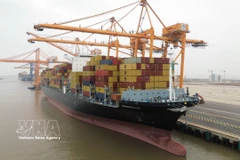
The vessel carrying the 2 millionth TEU arrives at Hai Phong Port. (Photo:VNA)

Hai Phong Port reaches 2-million-TEU milestone

Handling the 2 millionth TEU in 2025 not only demonstrates Hai Phong Port’s operational capacity and the collective efforts of its workforce, but also highlights its increasingly important role in regional and global supply chains, the confidence of shipping lines, logistics firms and the business community, and the effectiveness of policies to improve the investment climate and strengthen maritime infrastructure and services.

Melons labelled with traceability codes on display at the Song Van agricultural produce store in Ninh Binh city, Ninh Binh province. (Photo: VNA)

Tracing origins hindered by fragmented data systems

As the Government accelerates the digital economy, establishing a unified national traceability system has become a crucial move to end data fragmentation and disconnection among ministries, sectors and localities.

Hyundai unveils its new Avante Hybrid model in Seoul, the Republic of Korea, on August 13, 2020. (Photo: Yonhap/VNA)

Tax cuts poised to ignite Vietnam’s hybrid vehicle boom from 2026

Experts forecast that 2026-2030 will mark a period of strong growth for hybrid vehicles in Vietnam, a trend that will invigorate the automotive sector while supporting national objectives on emissions reduction, sustainable development and the broader transition to green mobility.

Illustrative image (Photo: VNA)

Vietnam targets 1 billion USD in banana exports

Bananas have been identified as a priority product under the Project for the Development of Key Fruit Crops to 2025, with a vision to 2030, approved in October 2022. Under the plan, banana acreage is projected to reach 165,000–175,000ha by 2030, with output of 2.6–3 million tonnes.

Deputy Minister of Foreign Affairs Nguyen Minh Hang (Photo: VNA)

Event connects Vietnamese businesses with African countries

Deputy Foreign Minister Nguyen Minh Hang held that to develop Vietnam – Africa ties more strongly and substantively, it is necessary to promote the engagement of businesses, and that the Government will create favourable conditions for them to enhance fruitful cooperation.

Deputy Prime Minister Ho Duc Phoc (R) and Independent Non-executive Chairman of AIA Mark Tucker at their meeting in Hanoi on December 12. (Photo: VNA)

AIA Group envisions long-term investment, cooperation in Vietnam

Over 25 years of operation in Vietnam, AIA has achieved positive results. Its premium revenue ranks among the top five life insurers, reaching nearly 14.83 trillion VND (563.71 million USD) in 2024 and an estimated 15.73 trillion VND in 2025, equivalent to around 10% of the market share.

A view of the 2025 Japan business roundtable in HCM City on December 12. (Photo: VNA)

Ho Chi Minh City courts Japanese investment with growth blueprint

Ha underscored the pivotal contributions of Japanese firms, which have long supported local socio-economic progress through major infrastructure projects, industrial zones and workforce training courses. To date, Japanese companies have invested more than 15 billion USD in over 2,200 projects, reflecting sustained confidence and commitment to the market.