Hanoi (VNA) - Not only does TH True Milk provide clean, fresh milk from its world-record-setting farms, the group has also actively contributed to the development of sustainable agriculture in Vietnam for years.
Over 14 years ago, TH Group began investing in Nghia Dan district in the central province of Nghe An with a project for dairy cattle farming and the production of TH true MILK. The project had a total investment of 1.2 billion USD and a planned area of over 37,000 ha.
Today, a closed agricultural production chain for dairy farming and high-tech milk processing, known as “From Green Pasture to Clean Milk” has been formed in Nghia Dan with a herd of nearly 70,000 cows, a modern milk factory with an area of 5.2 ha and a processing capacity now exceeding 1 million litres of milk per day.
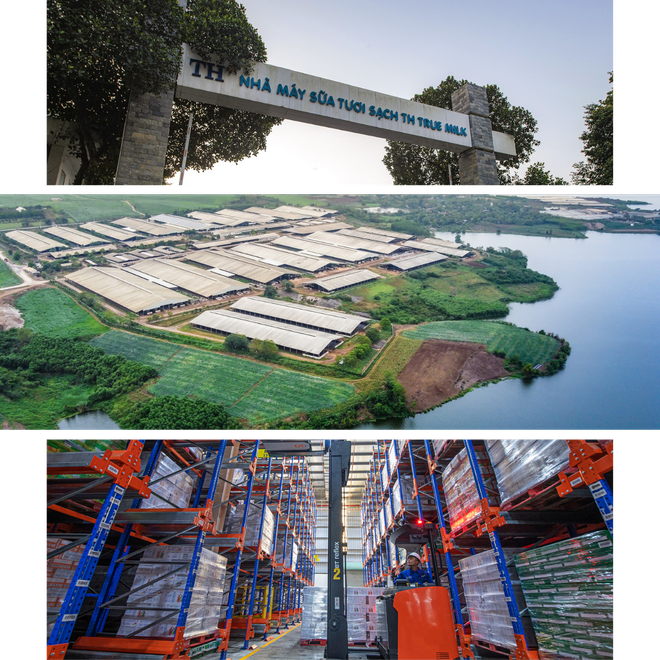
Following the success of this first project, a series of other dairy projects by TH Group have been implemented in many other provinces including Phu Yen and Thanh Hoa.
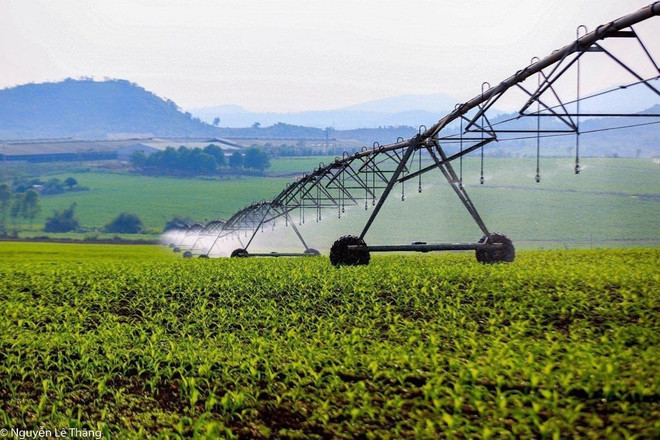
Travelling along Ho Chi Minh Road, visitors can witness changes of the red basalt land of Phu Quy, characterised by vast fields of Mombasa grass covering an area of 2,230 ha.
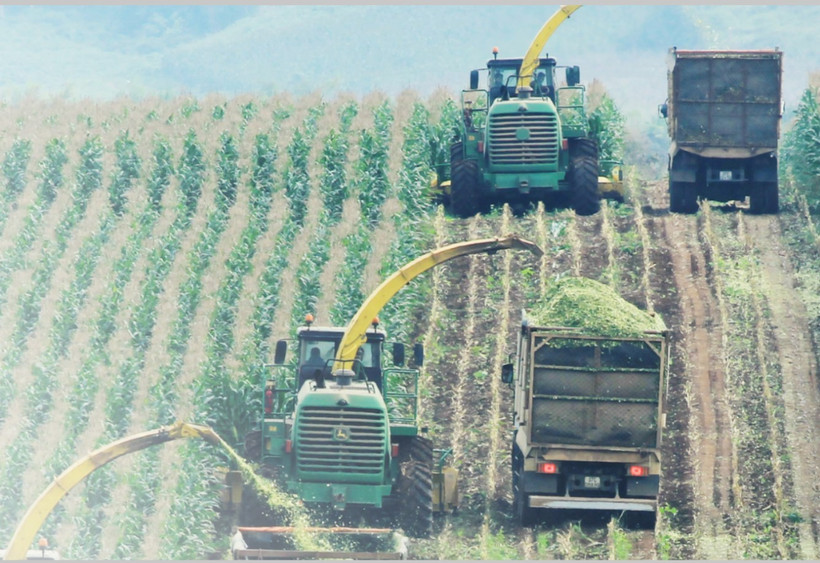
The landscape also includes extensive fields of corn and sunflowers, alongside large factories and farms equipped with modern machinery and high technology. Across these expansive fields, TH Group uses advanced machinery for every step of the cultivation process, from land preparation and sowing to harvesting.
Among these machines are large harvesters that can accomplish the work of hundreds of manual labourers. Notably, TH Group guides and collaborates with farmers to cultivate corn and grass according to clean farming standards, ensuring a guaranteed output.
Each year, TH buys raw materials worth over 100 billion VND from nearly 20,000 farmers in the project area. Standing next to a vast cornfield ready for harvest, Ly Hong Duong, a farmer from Nghia Lam commune in Nghia Dan district, said that his family used to grow rubber trees, but after many were damaged by storms, they decided to shift to growing biomass corn serving for TH's dairy farm.
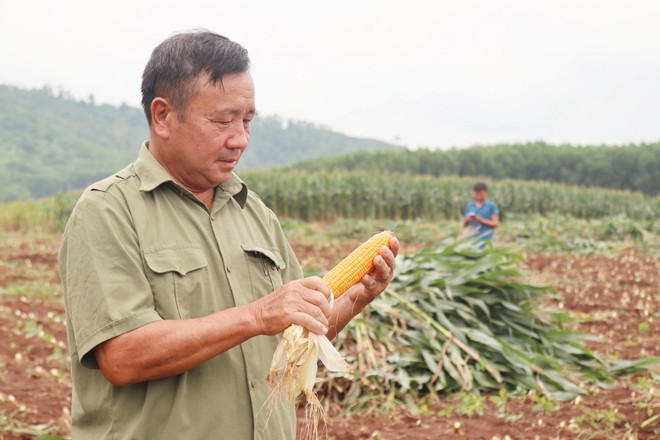
His family has spent five out of the total six ha of land on biomass corn cultivation. Duong said previously, when his family grew corn for seeds, they had to pick corn, dry it, separate seeds and then dry them again.
There were many steps involved, but the prices fluctuated. Now, they sell whole plants to TH Group, which is more stable. Pham Chi Kien, Secretary of the Nghia Dan district Party Committee, said that after more than a decade since TH Group's factories were built and began operations in the district, it has gained a facelift.
TH Group's projects have contributed to a major shift in the district’s economic structure and labour composition, leading to breakthroughs in its economic development.
He added that from an disadvantaged area with a poverty rate of 23%, Nghia Dan now has only 6.4% of households living in poverty. Local farmers have stable jobs and better incomes as they supply raw materials for TH Group's farms and factories, Kien said.
Closed production process from green pastures to clean milk Aiming at producing fresh clean milk, TH Group has implemented a closed production process called “From Green Pasture to Clean Milk.” This process incorporates modern technology, automation, and 4.0 technology in agricultural production and deep processing.
Its made-in-Vietnam products TH True MILK meet international quality standards. Nguyen Tien Dung, Production Director at TH Milk Factory, said that throughout the entire process - from milking to arriving at the production facility - the raw fresh milk does not come into contact with air at all. This is a crucial factor in controlling milk quality and a significant differentiator between industrial farming models and household dairy farming.
Thanks to the application of advanced technology and automation, the product can retain its nutrients and natural flavor throughout its shelf life without the use of preservatives, so it is better for consumer health. Factory with odorless waste treatment - exemplary model of green economy TH Group's concentrated dairy farm is located in the downstream of the Sao river on the Phu Quy plateau. This gentle river serves as a natural source of life, nurturing and revitalising the western part of Nghe An.
In 2011, the group's first water treatment plant was completed and put into operation, allowing TH Group be water self-sufficient in production. Currently, the group owns three water treatment plants with a total capacity of 14,500 cu.m per day.
These facilities utilise Amiad technology from Israel, which is among the most advanced water treatment technologies in the world today, operating fully automatically. Pham Vinh Son, General Director of the Green Fertiliser Technology Joint Stock Company, noted that TH Group practices a circular economy. At its farms, by-products from the farming and production processes are regarded as renewable resources rather than waste.
This approach reduces resource extraction, lowers emissions, and minimises environmental pollution. Waste from the dairy farming process, after being treated to meet standards, becomes a biological substrate used on the farm and is also processed into high-quality organic fertiliser. This fertiliser is then returned to the raw material fields and supplied to the market. Thanks to this process, the group has reduced methane emissions by 60-70% compared to conventional methods.
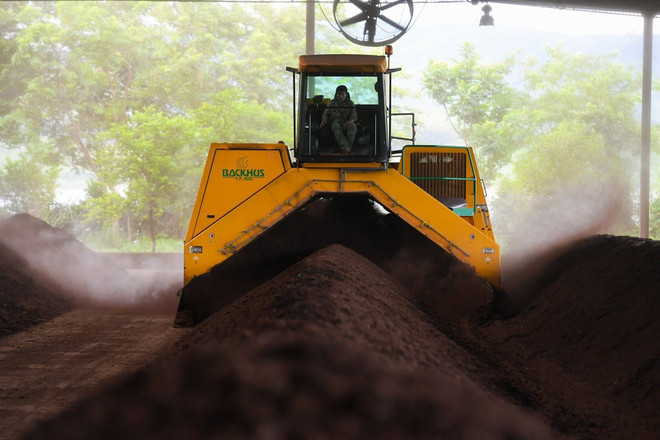
"The farm's waste, including both liquid and solid waste, is collected through a closed piping system and then separated for treatment. The wastewater treatment process at the plant also generates biogas, which is converted into electricity to serve the operational facilities," Son added.
The dairy farm in Nghe An invested in a solar energy system and officially connected to the national grid in late 2020. This project has brought significant economic benefits, environmental protection, and effectively reduced the load on the national power grid.
Cao Minh Hoa, Technical Director of the TH Milk Food Joint Stock Company, stated that the solar panel system produces 7 million kWh annually. The energy converted from solar to electrical energy at the farm helps reduce emissions by approximately 8,700 tonnes of CO2. The current level of self-generated electricity allows the company to save over 10 billion VND annually.
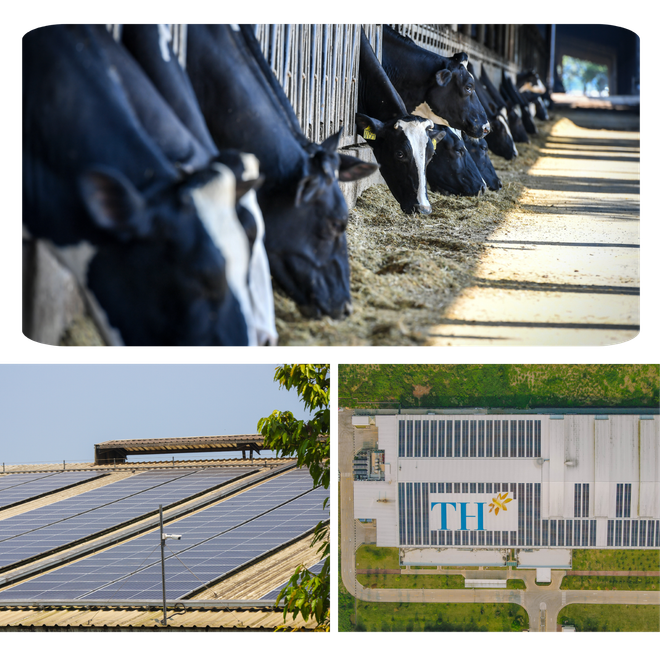
Notably, Hoa said the solar panel system, which includes about 1,500 panels installed on each barn roof, not only absorbs solar energy but also reduces heat radiation, helping to regulate the air temperature inside the barns and save electricity. “Surveys show that the temperature in barns equipped with solar panels is consistently 4 to 5 degrees Celsius lower than in those without solar panels.
This contributes to a cooler and more comfortable living environment for the cattle, reducing stress and fatigue from hot weather, which in turn increases milk production. This is also part of the animal welfare commitments made by the TH Group,” Hoa shared.
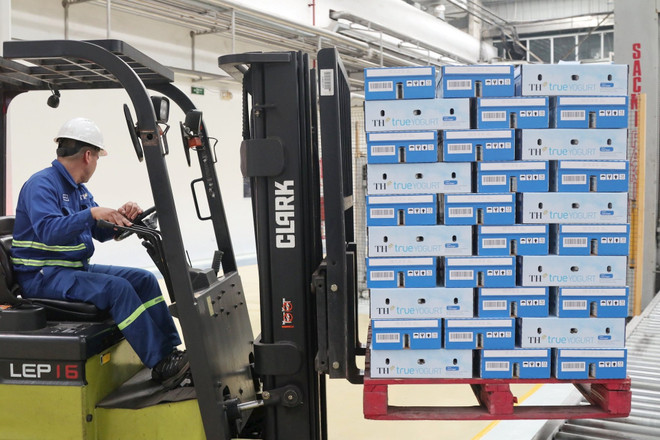
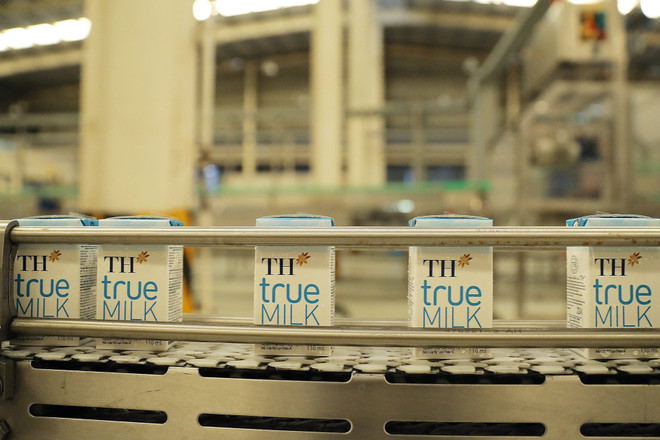
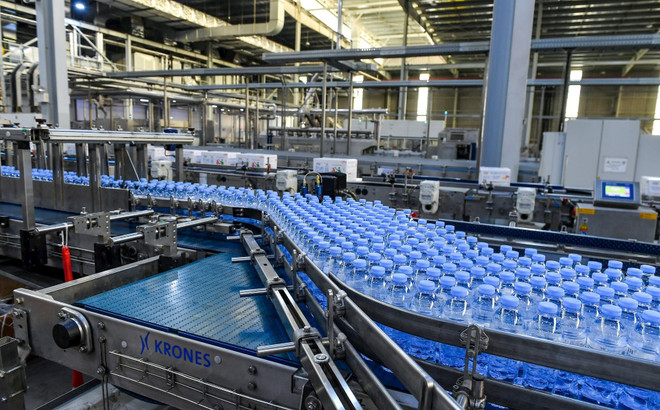
With a goal of sustainable development, the group has also made efforts to reduce plastic in its production process. This includes replacing single-use plastic bags and yogurt spoons with bags and spoons made from environmentally friendly biodegradable materials; reducing the number of yogurt spoons included with TH true YOGURT products; eliminating shrink wrap from bottled water caps; decreasing the weight of plastic bottles; and reducing the thickness of bottle labels. By implementing these measures, TH Group has reduced plastic usage by over 600 tonnes per year, equivalent to saving around 16 billion VND.
Additionally, TH has launched programmes for collecting milk boxes since 2022. The used boxes are sent to professional recycling units, where they are “recycled” into new products and items such as roofing sheets and student desks.
With many decisive and coordinated solutions, greenhouse gas emissions at the factory have significantly decreased year by year. In 2022 alone, greenhouse gas emissions fell to 0.103 kg of CO2 per product unit - a level that is remarkably lower than that of milk factories in Vietnam and Southeast Asia.
Overall, with a commitment to actions aimed at achieving Net Zero, TH's factories have implemented numerous initiatives that have reduced greenhouse gas emissions by up to 85% compared to previous levels, while decreasing hundreds of tonnes of plastic each year./.