German economic cooperation ministry praises Vietnam’s development

Commenting on the German Government’s prominent reference to Vietnam’s achievements in a key policy document shaping the future direction of its development policy, Dr Kambiz Ghawami, President of Germany’s World University Service (WUS), described this as highly significant.

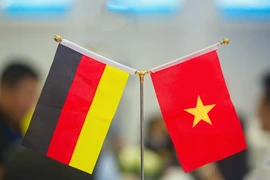
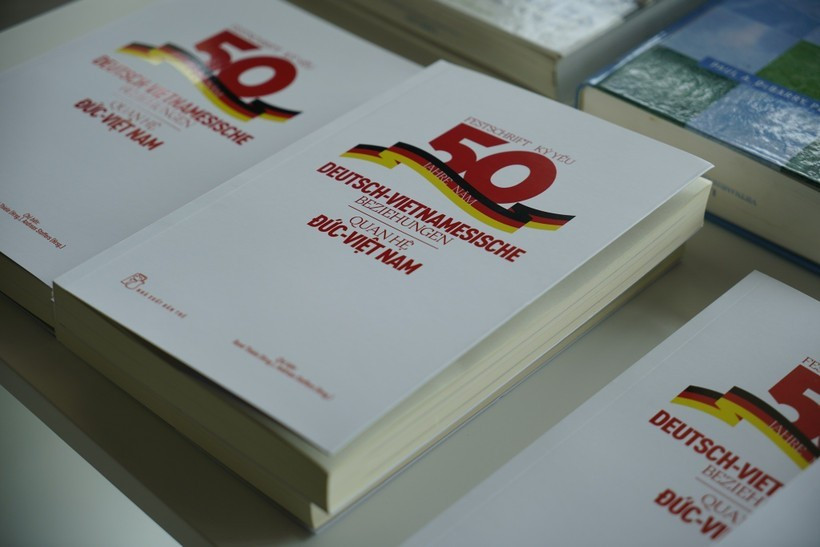
A commemorative publication titled “50 Years of Germany – Vietnam Relations: Partners in the Past, Present and Future”, published in 2025, offers a timely and comprehensive reflection not only on the 50th anniversary but also on the two countries' strategic path ahead. (Illustrative photo: the Vietnamese – German University)

Berlin (VNA) – Vietnam, along with several other partner countries of Germany’s Federal Ministry for Economic Cooperation and Development (BMZ) such as Brazil, India, Indonesia, Mexico, Peru and South Africa, features prominently in the European nation’s newly announced development policy reform agenda led by the ministry.

In outlining cooperation with emerging economies, the 26-page policy paper notes that many BMZ partner countries, including Vietnam, have experienced strong economic growth in recent years and decades.

These fast-growing economies are increasingly integrated into the global economy and often represent important consumer markets for Germany and Europe. They are also major exporters, play a central role in global value chains, and now occupy a significant position in political and geostrategic terms.

The BMZ expects to expand cooperation with emerging economies. The plan underlines that engagement with these countries is a key priority from both a geostrategic and development policy perspective, particularly in the face of global challenges such as climate protection and a socially and ecologically just energy transition.

Commenting on the German Government’s prominent reference to Vietnam’s achievements in a key policy document shaping the future direction of its development policy, Dr Kambiz Ghawami, President of Germany’s World University Service (WUS), described this as highly significant.

Speaking to a Vietnam News Agency correspondent in Germany, Ghawami said this demonstrates that the Southeast Asian nation is recognised as an equal partner and has been included in a select group of special BMZ partner countries, alongside Brazil, India, Indonesia, Mexico, Peru and South Africa, which will be afforded strategic importance in the future.

This also reflects a policy approach that serves the interests of the Vietnamese people and promotes multilateral relations and open markets amid ongoing global crises and a growing trend towards protectionism, he added.

According to the plan, the German Government has determined that development policy can no longer be confined to traditional aid, but must be restructured into a form of strategic cooperation closely linked to foreign, security and economic policy.

Germany’s development policy reform marks a shift away from isolated, project-based approaches towards focused, long-term strategic partnerships. Development cooperation is no longer viewed as charitable assistance, but as an essential instrument for safeguarding peace, security and shared prosperity in an increasingly interconnected and risk-prone world./.

VNA
See more

Indonesia’s meat industry faces widespread job loss risks (Photo:en.infosawit.com)

Indonesia’s meat industry faces risk of mass layoffs

The Indonesian Meat Entrepreneurs and Processors Association (APPDI) said the total beef import quota for private companies this year has been cut to 30,000 tonnes, down sharply from 180,000 tonnes in 2025. The figure accounts for only a small fraction of Indonesia’s overall import plan of 297,000 tonnes of beef and buffalo meat for 2026.

Vietnamese Minister of National Defence General Phan Van Giang (left) and Lao Minister of National Defence Senior Lieutenant General Khamlieng Outhakaysone (Photo: VNA)

Laos focuses on building comprehensive all-people national defence posture

Reporting on defence and security work over the past five years, he noted that despite numerous challenges, Laos has recorded significant achievements under the direct, comprehensive and resolute leadership of the LPRP, the guidance of the Central Commission for Defence–Security, the solidarity and efforts of administrations at all levels, sectors, local authorities and the Lao people, along with cooperation from strategic partners.

Governor of National Resilience Institute (Lemhannas RI) of Indonesia Dr. Ace Hasan Syadzily (Photo: VNA)

Indonesia's programme to develop visionary leaders unveiled

This programme is designed to equip prospective senior leaders with strategic leadership mindset, geopolitical and geostrategic vision, and the capacity to formulate policies and govern the country amid a dynamic domestic and international environment.

Indonesia moves to build clean energy ecosystem for new capital (Photo: indonesiabusinesspost.com)

Indonesia develops clean energy ecosystem for new capital

The involvement of Indonesia's strategic state-owned companies such as Pertamina will strengthen the vision of developing Nusantara into a “forest city” with low carbon emissions, through close collaboration between the government and the business community.

Indonesian Energy and Mineral Resources Minister Bahlil Lahadalia at a press conference in Jakarta on January 8, 2026 (Photo: ANTARA)

Indonesia to reshape coal policy in 2026

From January to September 2025, Indonesia’s coal production fell 15% year-on-year to 509 million tonnes, while exports declined 4.7% to about 285 million tonnes. Shipments to China and India dropped by 16% and 12%, respectively.